
Edward Fuller — Mayflower passenger and early Plymouth settler
Edward Fuller (c.1575–winter 1620/21) sailed on the Mayflower, signed the Mayflower Compact, and died in the colony’s first winter; his sons survived. He had lived in Leiden with English Separatists.
Edward Fuller (baptized September 4, 1575) was an Englishman who travelled on the Mayflower in 1620 and was one of the signers of the Mayflower Compact. Born in Norfolk, England, he was the son of Robert Fuller, recorded in some sources as a butcher. Little is documented about his early adulthood, but he is known today primarily for his role among the first group of settlers at Plymouth.
Image gallery
2 Images
Background and early life
Records show Edward Fuller’s baptism and family connections in Norfolk. He had a brother, Samuel Fuller, who also took part in the Mayflower voyage. At an uncertain date the Fuller brothers joined other English dissenters in the Dutch city of Leiden, a common refuge for those who dissented from the established church. These English Separatists rejected certain practices of the Church of England and sought greater religious freedom abroad.
Voyage to New England and Plymouth
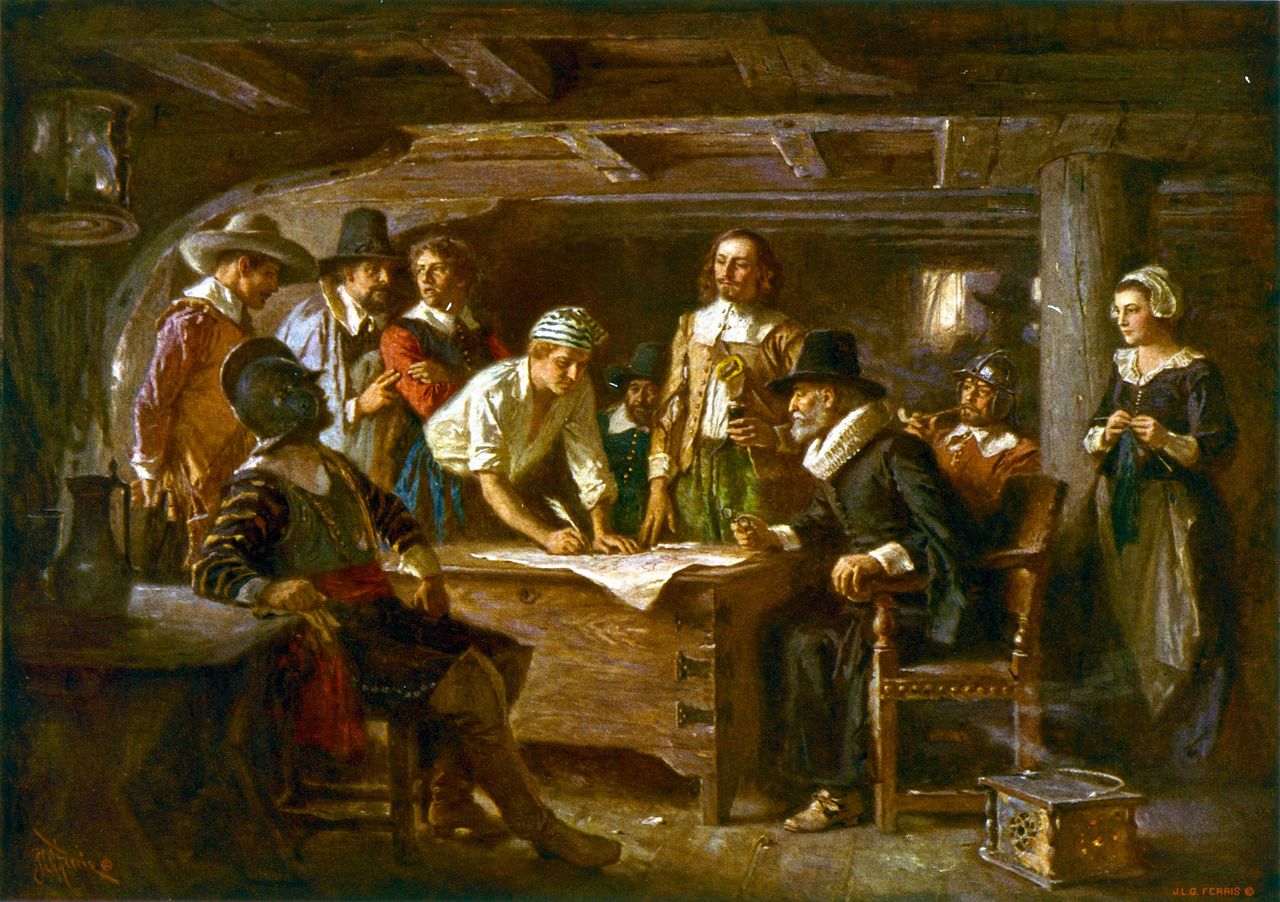
In 1620 Edward Fuller travelled aboard the Mayflower bound for New England. He was among the adult passengers who drew up and signed the Mayflower Compact, an early instrument of self-government agreed upon by male settlers as they prepared to establish a community. After the ship landed and the settlement that became Plymouth began, Fuller and his wife were among those who did not survive the first harsh winter of the colony, dying in the winter of 1620/21 along with many other newcomers.
Family and legacy
Edward Fuller and his wife had two known sons: Matthew (born c. 1605) and Samuel (born c. 1608). Though their parents died shortly after arrival, the boys survived in the fledgling settlement. The presence of these children is often noted in accounts of the colony’s early years because they represent one strand of continuity between the adult generation of settlers and the next.
Notable facts and historical context
- Edward Fuller’s signature on the Mayflower Compact links him to an important moment in early North American self-government.
- His move from England to Leiden places him among English Separatists who left England to avoid religious conformity under the Church of England.
- Contemporary parish records in Norfolk and other local documents are the main sources for his birth and family details; much about his life before Leiden remains sparse.
- Several primary and secondary sources about early Plymouth settlers discuss Fuller and his family; these can be consulted for genealogical and historical research (Plymouth records and colony lists among them).
Because documentation for many ordinary migrants of this period is limited, historians rely on fragmentary parish entries, ship lists, and civic records to reconstruct lives like Edward Fuller’s. His brief presence at Plymouth is emblematic of the many lesser-known individuals whose experiences shaped the early English presence in New England.
Questions and answers
Q: Who was Edward Fuller?
A: Edward Fuller was a passenger on the Mayflower in 1620 and he signed the Mayflower Compact. He was baptized in Norfolk, England in 1575 and was the son of a butcher named Robert Fuller.
Q: Did Edward Fuller have any siblings?
A: Yes, Edward Fuller had a brother named Samuel who also travelled with him on the Mayflower.
Q: What is known about Edward Fuller's life in England?
A: There is very little known about Edward Fuller's life in England.
Q: Did Edward Fuller have any children?
A: Yes, Edward Fuller had two sons named Matthew and Samuel.
Q: What is the significance of the Mayflower Compact that Edward Fuller signed?
A: The Mayflower Compact was a document that established a governing body and laws for the new settlement at Plymouth. It is significant because it was an early form of democracy in America.
Q: What were Separatists?
A: Separatists were people who did not believe in the Church of England.
Q: What happened to Edward Fuller and his wife after they arrived at Plymouth?
A: Edward Fuller and his wife died soon after they arrived at Plymouth, but their sons lived.
Related articles
Author
AlegsaOnline.com Edward Fuller — Mayflower passenger and early Plymouth settler Leandro Alegsa
URL: https://en.alegsaonline.com/art/30270
Sources
- plimoth.org : plimoth.org/media/pdf/fuller_edward.pdf
- americanancestors.org : americanancestors.org/pilgrim-families-edward-fuller/
- findagrave.com : findagrave.com/cgi-bin/fg.cgi?page=gr&GRid=25473954