
Edward Cave: Founder of The Gentleman's Magazine and early industrialist
Edward Cave (1691–1754) was an English printer, editor and publisher who launched The Gentleman's Magazine in 1731, creating the first successful general-interest periodical and engaging in early cotton-mill experiments.
Overview
Edward Cave, born on February 27 1691 and dying on January 10 1754, was an English printer, editor and publisher best known for founding The Gentleman's Magazine. He devised a new model of periodical that gathered items across many subjects for a broad reading public and turned it into a commercially successful enterprise. Cave's life combined literary entrepreneurship with practical involvement in early industrial technologies.
Image gallery
2 Images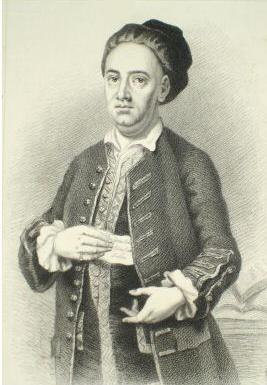

Early life and background
Cave came from modest origins: the son of a cobbler from Newton near Rugby, Warwickshire. He attended the local grammar school but left under difficult circumstances. In his youth he held a variety of occupations, including timber selling and small-scale printing and publishing work, developing the skills and contacts that later supported his magazine project. His practical experience in the book trade and print production informed both editorial and business decisions.
The Gentleman's Magazine and editorial approach
In 1731 Cave launched The Gentleman's Magazine with the deliberate aim of covering everything that interested the educated public, from commerce and news to literature and poetry. He first proposed the idea to established London publishers; when no one took it on he carried the venture himself. The magazine collected essays, reports, verse, parliamentary abstracts and correspondence, producing a single monthly source that both reflected and helped shape public conversation. Cave often contributed under the pseudonym Sylvanus Urban and managed the magazine's tone and content closely.
Staff, contributors and working methods
Cave employed numerous writers and compilers to supply material; among the better-known figures associated with the magazine was Samuel Johnson, who found steady editorial and writing work there early in his career. Cave ran his operation from offices at St John's Gate in Clerkenwell and kept tight control over production, distribution and advertising. His model—an edited miscellany for a broad readership—became widely copied and influenced the development of periodical journalism in Britain.
Industrial ventures: spinning and mills
Beyond publishing, Cave invested in early textile machinery. He secured rights from Lewis Paul relating to a roller-spinning patent and in 1742 purchased Marvels Mill at Northampton, converting it into a cotton mill powered by water. This enterprise is often cited as one of the earliest attempts to apply mechanised spinning on a mill scale, preceding later factory systems. The mill had mixed commercial success and eventually closed, but the project indicates how some eighteenth-century publishers and entrepreneurs engaged directly with industrial innovation.
Health, death and legacy
Cave suffered from gout in later life and died in 1754. He is buried at St. James's Church in Clerkenwell. His most lasting achievement was establishing a template for the general-interest magazine: a single periodical combining news, commentary, literature and practical information for a literate audience. The Gentleman's Magazine influenced subsequent editors and publications, helping to shape the habits of magazine reading and the economics of periodical publishing in the eighteenth century. For over a century Cave's name remained associated with the birth of modern magazine culture and with an unusual mix of literary and industrial ambition.
- Notable dates: birth February 27 1691; death January 10 1754.
- Occupations: printer, editor, publisher and investor.
- Key terms: magazine, miscellany, periodical, early cotton spinning (patent).
- Associated people and places: Samuel Johnson, Lewis Paul, Marvels Mill, Newton, London.
- Health: later afflicted by gout.
Questions and answers
Q: Who was Edward Cave?
A: Edward Cave was an English printer, editor and publisher. He is most well known for creating the first general-interest magazine called The Gentleman's Magazine in 1731.
Q: Where was Edward Cave born?
A: Edward Cave was born in Newton near Rugby, Warwickshire.
Q: What did Edward Cave do before starting The Gentleman's Magazine?
A: Before starting The Gentleman's Magazine, Edward Cave worked at a number of different jobs such as selling timber, writing and printing.
Q: What famous writer wrote for The Gentleman's Magazine?
A: Samuel Johnson wrote for The Gentleman's Magazine and was always thankful to Edward Cave for having given him his main job for many years.
Q: What invention did Edward Cave get permission from Lewis Paul to use?
A: Edward Cave got permission from Lewis Paul to use 250 spindles for his patent roller-spinning machine, an early model of the water frame.
Q: What business venture did not make much money for Edward Cave?
A: In 1742 he bought Marvels Mill at Northampton and made this into a cotton mill which unfortunately did not make much money and closed about 1761.
Q: Where is Edward Cave buried?
A:Edward is buried at St James Church in Clerkenwell.
Related articles
Author
AlegsaOnline.com Edward Cave: Founder of The Gentleman's Magazine and early industrialist Leandro Alegsa
URL: https://en.alegsaonline.com/art/30261