
Gout: causes, symptoms, diagnosis, treatment, and prevention
Gout is an inflammatory arthritis caused by uric acid crystal deposition. This article explains causes, presentation, diagnosis, acute and chronic management, prevention, and important distinctions.
Overview
Gout is a form of inflammatory arthritis characterized by sudden, severe attacks of joint pain, redness, warmth and swelling. Many descriptions of the condition emphasize intense pain and local signs of inflammation; this is reflected in patient reports of joints that are very tender to touch. Classic attacks often involve the base of the big toe, though other joints may be affected. For a brief medical overview, see gout basics.
Image gallery
10 Images





Causes and mechanisms
Gout results from deposition of urate crystals when the concentration of uric acid in the blood is persistently elevated. Uric acid is the final product of purine metabolism in humans. When levels are high, monosodium urate crystals can form and deposit in joint spaces, tendons and surrounding tissues, provoking a strong inflammatory response. Tendon involvement and nearby soft tissues are common sites for these deposits; additional information about affected structures is available at tendons and soft tissue.
Typical presentation and complications
An acute gout attack usually begins suddenly and reaches peak intensity within hours. Typical features include:
- Severe joint pain, often described as throbbing or crushing
- Redness, warmth and swelling of the involved joint
- Fever or malaise in more severe flares
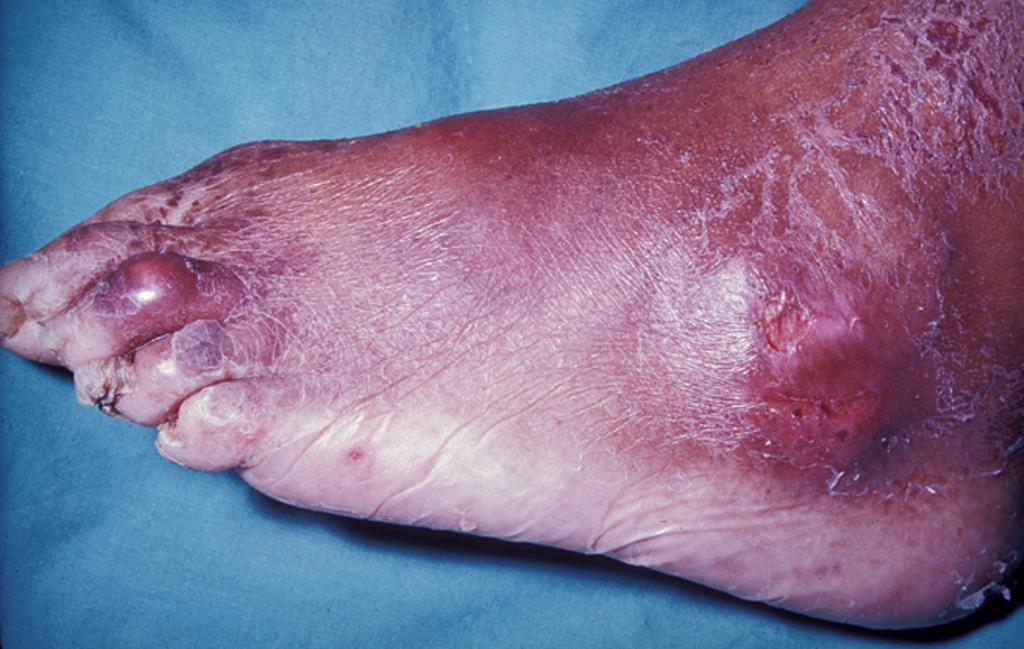
Recurrent attacks can lead to chronic joint damage and the development of tophi (visible deposits of urate crystals under the skin). Urate crystals may also collect in the urinary tract and contribute to kidney stones or impaired kidney function.
Diagnosis
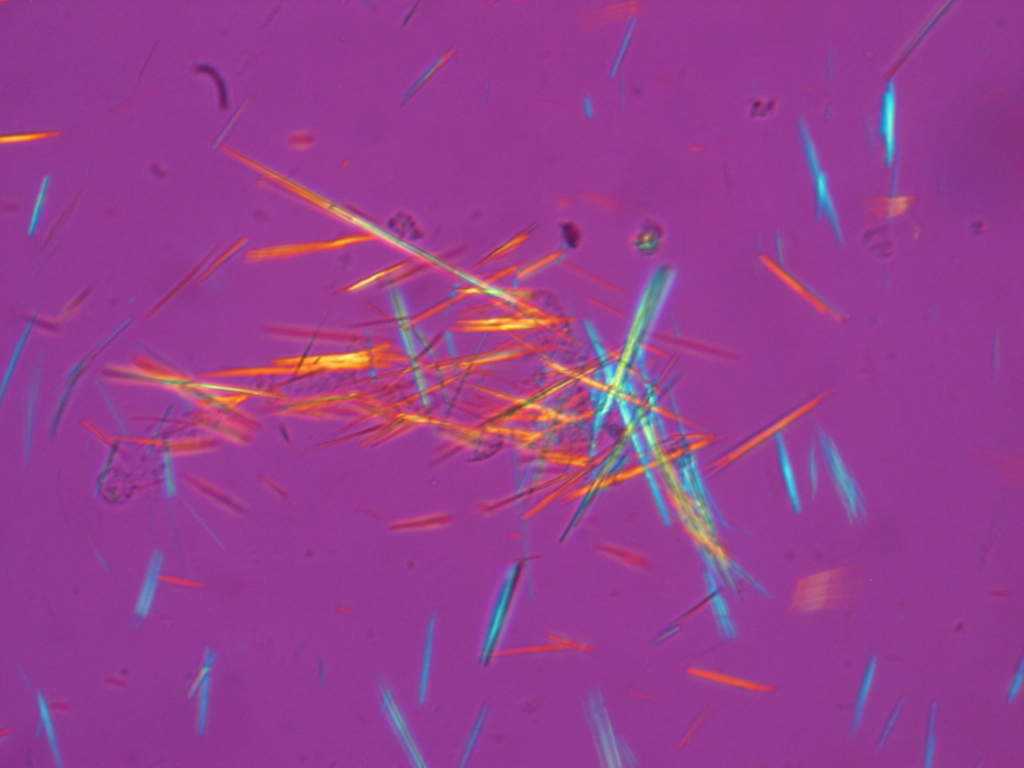
The definitive diagnosis is made by identifying needle-shaped, negatively birefringent monosodium urate crystals in joint fluid obtained by aspiration. Blood uric acid levels can support the diagnosis but are not definitive on their own; levels may be normal during an acute attack. Imaging (X-ray, ultrasound, or dual-energy CT) can detect joint damage or crystal deposits in some cases. Gout is one of several crystal arthropathies and should be distinguished from other causes of acute arthritis, including other inflammatory arthritis and bacterial infection.
Treatment and prevention
Management has two complementary goals: relieve pain during acute attacks and reduce urate levels to prevent recurrences and complications. Acute attacks are typically treated with nonsteroidal anti-inflammatory drugs (NSAIDs), colchicine, or corticosteroids, depending on medical history and contraindications. For people with frequent attacks or tophi, long-term urate-lowering therapy such as allopurinol or uricosuric agents like probenecid may be recommended to prevent symptoms; see guidance at long-term prevention.
- Nonpharmacologic measures: weight loss, limiting alcohol (especially beer), reducing intake of high-purine foods and sugary drinks, and treating contributing conditions.
- Pharmacologic options: short-term anti-inflammatory therapy for flares; xanthine oxidase inhibitors or uricosuric agents for chronic control.
Epidemiology, risk factors and history
Gout has become more common in recent decades, affecting roughly one to two percent of people in many Western populations over their lifetimes. Rising rates are linked to aging populations, higher prevalence of metabolic risk factors and lifestyle changes. Conditions such as hypertension, chronic kidney disease, obesity and metabolic syndrome increase gout risk. Longer life spans and dietary patterns are additional contributors noted in public health reports (demographic factors). Historically, gout was associated with affluent diets and was nicknamed "the disease of kings," reflecting its perceived link to rich food and alcohol.
Important distinctions and practical notes
Not all crystal-induced arthritis is gout. Calcium pyrophosphate deposition disease, often called pseudogout, produces similar joint swelling but involves different crystals and may require different management. People with suspected gout should receive a careful evaluation, including joint aspiration when feasible. For patient resources and further reading see patient information and clinical summaries at medical overviews or specialist guidance at treatment resources.
Prompt treatment of acute flares relieves pain quickly in most cases, while lifestyle modification combined with appropriate long-term therapy can substantially reduce attack frequency and prevent long-term complications.
Questions and answers
Q: What is gout?
A: Gout is a very painful medical condition where crystals get deposited from the blood into joints, tendons, and surrounding tissues. It causes red, tender, hot, swollen joint most often at the base of the big toe.
Q: How is gout caused?
A: Gout is caused by having too high of a level of uric acid in the blood which leads to crystals getting deposited from the blood into joints, tendons, and surrounding tissues.
Q: What percentage of cases have inflammatory arthritis?
A: About 50% of all cases of gout have inflammatory arthritis.
Q: How can doctors decide if someone has gout?
A: Doctors can decide if someone has gout if they find crystals in the joint fluid.
Q: What treatments are available for people with gout?
A: Treatment options for people with gout include anti-inflammatory drugs, steroids or colchicine to improve symptoms and lifestyle changes to reduce levels of uric acid as well as taking allopurinol or probenecid to prevent future attacks.
Q: How common is gout?
A:Gout affects approximately one to two percent of people in the West during their lifetimes.
Q: What are some risk factors associated with an increase in cases of gout?
A:Risk factors associated with an increase in cases of gouts include metabolic syndrome, longer life expectancy and changes in diet.
Related articles
Author
AlegsaOnline.com Gout: causes, symptoms, diagnosis, treatment, and prevention Leandro Alegsa
URL: https://en.alegsaonline.com/art/39921
Sources
- pubmed.ncbi.nlm.nih.gov : 17910294
- doi.org : 10.1097/RHU.0b013e3181896921
- pubmed.ncbi.nlm.nih.gov : 18830092
- doi.org : 10.3810/pgm.2010.03.2133
- pubmed.ncbi.nlm.nih.gov : 20203467
- doi.org : 10.1038/nrrheum.2009.236
- pubmed.ncbi.nlm.nih.gov : 20046204
- ncbi.nlm.nih.gov : "Gout--current diagnosis and treatment"
- doi.org : 10.3238/arztebl.2009.0549
- pubmed.ncbi.nlm.nih.gov : 19795010
- pubmed.ncbi.nlm.nih.gov : 18819329
- doi.org : 10.1016/S0140-6736(09)60883-7
- pubmed.ncbi.nlm.nih.gov : 19692116
- doi.org : 10.1056/NEJMoa035700