
Samuel Johnson
Samuel Johnson (1709–1784) was an English writer, lexicographer, critic and biographer whose Dictionary and essays shaped 18th-century literary life and left a lasting influence on the English language.
Overview
Samuel Johnson was born in Lichfield, Staffordshire — Lichfield — in 1709 and died in London — London — in 1784. A prolific man of letters, he worked as a poet, essayist, moralist, literary critic, biographer and lexicographer. After the publication of his great Dictionary he received an honorary degree and is commonly referred to as "Dr Johnson" (honorary doctorate).
Image gallery
10 Images

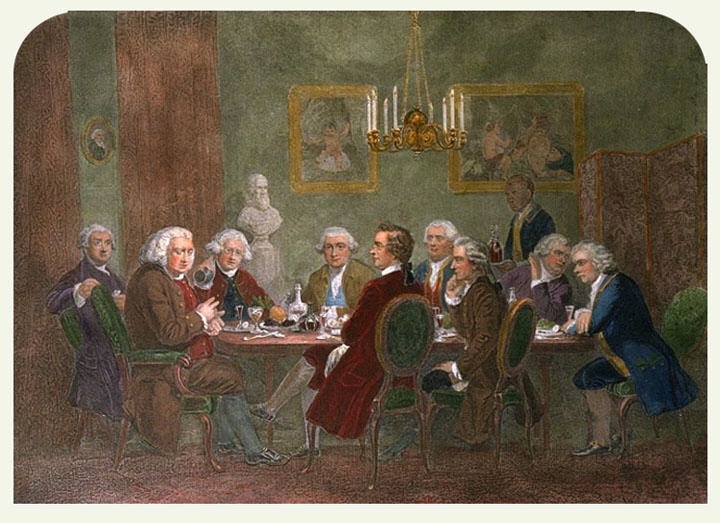


Main works and genres
Johnson produced a variety of works in different forms. He wrote periodical essays, poems, a philosophical tale, critical biographies and the pioneering dictionary that made his name. His writing combined moral reflections with close readings of literature and a notable capacity for sharp, memorable sentences.
- Dictionary of the English Language — a comprehensive lexicon that became influential across Britain and beyond.
- The Rambler and The Idler — series of moral and literary essays.
- Rasselas — a philosophical novella exploring happiness and human choice.
- Lives of the Poets — critical and biographical sketches of English poets.
Dictionary and lexicography
Johnson's Dictionary (first published mid-18th century) was based on wide reading of earlier English authors and included illustrative quotations to show usage. Compiled with great effort over several years, it helped stabilize spelling and the meanings of many words at a time when English lexicography was still developing. For decades it remained a standard reference and set a model for later dictionaries.
Style, reputation and influence
Johnson was celebrated for his forceful prose, moral seriousness and conversational wit. His critical essays emphasized close textual reading and ethical judgment. Much of what is popularly known about Johnson's personality and remarks comes from the biography written by his friend James Boswell, whose Life of Samuel Johnson preserved many anecdotes and quotations and shaped Johnson's posthumous reputation.
Historical context and legacy
Active during the mid-18th century, Johnson belonged to a literary culture that valued essays, periodicals and public criticism. His work influenced later writers, historians of the language and the craft of biography. He is remembered both for concrete contributions — especially in lexicography — and for the image of an authoritative, occasionally cantankerous moralist who dominated a key period in English letters.
Notable facts
Johnson is often called "Dr Johnson" because of his honorary degree. He is remembered less for a single literary school than for a range of roles: critic, editor, dictionary-maker and conversational figure whose remarks and judgments remain widely quoted. For further reading about his life and works, consult modern biographies and editions that compile his essays and the dictionary entries.
Questions and answers
Q: Who was Samuel Johnson?
A: Samuel Johnson was a famous writer who was born on 18 September 1709 in Lichfield, Staffordshire, England and died on 13 December 1784 in London.
Q: Why is Samuel Johnson often called "Dr Johnson"?
A: After publishing a famous dictionary, Samuel Johnson was given a doctorate, which is why he is often called "Dr Johnson".
Q: What types of writings did Samuel Johnson produce?
A: Samuel Johnson wrote some of his own stories, but more often he wrote criticisms about what other people had written.
Q: What is Samuel Johnson known for?
A: Samuel Johnson is known for his witty and amusing sayings, which are still remembered today.
Q: How do we know about Samuel Johnson's humorous sayings?
A: We know about some of Samuel Johnson's humorous sayings because his friend James Boswell wrote a book about him.
Q: What did Samuel Johnson publish that made him famous?
A: Samuel Johnson published a famous dictionary that made him famous.
Q: When did Samuel Johnson die?
A: Samuel Johnson died on 13 December 1784 in London.
Author
AlegsaOnline.com Samuel Johnson Leandro Alegsa
URL: https://en.alegsaonline.com/art/130405