
Alpaca (Vicugna pacos): Domestic South American camelid
A domesticated South American camelid prized for its soft, insulating fiber. Alpacas have two main fleece types, a long Andean history of breeding, and are kept worldwide for textiles and small-scale farming.
The alpaca (Vicugna pacos) is a domesticated member of the South American camelid family and one of four closely related species alongside llamas, guanacos and vicuñas. Smaller than the typical llama, alpacas are primarily raised for their fiber rather than as beasts of burden. They have been selectively bred for desirable fleece qualities over many generations and remain an important livestock animal in Andean societies and beyond.
Image gallery
10 Images


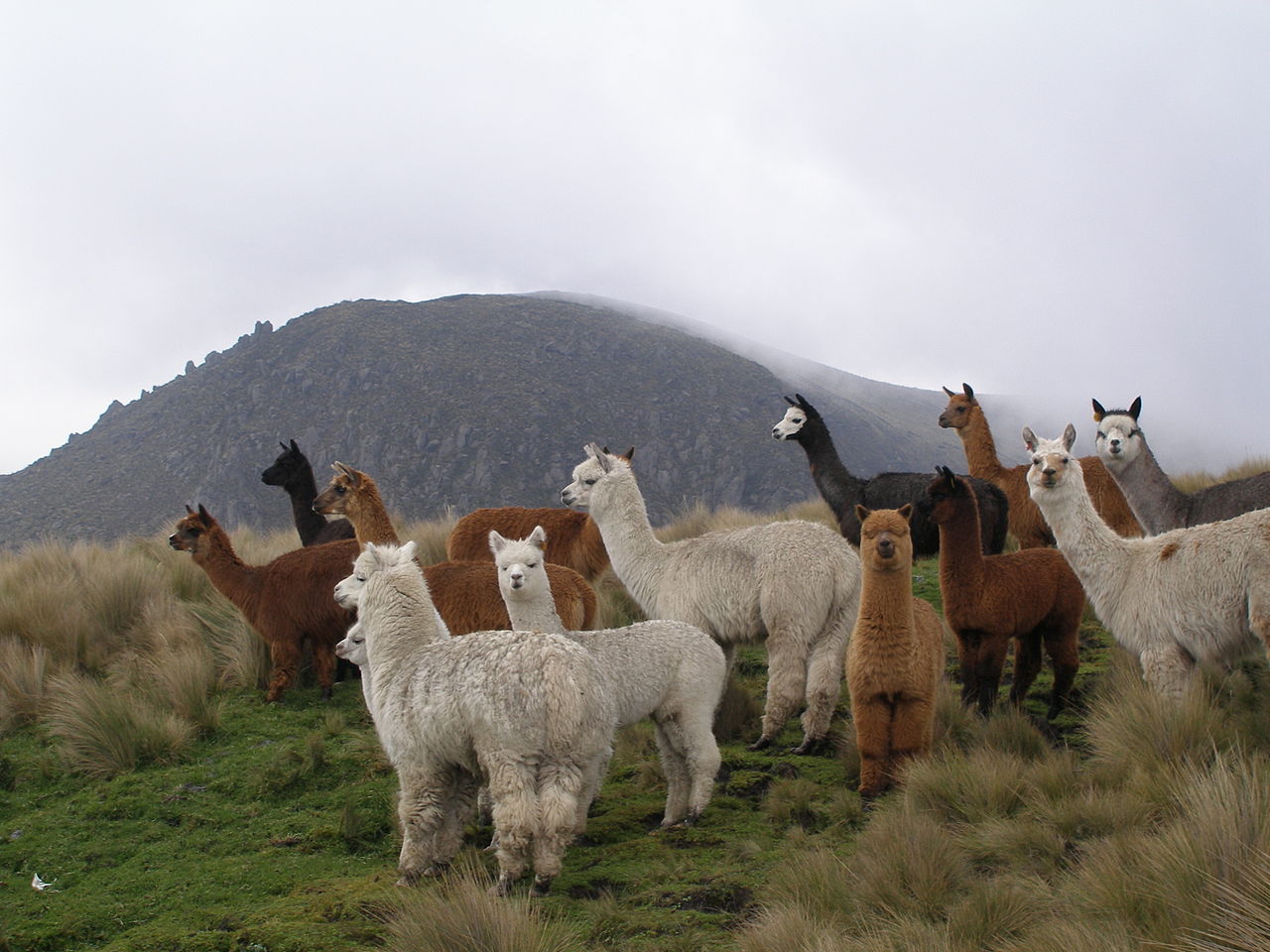

Characteristics
Alpacas are herd animals with a calm temperament and social behavior. Their most distinctive feature is the fleece, which varies in texture and structure. There are two broadly recognized fleece types:
- Huacaya: dense, crimpy, and woolly, giving a fluffy appearance.
- Suri: long, silky locks that hang in distinct strands.
Alpaca fiber is noted for being soft, warm, and available in a wide range of natural colors. Because it contains little or no lanolin, it is often hypoallergenic compared with sheep wool. Alpacas are adapted to high-altitude grazing and have efficient digestive systems suited to sparse mountain pastures.
History and domestication
Alpacas were domesticated centuries ago in the high plateaus of the Andes from wild camelids related to the vicuña. Indigenous Andean cultures developed selective breeding practices to enhance fleece traits, and alpaca fiber became important for clothing, ceremonial textiles, and trade. Colonial and modern periods changed herd structures and markets, but traditional husbandry remains a cultural cornerstone in many Andean communities.
Uses and importance
Today alpacas are primarily valued for their fleece, which is processed into yarns and garments. Beyond fiber production, they are kept for:
- small-scale farming and sustainable agriculture, due to low environmental impact;
- showing and breeding programs that preserve or enhance fleece qualities;
- companionship and ecotourism in regions where they are a cultural symbol.
While llamas serve more often as pack animals, alpacas can occasionally be used to carry light loads but are not typically employed for heavy transport.
Distinctions and notable facts
Alpacas differ from llamas in size, head shape and ear form, and are generally bred solely for fiber. Their wild relatives, especially the vicuña, are prized for very fine fleece and have been a focus of conservation efforts. Breeding programs today exist worldwide, with animals kept beyond South America by hobbyists and textile producers. For more on camelid biology and taxonomy see camelid resources.
Understanding these animals involves both their biological traits and their cultural role: alpacas combine practical value as a renewable fiber source with long-standing significance to Andean heritage.
Related articles
Author
AlegsaOnline.com Alpaca (Vicugna pacos): Domestic South American camelid Leandro Alegsa
URL: https://en.alegsaonline.com/art/2943
Sources
- species.wikimedia.org : Vicugna pacos
- ncbi.nlm.nih.gov : "Genetic analysis reveals the wild ancestors of the llama and the alpaca"
- doi.org : 10.1098/rspb.2001.1774
- pubmed.ncbi.nlm.nih.gov : 11749713
- zoo-hannover.de : Alpaka (in German)
- diverall.com : "Alpaca Care Instructions"