
Self-driving car
A vehicle capable of navigating and performing driving tasks without continuous human input, using sensors, software and maps; used in testing, fleet shuttles and driver-assist features.
A self-driving car, also called an autonomous vehicle or driverless car, is a motor vehicle equipped to perceive its environment and operate with little or no human intervention. These systems combine hardware and software to detect nearby objects, plan routes and control steering, acceleration and braking. Early deployments have focused on limited, supervised or geofenced contexts rather than full, unconstrained autonomy.
Image gallery
8 Images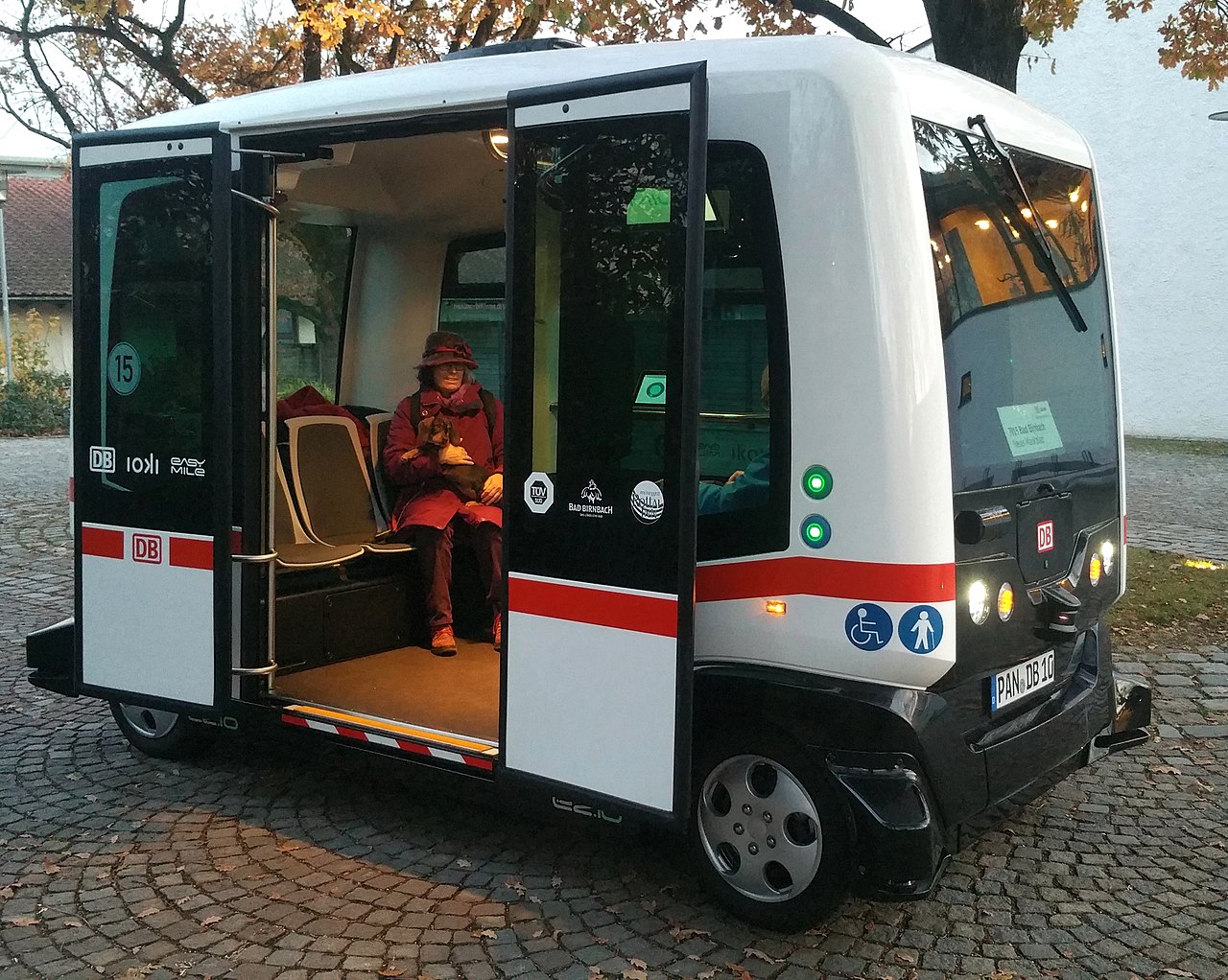




Key components and capabilities
Modern self-driving systems integrate several technologies to function together. Typical elements include:
- Sensors: devices such as cameras, radar, ultrasonic sensors and LiDAR that gather data about the vehicle's surroundings. See general sensor concepts at sensors.
- Positioning and maps: GNSS (GPS) combined with high-definition maps and localization algorithms to determine precise position on a roadway.
- Perception and prediction: software that classifies objects, predicts their likely motion and interprets traffic signals, signs and lane markings.
- Planning and control: path planning, decision-making logic and low-level controllers that execute maneuvers like lane keeping, speed regulation and parking.
- Connectivity and updates: communications for remote monitoring, map updates and fleet coordination.
Levels and real-world examples
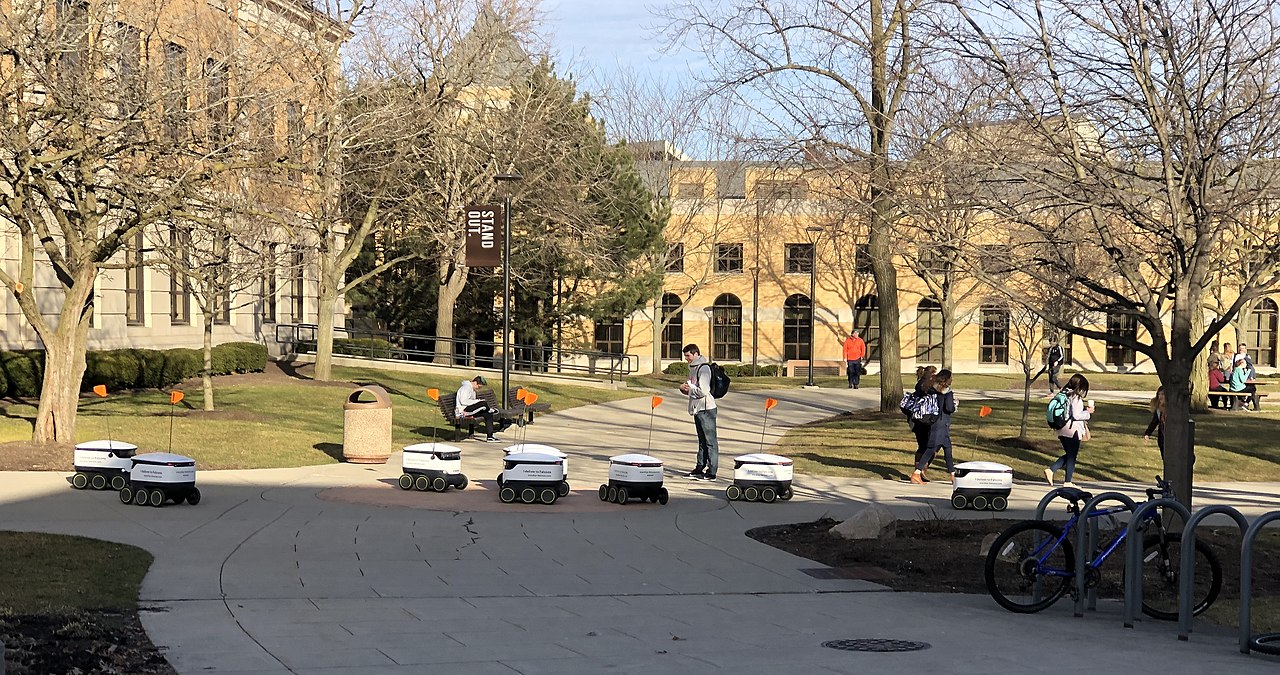
Industry frameworks often describe autonomy on a scale that ranges from driver assistance to full self-driving. Many deployed systems provide limited automation—assistance with steering or speed, automated parking, or supervised route-following on defined corridors. For instance, some shuttle services and buses operate preset routes in controlled environments; such services may transport passengers between fixed points like airport terminals or campus locations. The general concept of the machine as a vehicle performing tasks has led to experimentation in logistics, public transit and private vehicles.
History and development
Research on automated driving goes back decades, with early experiments in lane keeping and adaptive cruise control. Advances in sensor technology, machine learning and computing power during the 2010s accelerated development. Companies, universities and governments have since run pilot programs, test fleets and trials on public roads under regulatory oversight. Real-world testing has frequently been limited to specific conditions—such as mapped city zones, low speeds or accompanied operation—while engineers continue to address edge cases and safety validation.
Uses, benefits and considerations
Potential uses include reducing driver workload, improving mobility for people who cannot drive, increasing road capacity and enabling new services like robotaxi fleets. However, deployment raises technical, legal and social questions: how to certify safety, manage cybersecurity, assign liability after incidents, and integrate with pedestrians and human drivers. Many jurisdictions are creating regulations and pilot-permit frameworks to allow controlled operation while requirements and standards evolve.
Different projects and service types illustrate the range: driver-assist features that help maintain speed and lane, automated parking systems, shuttle buses following a predetermined route, and experimental on-demand ride services. Practical implementations often blend automated functions with a human safety driver or remote supervision; for broader adoption, systems must reliably handle rare and complex traffic situations. For additional context about human involvement in current systems, see human role.
For more technical background and ongoing developments, introductory resources and industry overviews are available at industry resources and other technical summaries.
Related articles
Author
AlegsaOnline.com Self-driving car Leandro Alegsa
URL: https://en.alegsaonline.com/art/28959
Sources
- dx.doi.org : 10.1109/IROS.1999.811692