
DualShock: Sony's iconic vibration controller for PlayStation
The DualShock is Sony's dual-motor vibration controller introduced for the PlayStation line in the late 1990s. It combined analog sticks, pressure-sensitive buttons and force feedback that influenced modern gamepad design.
Overview
The DualShock is a widely recognized video game controller created by Sony for the PlayStation family of consoles. It introduced integrated vibration feedback driven by two eccentric rotating mass motors, one in each grip, which produce synchronized shaking effects during gameplay. The name "DualShock" reflects the twin motors and the unit's ability to produce directional rumble.
Image gallery
10 Images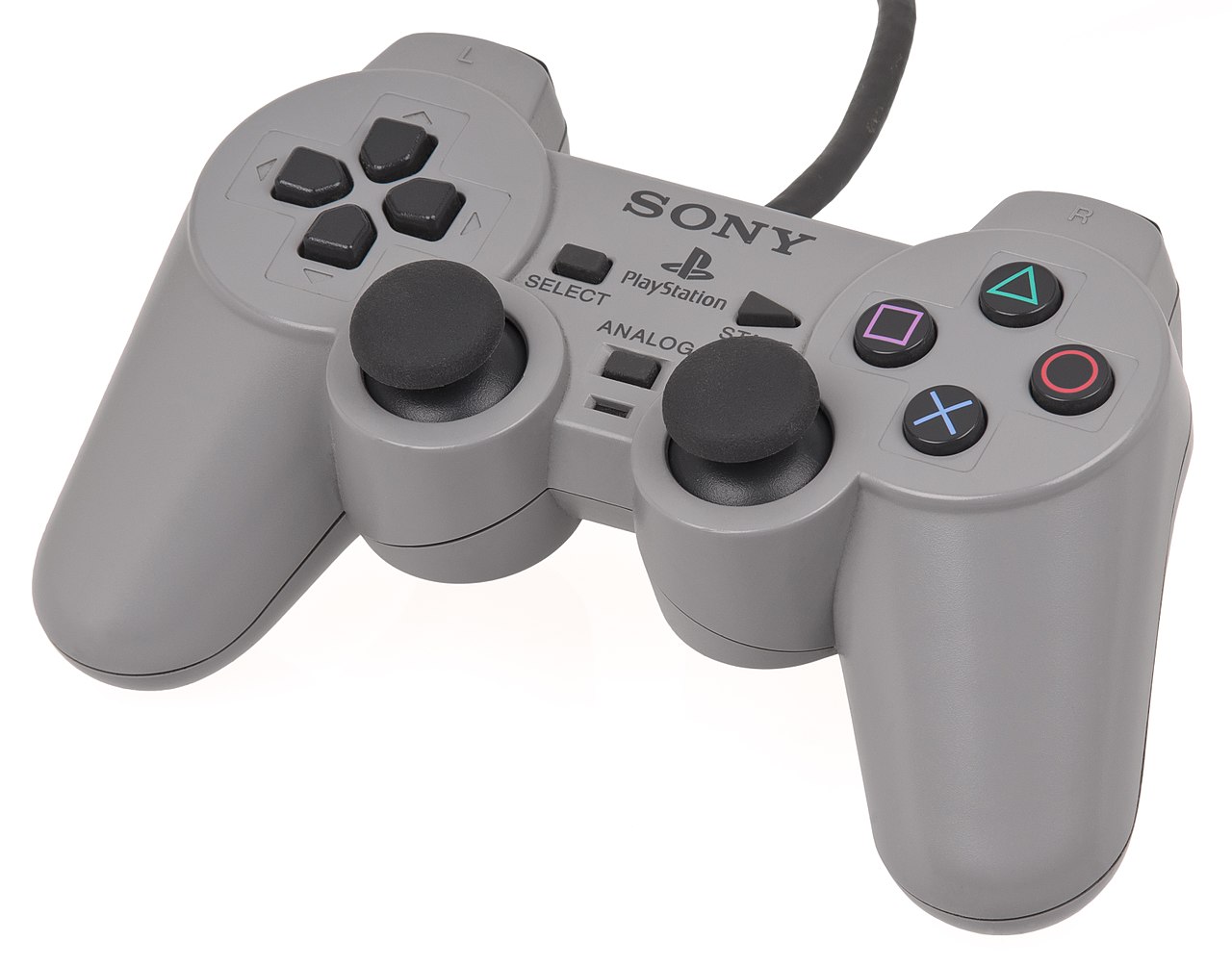



Design and key features
Built to be a comfortable, all-purpose gamepad, the DualShock combined traditional button layouts with then-emerging innovations. Important elements include:
- Analog sticks: Twin thumbsticks for full 360° input and finer movement control.
- Shoulder triggers: Ergonomic L and R inputs for additional in-game controls.
- Dual vibration motors: Left and right motors allow varied intensity and directional sensation.
- Standard face buttons and D-pad: Maintained compatibility with existing PlayStation titles.
History and development
Sony first released the DualShock in Japan in 1997 and followed with a wider launch in North America in 1998. Early PlayStation controllers lacked active force feedback; the DualShock integrated tactile vibration to add immersion. Over successive console generations Sony refined the concept, adapting the DualShock name and layout while adding wireless and motion-sensing variants.
Technical notes and operation
The rumble effect is generated by small offset-weight motors whose speed and timing are controlled by the console and game software. Developers trigger patterns to match events such as collisions, explosions, or surface textures. Because the motors can run at different intensities, the controller can suggest directionality or subtle, asymmetric sensations.
Impact, uses and distinctions
DualShock-style vibration became a standard expectation for modern controllers and influenced competing designs. It elevated tactile feedback from a novelty to a deliberate design tool for enhancing realism, accessibility, and player feedback. The DualShock remains a milestone in controller evolution, bridging simple digital pads and today’s feature-rich gamepads.
For more background on controllers and PlayStation hardware, see general references on video game controllers and company histories such as Sony and the PlayStation line. The initial release was in Japan before reaching markets including North America.
Related articles
Author
AlegsaOnline.com DualShock: Sony's iconic vibration controller for PlayStation Leandro Alegsa
URL: https://en.alegsaonline.com/art/29077