
Elmer Fudd (Looney Tunes character)
Elmer Fudd is a fictional hunter from Warner Bros.' Looney Tunes, known for pursuing Bugs Bunny and Daffy Duck, his distinctive speech, and his comic role as an inept pursuer in animated shorts and adaptations.
Overview
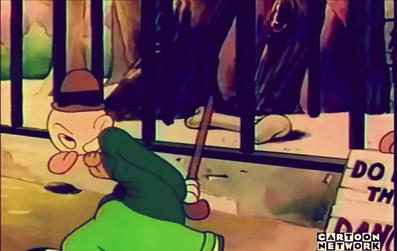
Elmer Fudd is a cartoon hunter and comic foil best known for his attempts to capture Bugs Bunny and, on occasion, Daffy Duck. Typically depicted as short, round-faced and balding, he wears a hunting outfit and is often shown carrying a shotgun. His personality combines earnestness with bumbling incompetence, and he is widely remembered for a distinctive speech pattern and a quiet-before-the-hunt catchphrase frequently quoted in popular culture.
Image gallery
5 Images


Characteristics and recurring gags
Elmer’s humor relies on a set of repeating elements that define his role across many cartoons:
- Speech pattern: A softened or altered pronunciation (often rendering "r" and "l" sounds in a characteristic way) that contributes to his comic identity.
- Appearance: Simple hunter’s clothes—cap, jacket and boots—and an expressive, rounded face designed for animation.
- Gags: Slapstick mishaps, failed ambushes, and elaborate attempts at trapping that backfire are common.
- Catchphrases: Lines delivered in a stylized patter, notably the quiet-before-the-hunt remark that has become an iconic bit of animation lore.
History and development
Created at the Warner Bros. animation unit, Elmer Fudd evolved from earlier, similar characters used in theatrical cartoons of the late 1930s and 1940s. Animators refined his look and timing over successive shorts so that he became the standard straight man to Bugs Bunny’s anarchic trickery. The character was adapted for television and print, and his design and scenarios were occasionally updated for later audiences while keeping the core traits intact.
Voice and portrayal
Several voice actors have portrayed Elmer across different eras. Arthur Q. Bryan is closely associated with the classic theatrical shorts and helped define the character’s vocal mannerisms. In later revivals, other performers have taken on the role for television specials, films and merchandising, preserving the recognizable speech and comedic timing.
Appearances and cultural role
Elmer Fudd appears primarily in short animated films from the Looney Tunes series and in subsequent compilations, features, and television programs. As an archetype of the well-meaning but ineffectual pursuer, he has become a recurring reference in broader popular culture, used to illustrate themes of role reversal, trickery, and comic justice. His image and routines have been reproduced in toys, books and various media, and the character continues to be cited in discussions of classic American animation. For studio history and further context see related resources.
Related articles
Author
AlegsaOnline.com Elmer Fudd (Looney Tunes character) Leandro Alegsa
URL: https://en.alegsaonline.com/art/30996