
Discourse analysis
Study of language beyond the sentence: how texts and conversations create meaning in social context, including methods, history, applications, and key concepts in linguistics and related fields.
Overview
Discourse analysis is the study of language use in texts and conversations as they occur in real life. Rather than focusing on individual sentences or abstract grammatical rules, discourse analysis examines stretches of language — spoken or written — and how they function together to produce meaning. Practitioners investigate how participants manage topics, turn-taking, coherence and the relationships between language and social context. For representative resources and sample materials see a text example or conversational datasets such as conversation corpora.
Image gallery
2 Images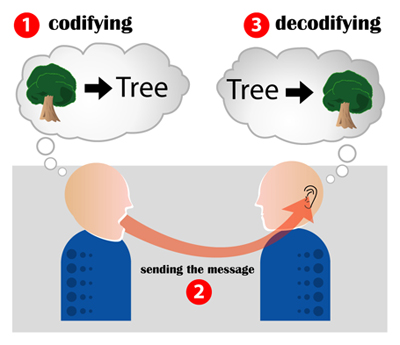

Key concepts and components
Important concepts include cohesion (linguistic links between sentences), coherence (overall sense and logical connections), context (situational, social and cultural background), and genre (the conventional form of a text). Discourse analysts also attend to pragmatics (how context shapes meaning), speech acts (promises, requests, assertions), and the role of modality, stance and register. The study intersects with traditional branches like syntax and semantics; for how it contrasts with sentence-level study see linguistics resources and discussions of syntax.
Methods and approaches
Researchers use a variety of methods, often combining qualitative and quantitative work. Common approaches include:
- Conversation analysis: micro-level study of talk-in-interaction and turn-taking.
- Critical discourse analysis: examining power, ideology and social inequality in language.
- Corpus-based discourse analysis: using large collections of authentic texts to identify patterns.
- Interactional sociolinguistics: linking language patterns to social identities and contexts.
Method choice depends on the question: describing conversational structure differs from exposing ideological framing in political texts.
History and development
The field developed through mid-20th-century shifts toward studying language in context. Influences include pragmatics, ethnography of communication and structuralist and post-structuralist thought. Over time it has diversified into subfields that borrow from sociology, anthropology and psychology; see connections to sociology, anthropology and psychology. Interdisciplinary journals and corpora have supported methods such as corpus linguistics and conversation analysis.
Applications and importance
Discourse analysis is applied in many domains: education (classroom interaction), media studies (news framing), translation and interpretation, legal discourse, health communication, and computational fields such as natural language processing. Practitioners help clarify how messages are constructed, how meaning is negotiated among participants, and how language both reflects and shapes social relations. For its role in communication research see communication studies.
Distinctions and practical notes
Discourse analysis differs from text linguistics by explicitly linking textual features to broader social context and the intentions of speakers or writers. It is not a single method but a family of perspectives; analysts must be explicit about their theoretical stance and data selection. Because discourse often depends on shared cultural knowledge, findings are best understood as context-sensitive rather than universally generalizable.
Further reading and entry points can be found through introductory summaries and annotated corpora available at genre studies and related repositories. For pragmatic or comparative work, researchers frequently combine multiple approaches to capture both structure and social meaning.
Related articles
Author
AlegsaOnline.com Discourse analysis Leandro Alegsa
URL: https://en.alegsaonline.com/art/27655