
Digital audio: principles, formats, and practical uses
An accessible overview of digital audio: how sound is converted, common formats (uncompressed, lossless, lossy), key technical ideas, history, and typical uses and devices.
Overview
Digital audio is sound represented in a discrete numeric form so it can be stored, edited and played by computers and electronic devices. Rather than a continuous electrical waveform, the acoustic signal is sampled and encoded as numbers. Those numbers can be kept as raw, uncompressed data, reduced without losing information, or compressed with some loss of fidelity to save storage and bandwidth.
Image gallery
5 Images



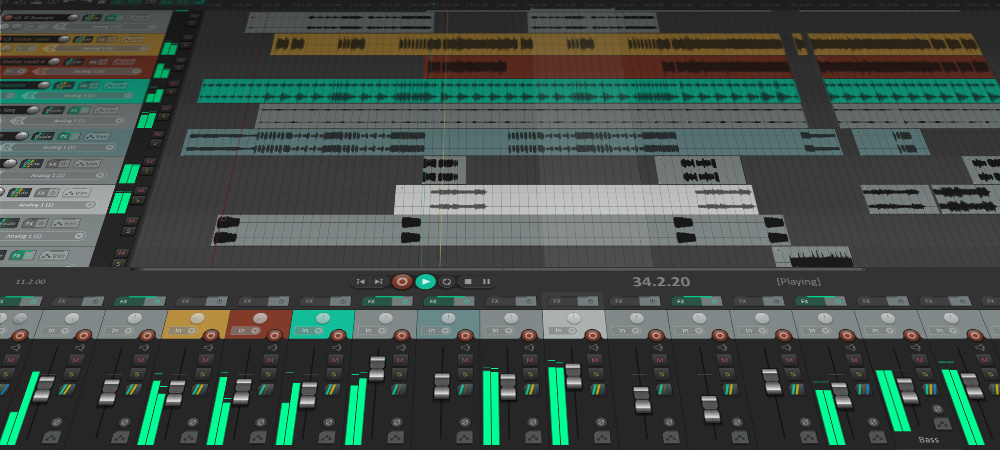
How digital audio is made
Conversion from an analogue waveform into digital data is performed by an analog-to-digital converter (ADC). The ADC measures the signal's instantaneous amplitude at regular intervals called the sample rate. Common consumer sample rates include 44100 Hz and 48000 Hz, meaning 44,100 or 48,000 measurements per second. Each measurement is quantized to a finite number of bits (bit depth), for example 16-bit or 24-bit, producing binary integers that represent the waveform values; these are the numbers stored in files or streams. When playback is required, a digital-to-analog converter (DAC) reconstructs a continuous waveform from the stored samples.
Key technical concepts
The fidelity of the digital reproduction depends on two main parameters: sample rate and bit depth. The Nyquist–Shannon sampling theorem states that a sample rate must be at least twice the highest frequency present in the signal to allow accurate reconstruction, which is why 44.1 kHz has been a common choice for music. Bit depth controls dynamic range and quantization noise; higher bit depths reduce the audible error introduced by rounding samples. Practical systems also use techniques such as dither to mask quantization distortion.
Formats and compression
Digital audio is stored in many file formats and containers. They fall into three broad categories:
- Uncompressed: raw pulse-code modulation (PCM) as found on standard audio CDs — an example is the Red Book CD format, typically 44.1 kHz/16-bit. CDs store PCM without compression.
- Lossless compression: reduces file size while preserving the original samples exactly when decoded. Popular lossless formats include FLAC and ALAC.
- Lossy compression: achieves greater size reduction by discarding information judged to be less perceptible. MP3 and AAC are common lossy codecs used for consumer distribution and streaming. See an example codec: MP3 files.
Devices, playback and common uses
Digital audio files and streams are widely playable on many devices: portable MP3 players, desktop and laptop computers, tablets and smartphones, as well as networked media players and dedicated audio equipment. Professional studios use high-resolution digital formats for recording and mixing, while streaming services and consumer downloads favor compressed formats to reduce storage and bandwidth requirements.
Historical notes and notable facts
The practical development of digital audio accelerated in the mid-20th century with pulse-code modulation research and became mainstream with digital recording, the introduction of commercially successful compact discs in the 1980s, and later the rise of digital codecs and portable players in the 1990s and 2000s. The conversion process turns analogue amplitude measurements into sampled amplitudes and then into binary numbers that computers can manipulate. Understanding these basics helps explain trade-offs among file size, quality, and system latency in recording, distribution, and consumer playback.
Further considerations
When choosing formats and settings, consider the intended use: archival and professional work typically require higher sample rates and bit depths or lossless formats; consumer distribution and streaming prioritize efficiency and compatibility. Additional topics for deeper study include psychoacoustics (how humans perceive sound), codec design, and the role of metadata and containers in organizing multichannel audio and associated information.
Related articles
Author
AlegsaOnline.com Digital audio: principles, formats, and practical uses Leandro Alegsa
URL: https://en.alegsaonline.com/art/27372