
Alive! — Kiss (1975) live album
Alive! is Kiss's first live album, released in 1975. It captures the band's theatrical stage show and high-energy performances and served as the group's major commercial breakthrough.
Overview
Alive! is the fourth overall release by the American hard rock band Kiss and their first official live album. Released in 1975, it presents a condensed representation of the group's concert set from that era, emphasizing spectacle, driving rhythms and singalong choruses. The record helped introduce Kiss's stage persona to a wider audience and altered the band's commercial trajectory. For a basic reference see album entry.
Image gallery
1 Image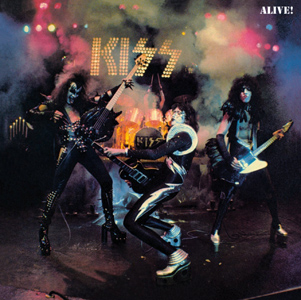
Recording and production
The album was compiled from multiple concert recordings and later refined in the studio. Mixing and selective overdubs were used to tighten performances and improve sonic clarity, a common practice for large-scale live albums of the period. Production choices aimed to reproduce the immediacy of a Kiss show while producing a record suitable for radio and home listening. Details about the band and its approach are discussed in many band profiles and contemporary accounts (production notes).
Content and notable tracks
Much of the track list draws from Kiss's first three studio albums and showcases signature numbers. The live rendition of "Rock and Roll All Nite" became particularly associated with the band's image and airplay success. Other fan favorites and stage staples are represented, giving listeners a concentrated sense of the live set. See a sample track list and credits at track details.
Release, reception and impact
Upon release the record attracted attention for capturing Kiss's theatricality and raw stage energy. It is widely credited with expanding the group's audience and catalyzing higher record sales and larger concert bookings. Reviews at the time noted both the vitality of the performances and the polished production, while later retrospectives often cite the album as a turning point in Kiss's career. Contemporary press and chart histories can be consulted via press archive and chart summaries.
Legacy and distinguishing features
Alive! has come to be regarded as an influential live rock record that balanced concert atmosphere with studio craft. It helped codify Kiss's stage identities and contributed to the broader 1970s arena-rock aesthetic. For further reading on the album's place in rock history and its subsequent reissues, see historical overview, reissue notes, and legacy essays.
- Why it matters: Breakthrough exposure and a bridge between live spectacle and commercial recordings.
- Key characteristics: High-energy performances, crowd interaction, studio overdubs used sparingly to enhance sound.
- Notable songs: Live staples that defined the band's concert identity.
Related articles
Author
AlegsaOnline.com Alive! — Kiss (1975) live album Leandro Alegsa
URL: https://en.alegsaonline.com/art/2650