
All Quiet on the Western Front
A concise encyclopedia entry on Erich Maria Remarque's novel All Quiet on the Western Front: its narrative, themes, publication history, reception, adaptations and lasting cultural impact.
Overview
All Quiet on the Western Front is a landmark anti‑war novel originally published in German as Im Westen nichts Neues. Written by the German author Erich Maria Remarque, it presents a first‑person account of young soldiers on the Western Front during the First World War. The book is known for its spare, direct prose and its sustained focus on the physical and emotional cost of modern industrialized warfare.
Image gallery
4 Images
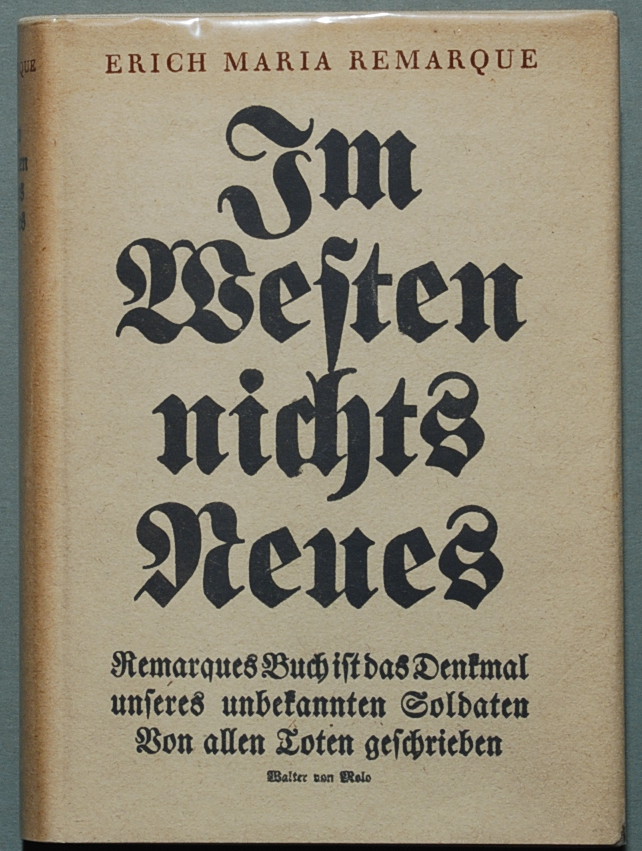


Content and main characters
The story is told by Paul Bäumer, a teenage infantryman who enlists with classmates and experiences the daily realities of life at the front: bombardment, muddy trenches, shortages, and the death of comrades. Rather than an extended plot arc, the novel is episodic, recording moments of combat, furlough, injury, and reflection. Intimate scenes of friendship and loss give the narrative its human core and underline the collapse of prewar ideals among the surviving soldiers.
Themes and style
Central themes include the futility of war, the destruction of youth, alienation from civilian society, and the erosion of nationalistic rhetoric. Remarque employs concise, unadorned language and vivid sensory detail to convey exhaustion and trauma. The book resists romanticization of combat and highlights the gap between homefront propaganda and soldier experience.
Publication, reception, and controversy
First published in 1929, the novel quickly became internationally influential and translated into many languages. It provoked strong reactions: praised for its realism and humanitarian message, it was also attacked by nationalist critics and later targeted by the Nazi regime for its perceived anti‑war and anti‑nationalist stance. For contemporary context and the author's life, see a brief biography link: Remarque overview.
Adaptations and legacy
All Quiet on the Western Front has been adapted for stage and film multiple times. These adaptations vary in approach but generally preserve the novel's central critique of war and its focus on soldierly camaraderie. The book remains a staple of twentieth‑century literature courses and is frequently cited in discussions of war literature, veterans' experiences, and anti‑war movements.
Notable facts
- The novel helped define the genre of modern war fiction and influenced later writers who explored combat trauma.
- Its plainspoken narrative and emphasis on ordinary soldiers distinguish it from works that emphasize strategic or political perspectives.
- Because of its historical and cultural significance, it continues to be studied, adapted, and debated in literary and historical contexts.
Tags
Related articles
Author
AlegsaOnline.com All Quiet on the Western Front Leandro Alegsa
URL: https://en.alegsaonline.com/art/2710