
Delta (Greek letter Δ / δ): forms, history, and common uses
Overview of the Greek letter delta (Δ, δ): its phonetic value, numeric role, historical descendants, mathematical and scientific meanings, and the river-delta name connection.
Overview
Delta is the fourth letter of the Greek alphabet, written as uppercase Δ and lowercase δ. It represents the "d" consonant in both Ancient and Modern Greek. As part of the alphabet it also served as a numeral, where its value corresponds to four in the system of Greek numerals. The symbol and its sounds are central to the alphabetic heritage that produced several letters in other writing systems, including the Latin D and the Cyrillic Д (see Greek alphabet).
Image gallery
1 Image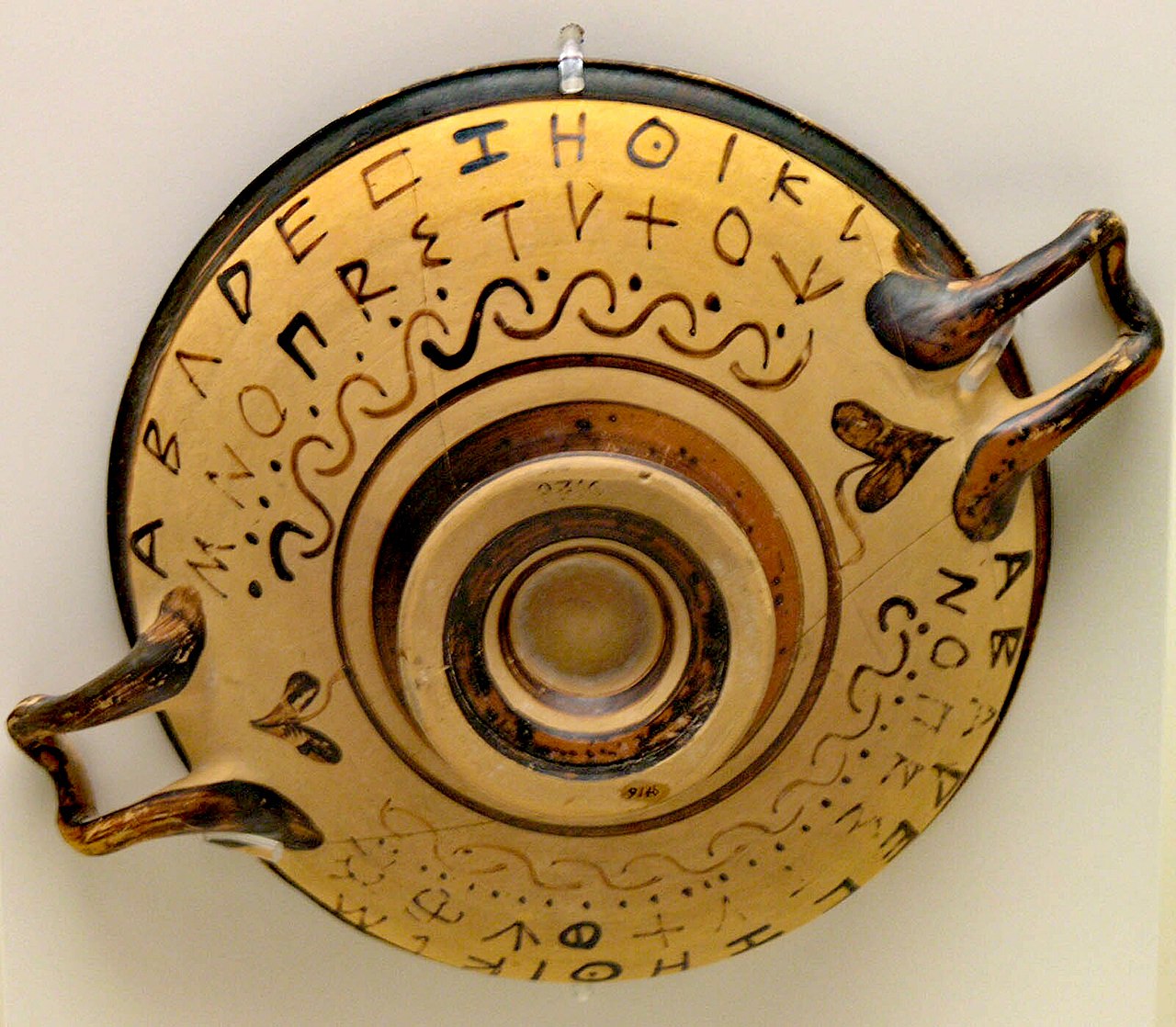
Forms and notation
Delta appears in two main forms: the triangular uppercase Δ and the looped lowercase δ. These shapes are used widely beyond linguistics. The upright triangle is often used as a symbol for a finite change or difference in a quantity (for example, Δx) in mathematics and applied sciences. The lowercase δ frequently denotes a small quantity, a partial value, or a special parameter; in chemistry it can indicate a partial electric charge. Illustration placeholders: and .
Historical development
Delta originated from the Phoenician letter dalet, like many early Greek letters. Over time the character evolved graphically from a more angular form to the versions familiar today. Its phonetic role as a dental voiced stop (the sound /d/) has been stable across most historical stages of Greek. The Greek alphabet in general provided models for several writing systems; the connection between delta and the Latin D and Slavic Д illustrates this diffusion. For background on the language contexts, see Ancient and Modern Greek.
Uses and examples across disciplines
Delta is a multipurpose symbol used in many fields. Some of the most common applications include:
- Mathematics: Uppercase Δ denotes a finite change (difference) or a geometric triangle; it also stands for a discriminant in polynomial equations, an expression that helps determine the number and type of roots (polynomial roots) and other algebraic properties (mathematics).
- Analysis and calculus: Lowercase δ appears in limit proofs and the epsilon–delta definition of limits, where it marks small positive tolerances in arguments about continuity and convergence (proofs, limits, calculus).
- Chemistry and physics: A lowercase δ is commonly used to signal a partial electric charge on an atom within a molecule (a charge smaller than a full ionic charge), and uppercase delta can denote changes in thermodynamic quantities.
- Geography: The landform called a river delta—where a river fans out and deposits sediment at its mouth—is named for its roughly triangular outline, reminiscent of uppercase Δ (river delta).
Notable distinctions and facts
Although delta is visually simple, its meaning depends heavily on context. Uppercase and lowercase are not interchangeable: Δ often signals a finite or discrete difference, while δ tends to indicate an infinitesimal, a partial quantity, or a parameter in technical notation. In Greek numerals the letter carries the numeric value 4, a use that reflects an ancient practice of assigning numbers to letters. Because of its widespread symbolic roles, delta appears in scientific notation, engineering formulas, linguistic descriptions, and everyday references (for example, place names and brand names inspired by the triangular motif).
Further reading
For more details on the alphabetic history, notation conventions, and specific applications consult general references on the Greek alphabet, historical treatments of Ancient and Modern Greek, introductions to mathematics and calculus, and specialized discussions of polynomial discriminants and river deltas.
Related articles
Author
AlegsaOnline.com Delta (Greek letter Δ / δ): forms, history, and common uses Leandro Alegsa
URL: https://en.alegsaonline.com/art/26451