
Danelaw — Viking-era districts of northern and eastern England
The Danelaw refers to the parts of England under Scandinavian law and settlement from the late 9th to early 11th centuries, notable for place‑names, legal customs, and Norse cultural influence.
The Danelaw is a historical term used by medieval writers to describe the parts of northern and eastern England where Scandinavian (mainly Danish and Norse) settlers held political power and where local customs were strongly influenced by Norse practice. The name itself comes from Old English and Old Norse sources; see the traditional form often cited as Dena lagu or Danelagen. Geographically the zone covered substantial portions of what are now Yorkshire, Lincolnshire, East Anglia and parts of the Midlands and Northumbria, an area discussed in many modern accounts of the region.
Image gallery
4 Images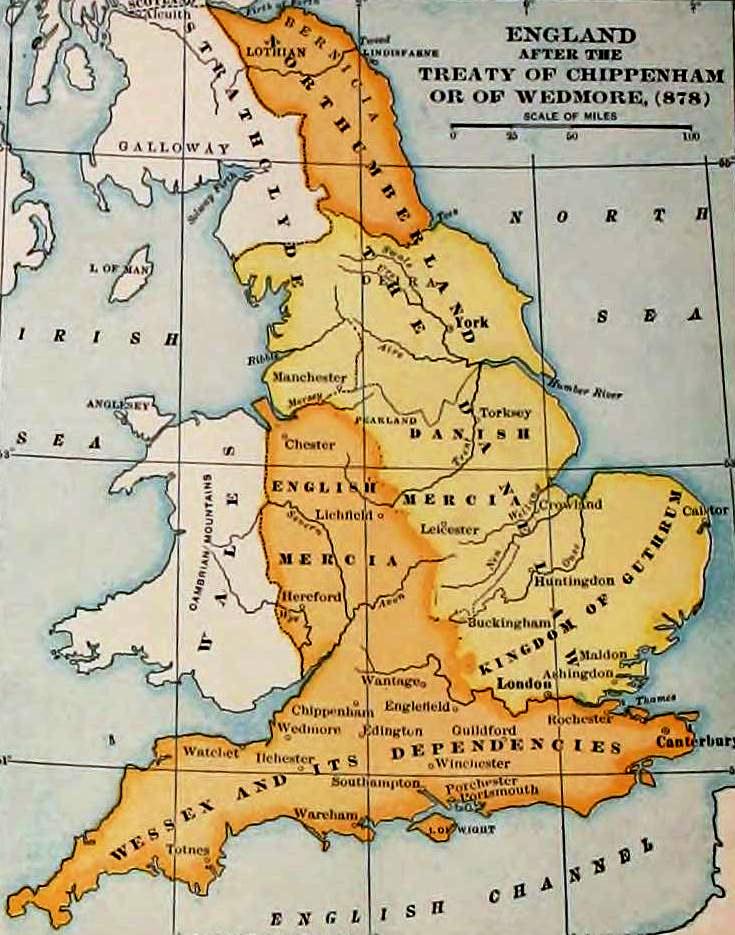


Characteristics and administration
Within the Danelaw distinct legal and administrative practices developed or continued under Scandinavian influence. Assemblies similar to the Norse thing met to decide disputes; administrative units often used the term "wapentake" in place of the Anglo‑Saxon "hundred." Local law codes and custom sometimes recorded different fines and procedures from those in Anglo‑Saxon England. Economically and socially the area combined farming settlements with important trading towns, especially ports and river hubs where Norse traders and settlers concentrated.
Origins and historical development
Scandinavian incursions increased after the mid‑9th century, and a large force known as the Great Heathen Army established power in England. Following years of conflict and negotiated settlements in the late 9th century, Anglo‑Danish frontiers emerged. Contemporary and later sources frame the period of distinct Danelaw authority as lasting from that late 9th‑century settlement until the early 11th century, when kings such as Cnut brought wider political unification under a Danish monarch; see discussions of the chronology late 9th century to early 11th century. Administrative control and the precise boundaries were variable and the label "Danelaw" itself becomes more common in 11th‑century writing about governance.
Legacy: language, place‑names and towns
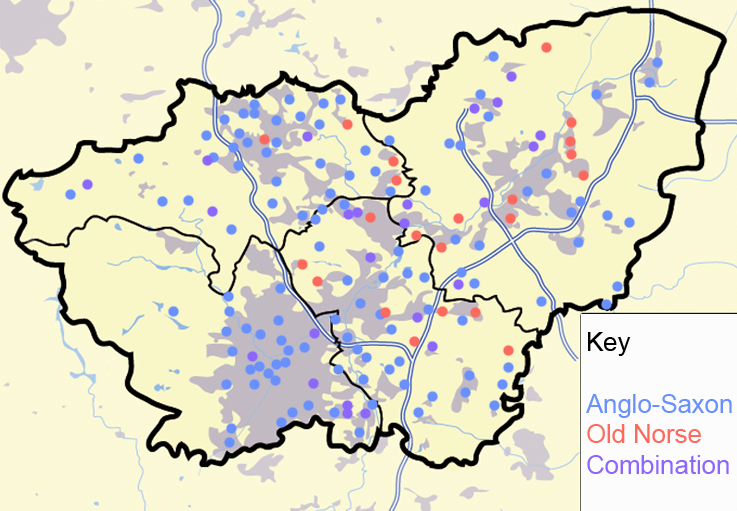
One of the clearest legacies of the Danelaw is the survival of Norse elements in English place‑names and vocabulary. Many English towns and villages retain Scandinavian suffixes such as:
- -by (farm, village)
- -thorpe / -thorp (secondary settlement)
- -thwaite (clearing)
- -toft and -holm (site types)
Urban centres like York (Old Norse Jorvik) became important cultural and economic nodes. Archaeology, charters and later legal texts preserve evidence of bilingualism, trade links across the North Sea and mixed Anglo‑Scandinavian communities.
Notable facts and distinctions
The Danelaw was not a single uniform state but a mosaic of lordships, towns and rural districts where Scandinavian elites and settlers shaped local life. Boundaries were approximate and shifted with warfare and diplomacy; classic dividing lines in historical accounts often align roughly with Roman roads such as Watling Street and river systems. Modern interest in the Danelaw centers on how it exemplifies cultural contact, legal pluralism and the long influence of Norse settlement in England. For further reading on legal and cultural aspects see introductory resources on the Danes and overviews of the topic in scholarly summaries or primary‑source translations and collections.
Scholars continue to refine the picture drawn from chronicles, place‑name studies and archaeology, so interpretations of the Danelaw's extent and institutions remain active subjects of research in medieval studies.
Related articles
Author
AlegsaOnline.com Danelaw — Viking-era districts of northern and eastern England Leandro Alegsa
URL: https://en.alegsaonline.com/art/25357