
Cumberland County, New Jersey
Coastal and agricultural county in southern New Jersey centered on Bridgeton, noted for tidal marshes, Delaware Bay shoreline, fertile farmland, small cities like Vineland and Millville, and mixed maritime‑industrial economy.
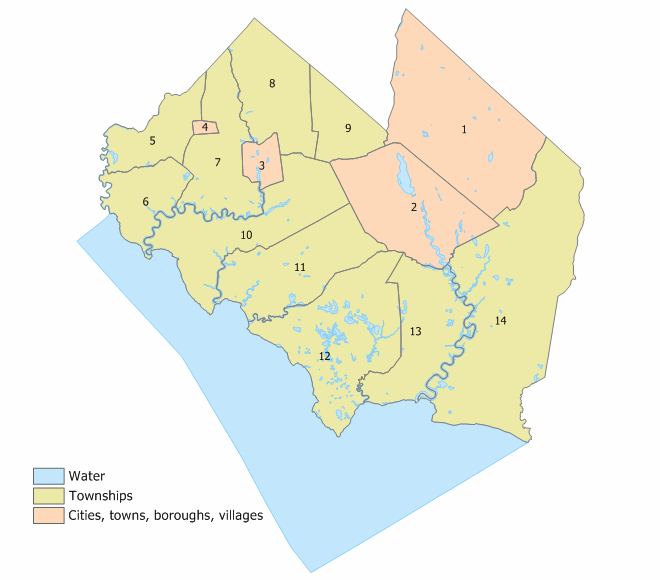
Cumberland County is a county in the U.S. state of New Jersey. It occupies a largely rural and coastal portion of the state and combines small cities, boroughs and townships with extensive farmland and tidal marshes. The county government is centered in the county seat, the city of Bridgeton, which serves as a regional hub for courts, public records and local services.
Image gallery
6 Images


Geography and natural features
The county’s landscape includes lowlands and estuaries that drain to Delaware Bay, tidal marshes important for wildlife, and inland agricultural plains. Several rivers and streams pass through the county, creating habitats for fish, migratory birds and shellfish. Coastal areas and preserved wetlands attract birdwatchers, anglers and others interested in outdoor recreation and conservation.
History and settlement
Indigenous peoples used the coastal and riverine resources here before European settlement. Over time, colonial-era towns and farms developed along navigable waterways and roads. In the 19th and 20th centuries, small manufacturing enterprises, mills and shipyards grew alongside agriculture, leaving a mix of historic downtowns and industrial sites that reflect the county’s layered past.
Economy and land use
Agriculture remains a pillar of the local economy: vegetable crops, nurseries and poultry production are commonly cultivated on the county’s fertile soils. At the same time, light manufacturing, maritime operations and small businesses provide employment in urban centers such as Vineland and Millville. Tourism tied to heritage events, local festivals and coastal nature attracts visitors seasonally.
Government, communities and services
Cumberland contains a range of municipal forms—cities, townships and boroughs—each managing local services such as schools and zoning while the county oversees courts, public health and regional planning. Transportation links, including regional roadways and local transit connections, support commuting, commerce and access to recreational areas.
Conservation and culture
Land-use planning in the county balances economic development with preservation of wetlands, farmland and historic sites. Community festivals, historic districts and outdoor recreation opportunities are notable features that contribute to local identity and quality of life.
- Coastline and tidal marshes provide important wildlife habitat and recreation.
- Farming, nurseries and poultry production are significant economic activities.
- Historic towns and mixed industrial-maritime heritage shape the cultural landscape.
Related articles
Author
AlegsaOnline.com Cumberland County, New Jersey Leandro Alegsa
URL: https://en.alegsaonline.com/art/24637