
Cunene Province, southern Angola
Cunene is a southern province of Angola, named for the Cunene River. Its capital and only city is Ondjiva. The province is sparsely populated, with a largely rural economy based on livestock and subsistence farming.
Overview
Cunene is a province in the far south of Angola, named after the Cunene River that marks part of the international boundary with Namibia. The provincial capital and principal urban centre is Ondjiva. Population estimates vary, commonly cited in the range of roughly 200,000 to 300,000 people, and much of the territory remains sparsely settled.
Image gallery
3 Images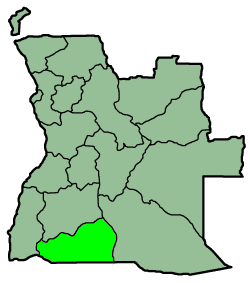


Geography and environment
The province occupies a semi-arid to dry savanna belt with scattered woodlands and seasonal rivers. The Cunene River is the most important hydrological feature in the region, influencing local agriculture, fishing and cross-border relations. Soils and rainfall are uneven, producing a mix of grazing land and areas suitable for drought-tolerant crops.
Economy and society
Livestock raising, especially cattle, is a central livelihood across Cunene, complemented by subsistence farming and small-scale trade. Many communities follow pastoral or agropastoral lifestyles. Ondjiva functions as the main market and administrative hub; outside the city, settlements are predominantly rural and often based on traditional social structures.
History and development
Before colonial rule the area was home to several pastoralist and farming societies. During the 20th century it experienced Portuguese administration and later disruption from Angola’s independence and civil conflict. Reconstruction and development efforts since the end of large-scale hostilities have focused on reconnecting rural areas, rebuilding infrastructure and restoring services.
Notable features and challenges
- Cross-border ties with Namibia are important for trade and family connections.
- Cunene’s dry climate and variable rainfall create vulnerabilities to drought and food insecurity.
- Traditional cultures and languages remain strong, offering cultural tourism potential if infrastructure improves.
The province is significant for its pastoral economies, its strategic position along the Cunene River, and ongoing post-conflict recovery that aims to balance development with traditional livelihoods.
Related articles
Author
AlegsaOnline.com Cunene Province, southern Angola Leandro Alegsa
URL: https://en.alegsaonline.com/art/24662