
Crested penguin (genus Eudyptes)
Crested penguins (genus Eudyptes) are yellow-crested, black-and-white seabirds of subantarctic islands, notable for head plumes, red bills and a two-egg breeding system with brood reduction.
Overview
The name crested penguin is applied to members of the genus Eudyptes, a group of medium-sized penguins native to the Southern Hemisphere. These birds are generally black above and white below and are best known for conspicuous yellow head plumes or crests and often reddish bills and eyes. Crested penguins are marine predators that forage at sea for crustaceans, small fish and squid, and they form dense breeding colonies on rocky shores and tussock-covered slopes.
Image gallery
10 Images


Physical characteristics
Crested penguins share several adaptations for a life in cold, productive waters: streamlined bodies, stiff flippers for underwater propulsion, and dense plumage for insulation. The yellow crest feathers vary in shape and placement by species, sometimes forming tufts above the eyes or a halo-like band. Sexes are similar in plumage, with males typically slightly larger on average in some species.
Species and taxonomy
Taxonomic treatments differ and experts do not always agree on the number of species or the rank of some island forms. Well-known members usually placed in the group include the macaroni penguin and several island-restricted species and forms often called rockhopper penguins. Other commonly recognised taxa include the royal, erect-crested, Snares and Fiordland penguins. For summaries of classification and species limits see general penguin references and specialised taxonomic resources.
Distribution and habitat
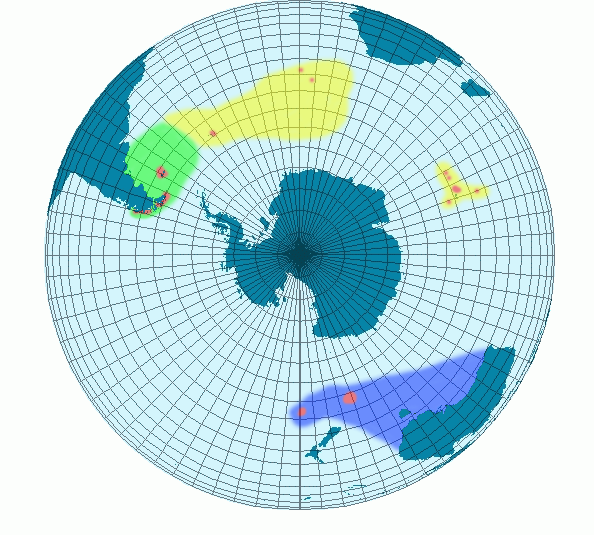
Most crested penguins breed on subantarctic islands and nearby temperate islands scattered across the Southern Ocean. Some species or populations are restricted to single archipelagos or a handful of islands, which contributes to their vulnerability. Historical records note that a population on the Chatham Islands may have been lost during the 19th century.
Behaviour and diet
Crested penguins are social at breeding colonies and often travel and forage in groups at sea. Their diet is dominated by small marine organisms such as krill and other crustaceans, with fish and cephalopods taking a larger role in some populations or seasons. They are capable divers and typically forage within a range that reflects local ocean productivity and prey distribution; in many areas they make repeated short trips to sea while breeding.
Breeding and life cycle
A characteristic feature of crested penguins is a two-egg clutch in which the first-laid egg is markedly smaller than the second. Although two eggs are laid, normally only one chick survives to fledging in most breeding seasons; the smaller first egg rarely produces the surviving young, a pattern described as brood reduction. Parents share incubation and chick-rearing duties, alternating time at sea feeding and time ashore guarding and brooding chicks.
Conservation
Many crested penguin populations face threats from changing ocean conditions, shifts in prey availability, fisheries interactions such as bycatch, oil pollution and introduced predators at breeding sites. Small, isolated colonies are particularly susceptible to disturbance and invasive mammals. Conservation measures used across their range include protection and management of breeding islands, eradication or control of introduced predators, fisheries regulation, and ongoing population monitoring. Because crested penguins occupy a middle trophic level and respond to changes in marine ecosystems, they are often used as indicators in seabird and oceanographic studies.
Human interactions and research
Historically, some populations declined following human exploitation and the introduction of mammals to breeding islands. Today research on crested penguins covers ecology, foraging behaviour, breeding biology, population trends and the impacts of climate variability. Conservation priorities vary by region and population, and efforts combine local management with wider-scale measures aimed at sustaining marine food webs and reducing threats from human activities.
Related articles
Author
AlegsaOnline.com Crested penguin (genus Eudyptes) Leandro Alegsa
URL: https://en.alegsaonline.com/art/24129
Sources
- itis.gov : "ITIS Standard report page: Eudyptes"