
Craugastoridae: Neotropical direct-developing frogs
Craugastoridae is a family of primarily terrestrial Neotropical frogs that develop directly from eggs to froglets. It contains the genera Craugastor (≈112 species) and Haddadus (2 species).
Overview
Craugastoridae is a family of small to medium-sized frogs native to the Americas. Members are best known for their terrestrial habits and direct development: eggs hatch into miniature froglets rather than free-swimming tadpoles. The family contains two recognized genera, with markedly different ranges and species counts.
Image gallery
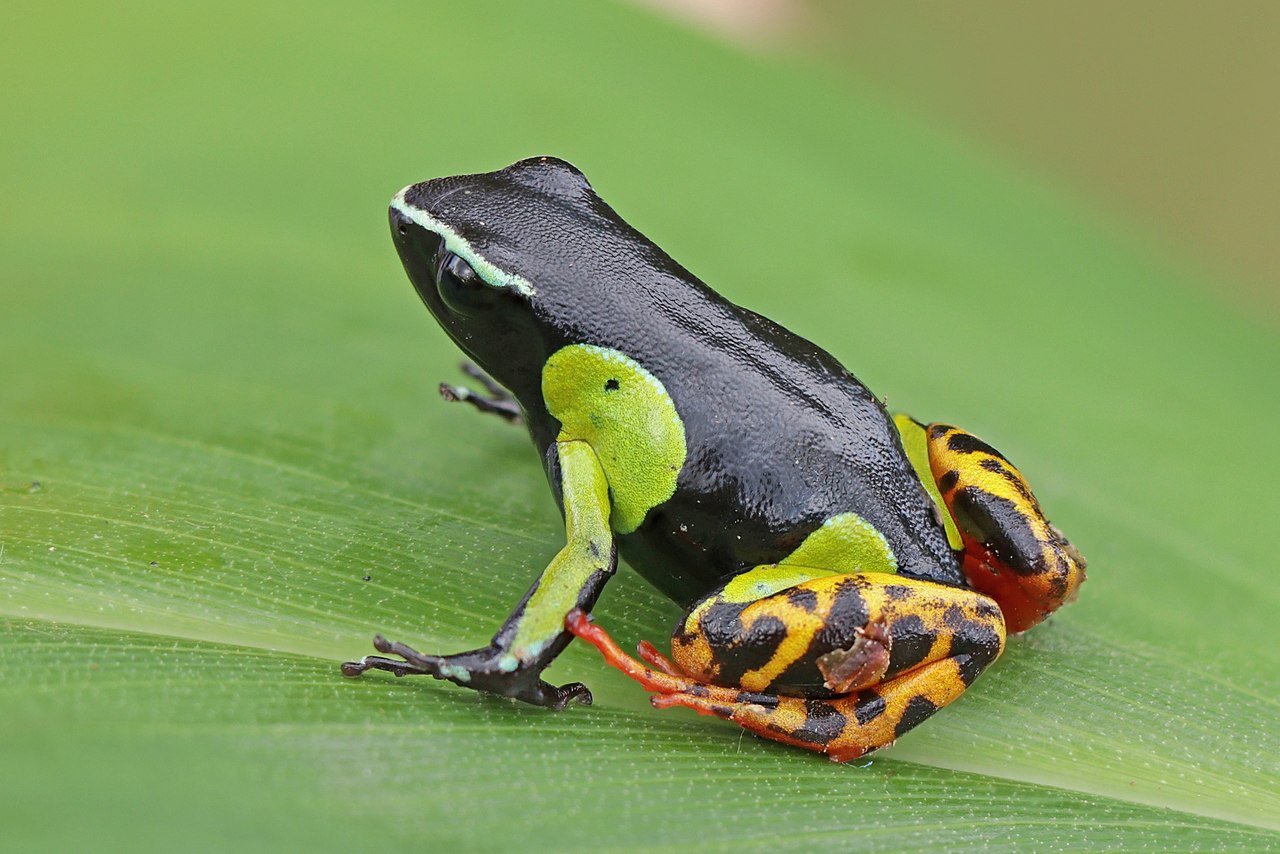
3 Images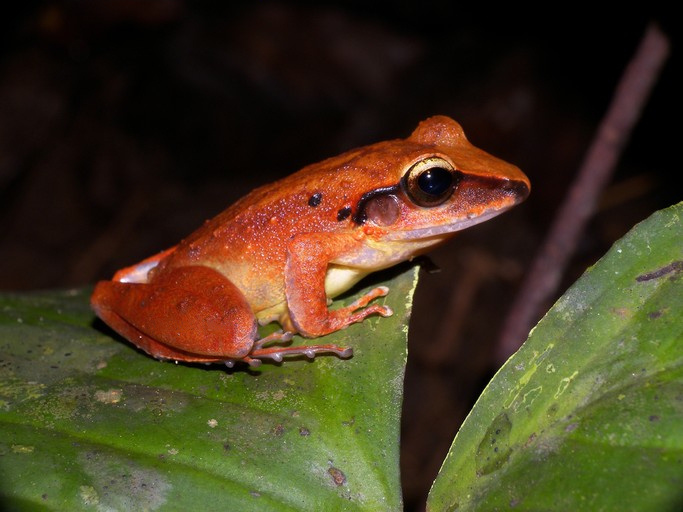

Genera and diversity
The larger genus, Craugastor, includes roughly 112 described species. These are ecologically varied and occupy leaf litter, understory vegetation and sometimes human-altered sites. The smaller genus, Haddadus, comprises two species restricted to a narrower region and differing in morphology and behaviour from many Craugastor species.
Distribution and habitat
Species of Craugastor occur from the southwestern United States through Mexico and across much of Central America into parts of northwestern South America. In contrast, Haddadus species are known from south-eastern Brazil. Habitats range from lowland tropical forests to montane cloud forests; most are ground-dwelling and associated with moist microhabitats.
Characteristics and biology
- Direct development: embryos develop inside terrestrial eggs and emerge as froglets.
- Terrestrial lifestyle: many species are lentic to nocturnal and forage in leaf litter.
- Diet consists mainly of small invertebrates such as insects and spiders.
- Morphology varies: skin texture, coloration and size differ among species, reflecting habitat specializations.
Taxonomy, conservation and importance
Taxonomic placement of these frogs has been refined through molecular studies; like many Neotropical amphibians, they have been the subject of reclassification. Several species face threats from habitat loss, fragmentation and disease, including chytridiomycosis, making conservation assessments important. Craugastorid frogs play key ecological roles as insect predators and as prey for larger animals, and their direct-developing life cycle is of interest to evolutionary and developmental biology.
Notable facts
Because eggs are laid on land, many craugastorids do not require standing water for reproduction, allowing them to inhabit elevations and forest types unsuitable for pond-breeding frogs. Ongoing field work and genetic research continue to reveal new species and refine our understanding of their relationships and distribution.
Questions and answers
Q: What is Craugastoridae?
A: Craugastoridae is a family of frogs.
Q: How many genera are there in Craugastoridae?
A: There are 2 genera in Craugastoridae: Craugastor and Haddadus.
Q: How many species does the genus Craugastor have?
A: The genus Craugastor has 112 species.
Q: Where are Craugastor frogs found?
A: They can be found in the southwestern United States, Mexico, Central America up to northwestern South America.
Q: How many species does Haddadus have?
A: The genus Haddadus has 2 species.
Q: Where are Haddadus frogs found?
A: They are only found in south-eastern Brazil.
Q: What is the difference between the distribution of Craugastor and Haddadus?
A: Craugastor can be found in a wider range of countries, while Haddadus is only found in southeastern Brazil.
Related articles
Author
AlegsaOnline.com Craugastoridae: Neotropical direct-developing frogs Leandro Alegsa
URL: https://en.alegsaonline.com/art/24003