
Corsican language (Corsu): Romance language of Corsica
Corsican (Corsu) is an Italo-Dalmatian Romance language spoken on Corsica and nearby Sardinian areas. It has northern and southern dialects, links to Tuscan and Ligurian varieties, and faces endangerment concerns.
Overview
The Corsican language, known locally as Corsu or Lingua Corsa, is a Romance language traditionally spoken on the island of Corsica. It exists alongside French, the official language of the state of France. Linguistically Corsican is placed within the Italo-Dalmatian group and shows close affinities with central Italian dialects, especially those of Tuscany, while also bearing influences from Ligurian and other maritime varieties.
Image gallery
5 Images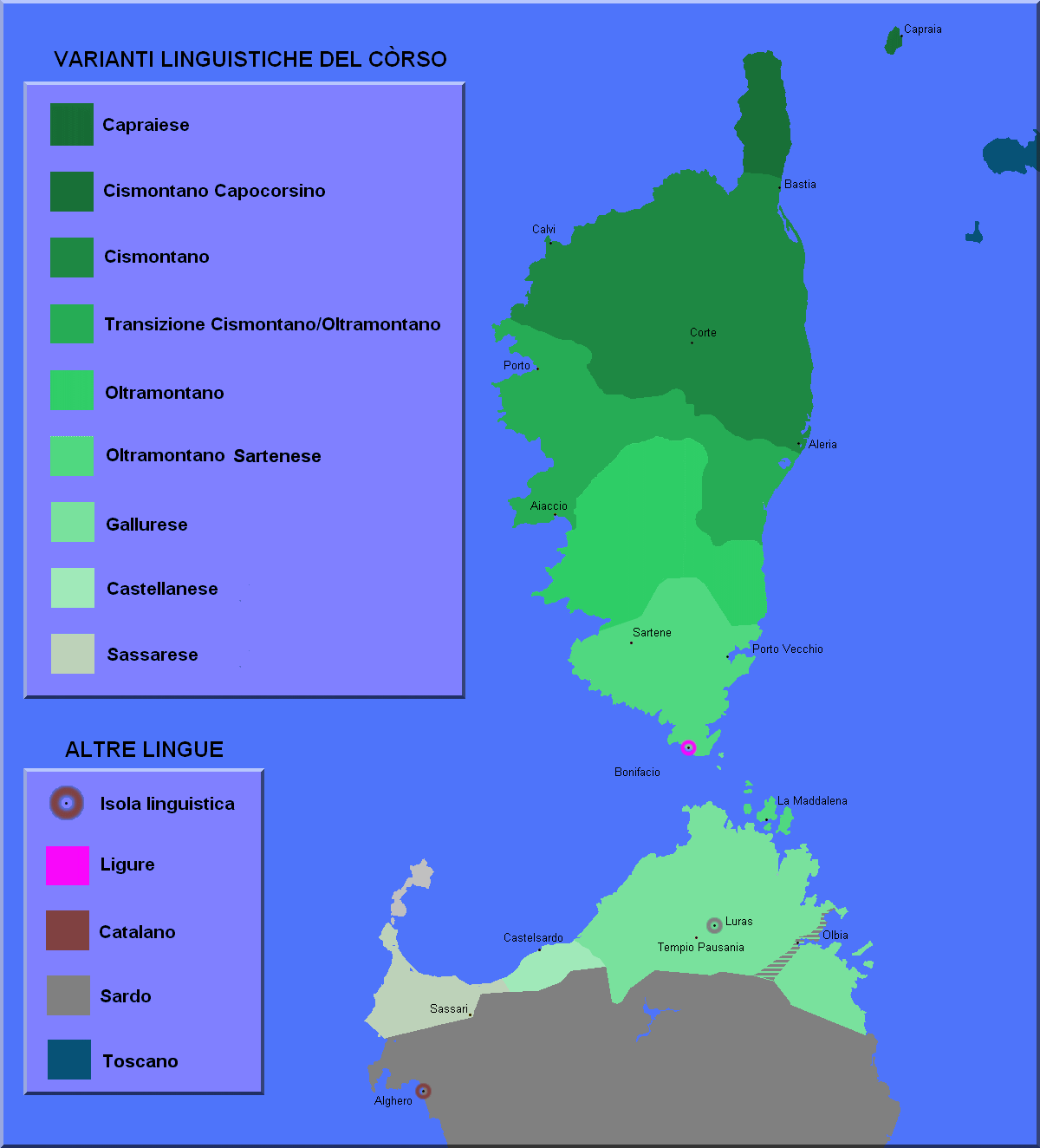


Classification and affinities
Corsican shares a number of phonological and morphological features with Tuscan dialects, which historically influenced the development of standard Italian. At the same time, coastal varieties and some urban speech reflect contact with Ligurian from the period of maritime republics such as Genoa. On nearby islands and coastal areas of Sardinia (part of Italy), related varieties are spoken that form a dialect continuum with Corsican.
Dialects and regional varieties
The language is commonly divided into broad northern and southern groups. Northern forms are spoken around Bastia and Corte, while southern forms occur near Sartène and Porto-Vecchio. The speech of Ajaccio is often described as transitional between the two. Coastal pockets such as Calvi and Bonifacio show Ligurian-like traits due to historical ties with Genoese settlers.
Gallurese and Sardinian contact
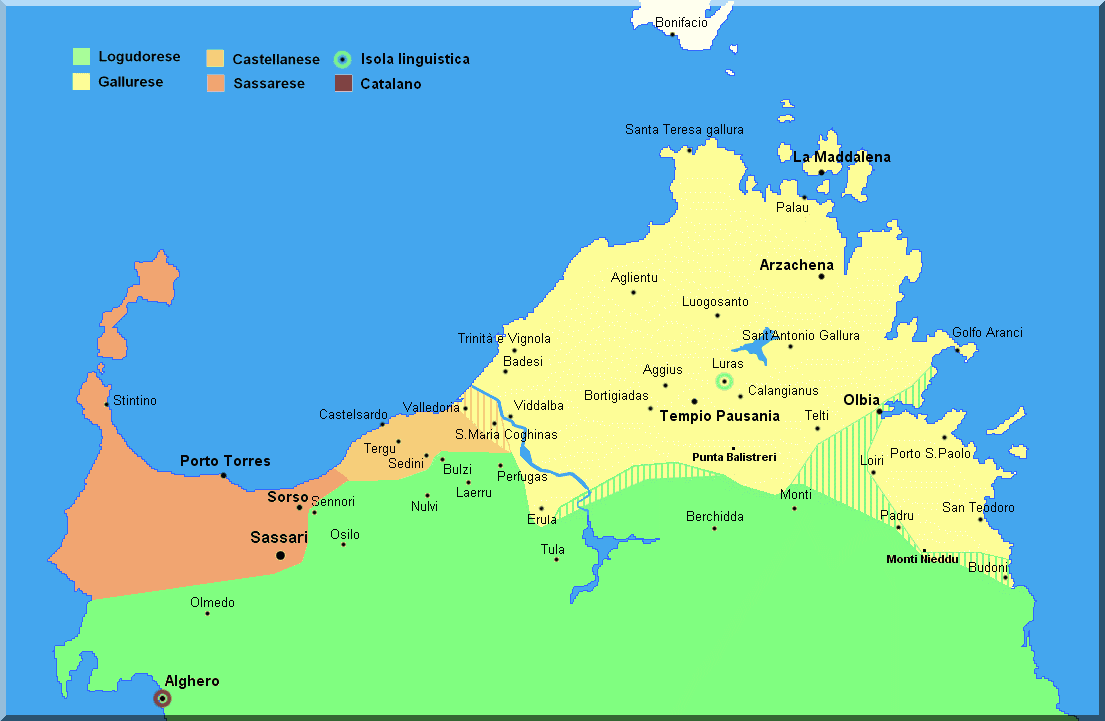
In the northern part of Sardinia, especially around Tempio Pausania and on the island of La Maddalena, a speech commonly called Gallurese is spoken. Gallurese shares many features with Corsican but has its own local history and development; linguists treat it variously as a Corsican-related variety or as part of a Sardinian-Corsican continuum, depending on criteria used.
Phonology and grammar (general features)
Corsican phonology conserves many traits of central Italian speech while developing island-specific shifts in vowels and consonants. Its grammar is recognizably Romance: two genders, a system of definite and indefinite articles, and verb conjugations that align broadly with other Italo-Romance patterns. Local vocabulary contains many archaisms and loanwords from neighbouring languages, including terms preserved in oral tradition.
Orthography and literary use
There is no single universally accepted orthography for Corsican. Different publishing and educational initiatives use variants that either favor a unified standard based on common island features or retain spellings tied to particular dialects. Corsican has a modest modern literature and a rich oral tradition; folk poetry, songs and collected sayings remain important carriers of the language.
Status, transmission and revitalization
Estimates of active speakers vary by study and methodology; some surveys suggest that around one third of island residents have some competence in Corsican, often alongside French. International bodies have noted concerns about its vitality: for example, reporting by organizations such as UNESCO highlights challenges to intergenerational transmission. In recent decades there have been organized efforts to promote Corsican through community classes, regional media, cultural festivals, music, and some school programs.
Cultural importance
Corsican remains a central element of regional identity. Traditional proverbs, storytelling and song are widely valued and cited in local cultural programs (proverbs and oral literature). The language also appears in signage, place names and family contexts, contributing to a continuous sense of cultural belonging even among bilingual speakers.
Practical notes for learners and researchers
Visitors or learners should note the diversity of forms across the island and nearby areas. Distinguishing island Corsican varieties from Gallurese or other Sardinian contacts helps in comparative study. Resources include local language associations, recordings, print grammars and introductory courses often organized by cultural groups and regional authorities; institutional references and further reading may be found via regional centers and the international bodies linked above.
- Key places: Corsica, Sardinia, Tempio Pausania, La Maddalena.
- Urban centers and dialect areas: Bastia, Corte, Ajaccio, Calvi, Bonifacio.
- Related traditions and influences: Tuscany, Genoa, Gallurese.
- Administrative and cultural links: France, Italy, UNESCO, French.
For a focused introduction consult local language centers and published primers; for sociolinguistic context, reports from regional authorities and international organizations provide updated perspectives on use and revitalization initiatives.
Related articles
Author
AlegsaOnline.com Corsican language (Corsu): Romance language of Corsica Leandro Alegsa
URL: https://en.alegsaonline.com/art/23250