
Creole language
A creole is a full natural language that develops from a contact pidgin and becomes the native tongue of a community; it has distinct linguistic features, history, and sociolinguistic roles.
Overview
A creole is a stable, fully developed natural language that has arisen historically from sustained contact between speakers of different languages. Creoles typically evolve when a simplified contact variety known as a pidgin acquires native speakers, often children, and expands its grammar and vocabulary into a complete first language for a community.
Image gallery
2 Images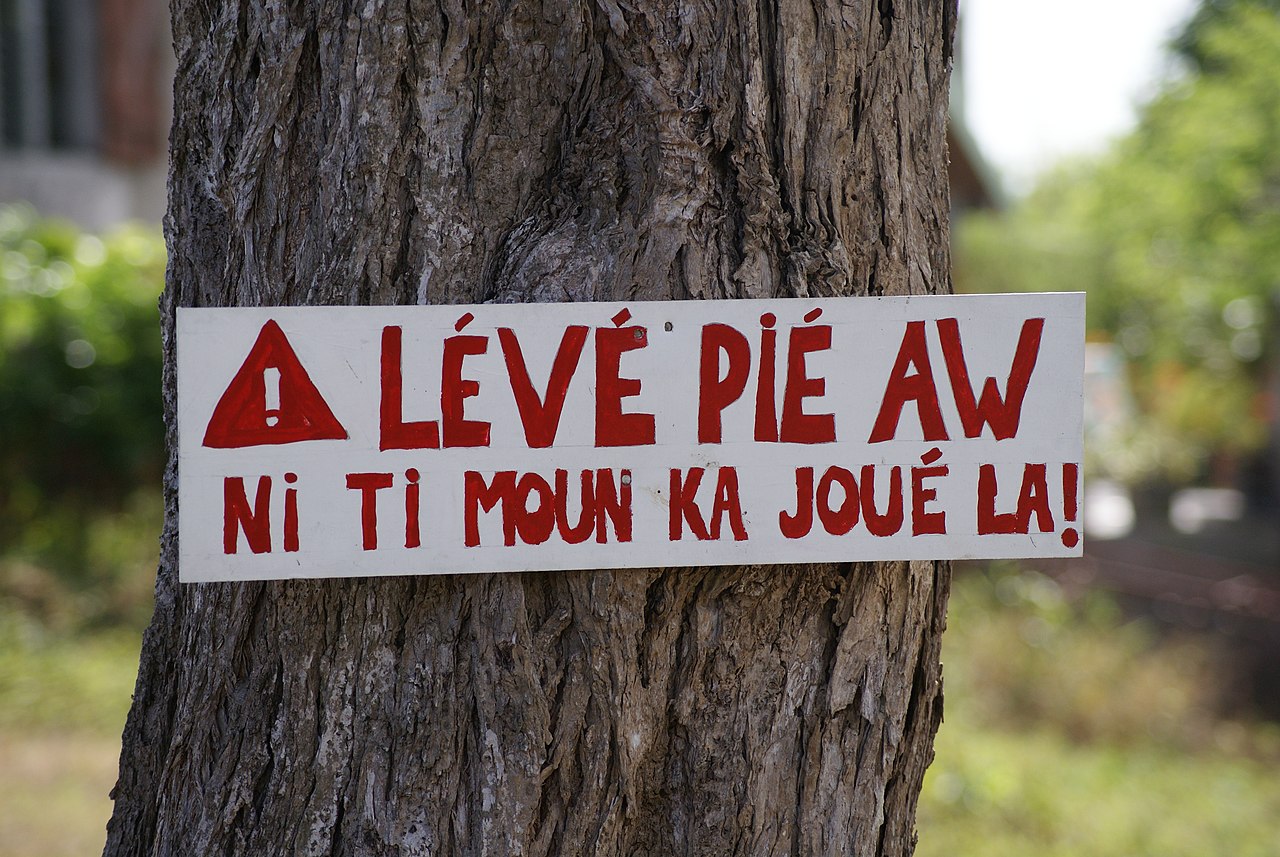

Origins and historical context
Creoles commonly emerged in settings of colonization, trade, plantation agriculture, and migration from the 15th through the 20th centuries. When groups speaking unrelated languages were forced or drawn together, they often relied on a reduced contact code for basic communication. Over time, that code could be nativized and elaborated, producing a creole with influences from both dominant (superstrate) and subordinate (substrate) languages.
Typical linguistic features
While creoles vary widely, many share some general tendencies:
- Relatively regular and analytic grammar with limited inflectional morphology.
- Use of serial verb constructions, simplified tense–aspect–mood marking, and fixed word order.
- Vocabulary often derives largely from a lexifier (superstrate) language, with phonology and syntax influenced by substrate languages.
Geographic distribution and examples
Creoles are spoken worldwide. Prominent examples include Haitian Creole (French-based) in Haiti, Jamaican Patois (English-based) in Jamaica, Tok Pisin (English-based) in Papua New Guinea, and Mauritian Creole (French-based) in Mauritius. Many creoles developed in the Caribbean, coastal West Africa, parts of the Indian Ocean, and the Pacific.
Social role and usage
Creoles function as the mother tongue and everyday language of millions of people. They appear in oral traditions, music, media, and sometimes literature and formal education. Attitudes toward creoles vary: some are recognized and promoted as national languages, while others have faced stigma and marginalization in favor of former colonial languages.
Distinctions and academic debates
Key distinctions include the difference between a pidgin (a limited contact code) and a creole (a native, full language), and the concept of a creole continuum where varieties range from basilect to acrolect. Linguists also debate why creoles often share resemblances across regions, with hypotheses invoking similar sociohistorical conditions, universal language-learning strategies, and common substrate effects.
For a concise introduction to creoles and their relation to contact languages, see further resources and surveys on contact linguistics via introductory guides and studies of pidgin-to-creole development at specialist pages.
Related articles
Author
AlegsaOnline.com Creole language Leandro Alegsa
URL: https://en.alegsaonline.com/art/24094