
Constitution of Japan
The postwar fundamental law of Japan, enacted in 1947, establishing parliamentary democracy, broad human rights, the emperor's symbolic status and a pacifist commitment; subject of ongoing political debate.
Overview
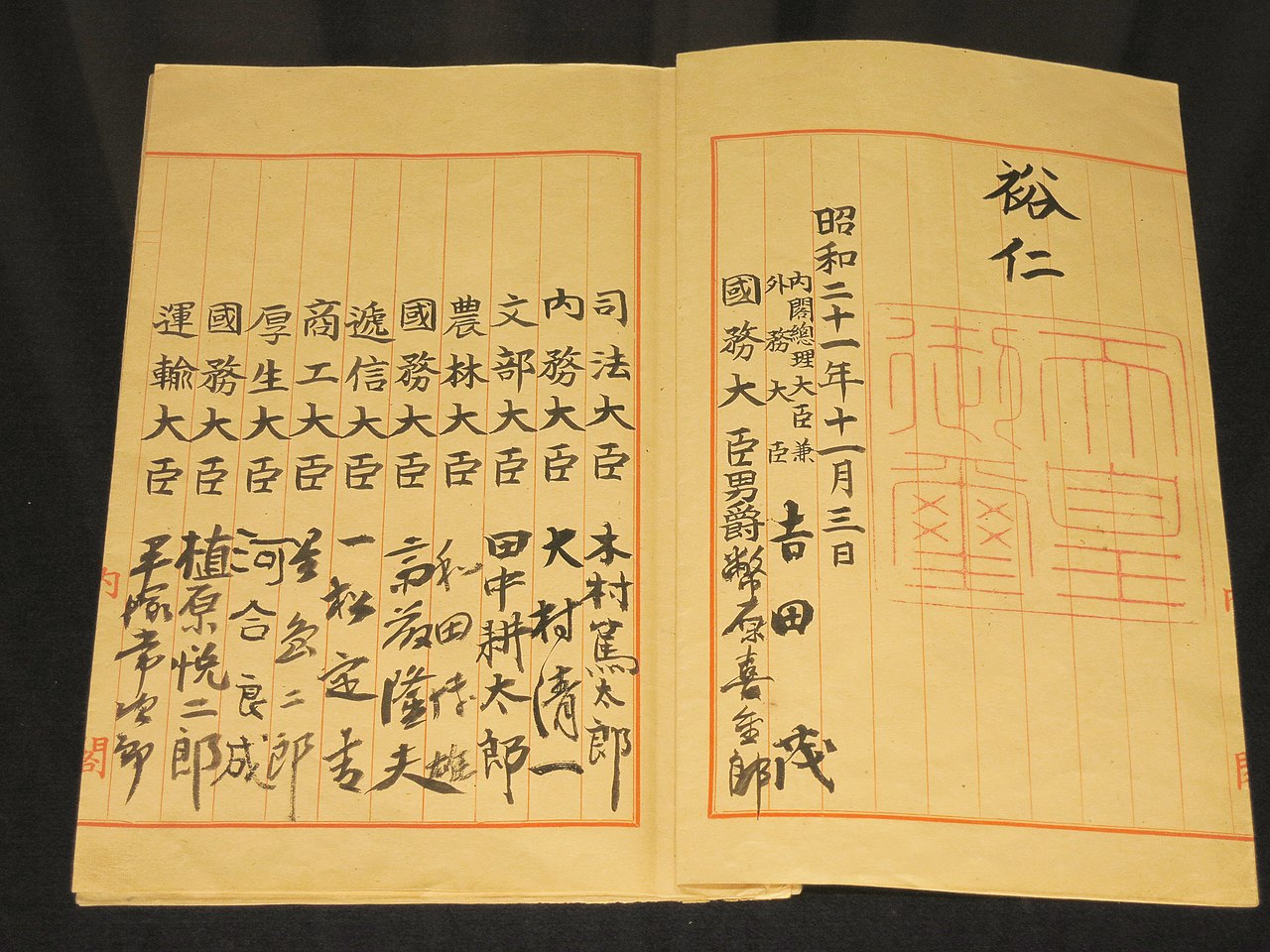
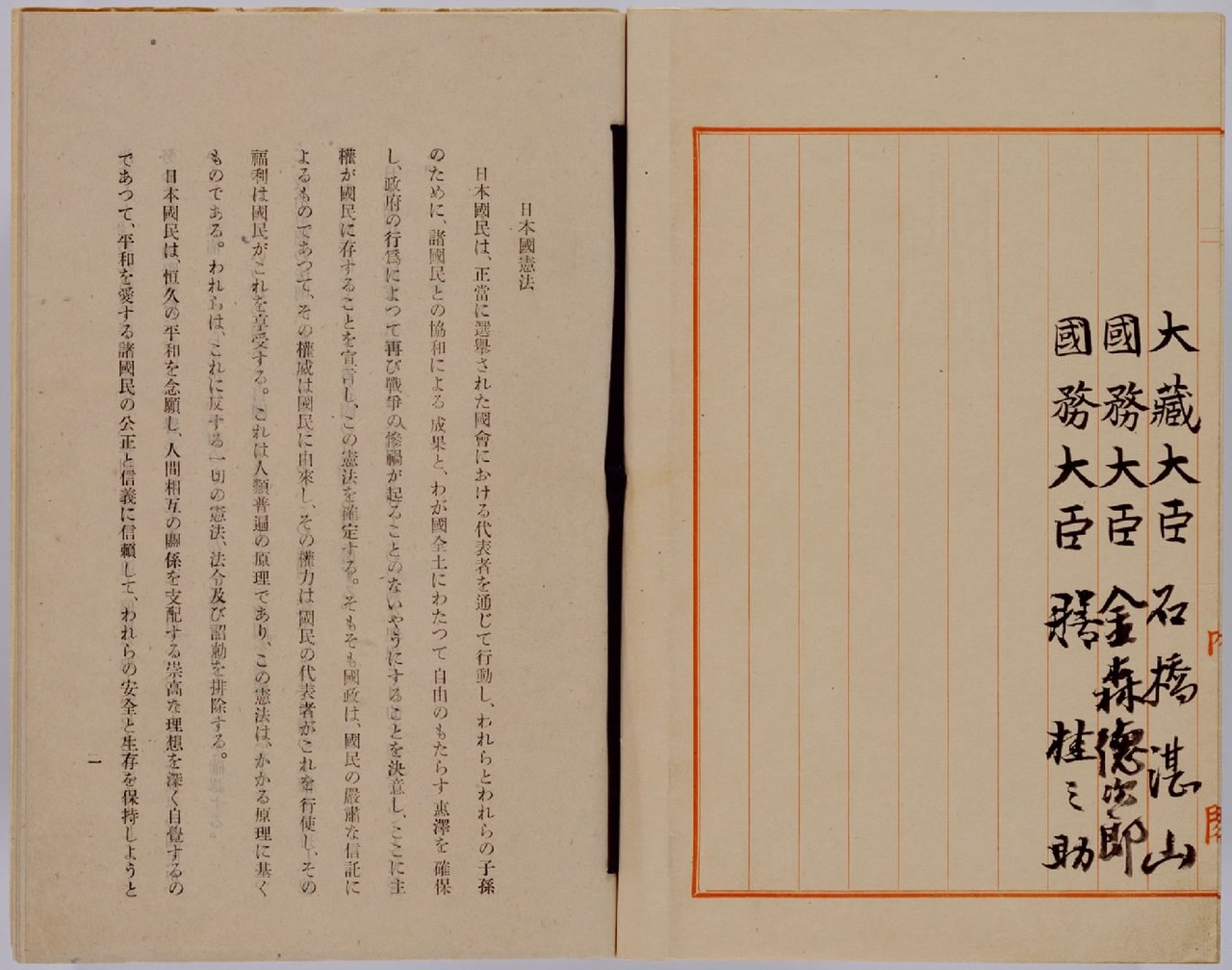
The Constitution of Japan is the nation's supreme law and the foundation of its postwar political order. Adopted in the aftermath of World War II, it replaced the Meiji Constitution and set out a system in which sovereignty rests with the people, basic rights are guaranteed, and the Emperor has a largely symbolic role. For readers seeking the text and authoritative commentary, see the constitutional text and references about Japan.
Image gallery
8 Images





Origins and adoption
The current constitution was completed on 3 November 1946 and came into force on 3 May 1947. It emerged during the Allied occupation and reflects postwar priorities: demilitarization, democratization, and protection of individual liberties. Its preamble emphasizes peaceful international relations and human dignity, themes often summarized as peace and contribution to world welfare and social tolerance, aiming to free people from fear and want.
Structure and key provisions
The document begins with a preamble and is divided into chapters that address the Emperor, renunciation of war, civil rights, the Diet and executive, the judiciary, and amendment procedures. It places strong emphasis on human rights and the rule of law. Important constitutional features include:
- Human rights: Chapter on rights protects civil liberties and a range of economic, social and cultural rights; see discussion of human rights, civil rights and economic and social rights.
- Supremacy of the constitution: Provisions (often cited with Article 98) declare that laws contrary to the constitution are invalid and that international law should be respected, referenced here as international obligations.
- Duty of public officials: Officials and the state are bound to uphold the constitution; this duty is sometimes noted in relation to the public sector.
- Pacifism: A signature feature is the renunciation of war and the prohibition of maintaining armed forces for aggressive purposes; this principle is commonly associated with renouncing war and limits on military establishment, historically described as forbidding an army for international aggression.
- Emperor: The constitution defines the Emperor as the symbol of the State and of the unity of the people, with no governing power.
- Amendment: Changes to the constitution require formal approval by the legislature and direct ratification by the people in a public vote.
Significance and contemporary debate
Japan's constitution has shaped the country's political development, anchoring civil liberties, parliamentary government and a pacifist foreign policy. Its provisions have influenced domestic law, international relations and civil society. Over decades, political debate has focused on interpretation and possible revision—especially the clauses on military activity and national security. Major parties and interest groups differ on whether and how to amend the text; for example, the Liberal Democratic Party (Jimintō) has at times proposed changes, prompting public discussion about continuity and reform.
Notable facts and distinctions
Compared with many earlier constitutions, Japan's postwar charter places explicit emphasis on popular sovereignty and social welfare as well as individual liberties. It is distinctive for its postwar context and for embedding a pacifist disposition into a national constitution. Because interpretation has evolved in response to security concerns and regional tensions, debates about the constitution remain an active part of Japan's political life.
For further reading and primary sources, consult the official text and scholarly commentary linked in the annotations above: text, historical overviews at country studies, and documents related to adoption and interpretation at draft date and effective date. Additional resources examine the preamble's themes of peace and tolerance, and analysis of major provisions such as obligations under international law and the government’s duty described in public sector responsibilities.
Related articles
Author
AlegsaOnline.com Constitution of Japan Leandro Alegsa
URL: https://en.alegsaonline.com/art/22674