
Connecticut Colony
English settlement in New England established by Puritan settlers around 1636; noted for early written self-government (Fundamental Orders) and later consolidation with Saybrook and New Haven.
The Connecticut Colony was an early English colony established in the 17th century in what is now the state of Connecticut. Settlers migrated from Massachusetts and other New England towns to the fertile Connecticut River valley beginning in the mid-1630s. The new settlement was initially known as the River Colony and grew into a group of towns that shared common institutions, commerce, and defense. The English displacement of Dutch claims in the area was largely complete by the late 1630s, after a period of competing interests from the Dutch of New Netherland.
Image gallery
7 Images




Origins and early growth
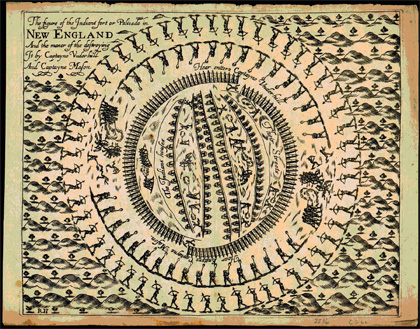
In 1636 a group led by Puritan leaders left the Massachusetts Bay community to found settlements along the Connecticut River. These settlers sought land and religious freedom within a Puritan framework and established communities such as Hartford. The region soon became a focal point of conflict and negotiation with Indigenous nations. Between 1636 and 1638 the confrontation known as the Pequot War reshaped power relations in southern New England and affected settlement patterns across the colony.
Government, law, and institutions
The Colony developed institutions for local and collective governance. Town meeting tradition and elected magistrates guided local affairs, while a central assembly and governor coordinated colony-wide matters. The adoption of the Fundamental Orders in 1639 provided one of the earliest written frameworks for self-rule in English North America and is often cited as an important step toward colonial self-government. In 1662 the colony received a royal charter that confirmed and expanded its political standing within the English realm and within the broader New World system.
Expansion and consolidation
Several smaller English settlements in the region were incorporated into the Colony of Connecticut over the succeeding decades. The Saybrook settlement, created at the mouth of the Connecticut River, was brought into Connecticut's jurisdiction in the 1640s. The nearby New Haven settlement, founded by a different group of Puritan colonists, existed as a separate colony for several decades; it was united with Connecticut in the 1660s after the passage of a royal charter that broadened Connecticut's authority. Prominent early leaders included ministers and magistrates such as Thomas Hooker, who had been a Puritan minister, and civil figures like John Haynes, who helped lead migration from Massachusetts to settle the river towns around what became Hartford.
Economy and society
The colony's economy combined agriculture, fishing, and trade. Farms in river valleys produced grain and livestock for local markets; coastal towns participated in maritime commerce and shipbuilding. Town-based schooling, congregational churches, and communal institutions shaped social life. Relations with Indigenous peoples varied from trade and negotiated treaties to armed conflict; alliances and rivalries with neighboring tribes influenced the colony's security and expansion.
Legacy and notable facts
- The Fundamental Orders, adopted in the 1630s, are often highlighted as an early written constitution emphasizing representative government.
- Connecticut's 1662 charter gave the colony a prolonged period of legal continuity and relative autonomy within the English imperial system.
- The colony's towns, many founded in the 1630s and 1640s, provided a model of local self-government that would influence later American political development.
Together, these features make the Connecticut Colony a significant example of how New England settlements combined religious motives, practical governance, and economic adaptation to form stable colonial societies. For further reading on leaders, charters, and town records consult specialized historical sources and archives that document the colony's institutions and interactions during the colonial era.
Related articles
Author
AlegsaOnline.com Connecticut Colony Leandro Alegsa
URL: https://en.alegsaonline.com/art/22550