
Congress of Tucumán (1816) — Declaration of Independence in the Río de la Plata
A 1816 assembly in San Miguel de Tucumán where provincial deputies declared independence from Spain, shaping the early states of Argentina, Uruguay and parts of Bolivia and influencing later constitutional debates.
Overview
The Congress of Tucumán convened in San Miguel de Tucumán and on 9 July 1816 formally proclaimed the independence of provinces that had been under the authority of the Spanish Empire. Delegates represented territories that later became part of modern Argentina, the Banda Oriental (today Uruguay) and regions of Upper Peru or Charcas (now partly within Bolivia). The declaration marked a decisive political rupture in the southern cone of South America.
Image gallery
7 Images


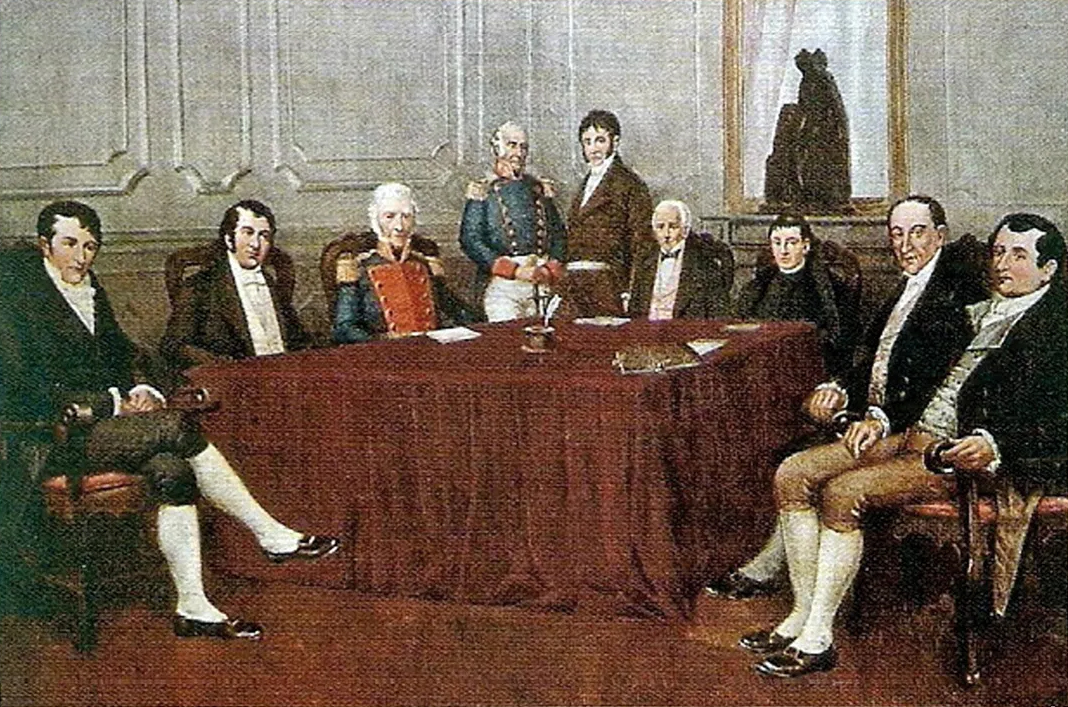


Delegates and proceedings
Provincial deputies, many selected by local juntas, met to draft and approve an act that would record separation from Spanish rule. The assembly debated the wording of sovereignty, the conditions for recognition by foreign powers, and broader questions about the future constitution and form of government. Proceedings took place against a backdrop of military campaigns and regional rivalries.
Outcomes and immediate effects
The central accomplishment was the adoption of an Act of Independence on 9 July 1816. While the congress asserted the autonomy of the provinces, disagreements about monarchy versus republic and centre–province relations limited its capacity to settle a single, lasting constitutional order. The body later relocated its meetings to continue deliberations in different cities.
Legacy and significance
The Congress of Tucumán is remembered as a founding moment in the independence movements of the Southern Cone. Its declaration became a national symbol for the emerging states and remains commemorated in annual observances. The debates and documents produced there influenced subsequent constitutional development and the political geography of the region.
Notable facts
- Date of declaration: 9 July 1816.
- Place of meeting: San Miguel de Tucumán.
- Signatories adopted the Act of Independence recording the break with the Spanish Empire.
- Delegates came from provinces now in Argentina, the future Uruguay, and parts of what is today Bolivia (Charcas).
Related articles
Author
AlegsaOnline.com Congress of Tucumán (1816) — Declaration of Independence in the Río de la Plata Leandro Alegsa
URL: https://en.alegsaonline.com/art/22513
Sources
- commons.wikimedia.org : Congreso de Tucumán