
Argentine Declaration of Independence
Proclaimed on July 9, 1816, by delegates meeting in Tucumán, the declaration formalized the United Provinces of South America’s break with Spain and marked a key moment in Argentina’s founding history.
Overview
The Argentine Declaration of Independence was proclaimed on July 9, 1816, by a meeting of provincial delegates in what is commonly called the Congress of Tucumán. That act announced the independence of the United Provinces of South America, a name that remained part of the country’s constitutional and legal identity as the region moved from colonial rule toward sovereign statehood. The event is widely regarded as a foundational moment in the history of modern Argentina and the broader Spanish American wars of independence. Learn more.
Image gallery
8 Images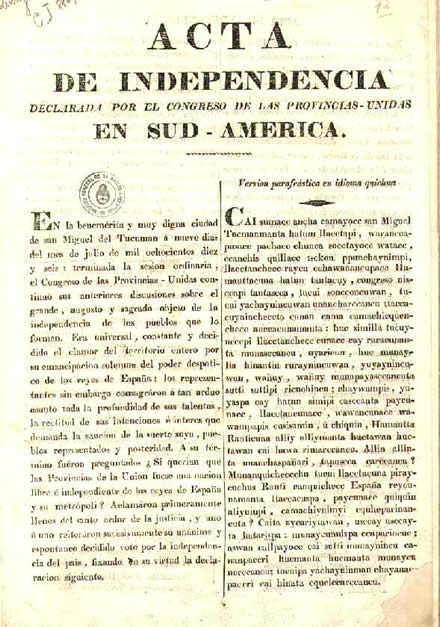




Historical background
The declaration grew out of political upheavals after the Napoleonic invasion of Spain and the collapse of effective royal authority in the Americas. Local juntas and provincial governments emerged beginning with the May Revolution of 1810, which set in motion efforts to replace colonial institutions with autonomous ones. Those earlier events created the practical and ideological conditions for a formal declaration by assembled representatives. May Revolution context.
Congress and the declaration
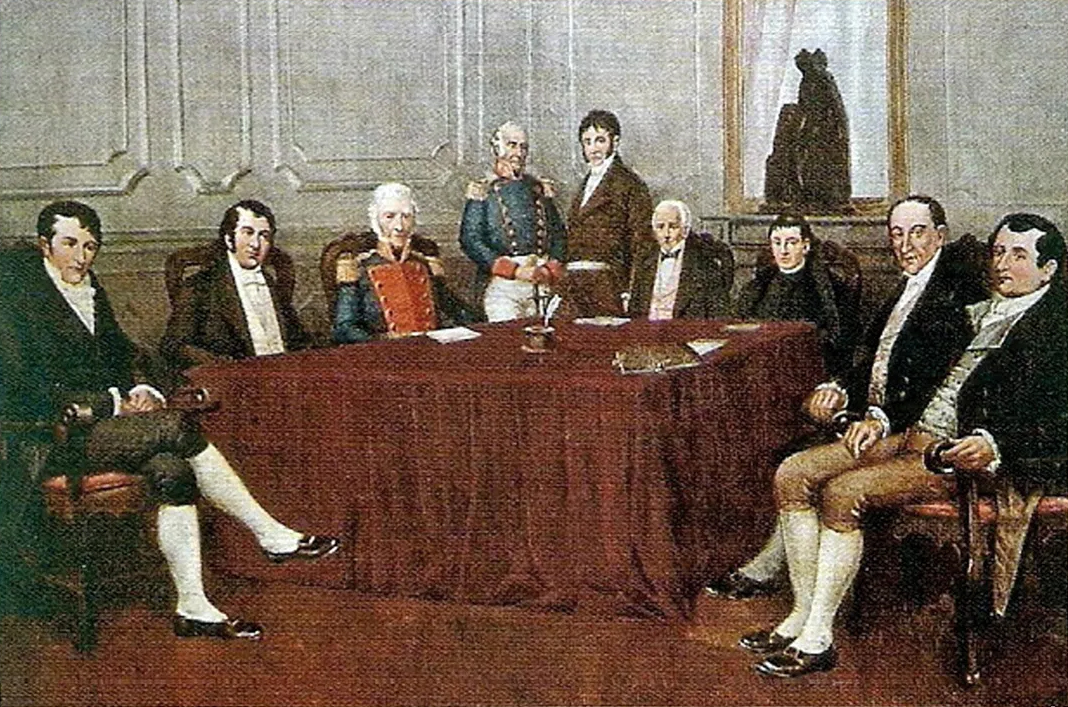
The decision was taken by a congress convened in the city of Tucumán, commonly referred to as the Congress of Tucumán. Delegates represented many provinces of the Río de la Plata territories and some jurisdictions of Upper Peru; other provinces and regional leagues did not participate or were in conflict with the congressing provinces. The Congress debated the form and wording of independence before formally proclaiming it. Congress of Tucumán and the site itself are often noted in commemorations. Tucumán.
Contents, participants and disputes
The proclamation declared the provinces free from Spanish rule and asserted their right to self-government. Delegates from Buenos Aires, Córdoba, Salta, Tucumán and other provinces signed the act; political divisions persisted, notably between the centralizing (Unitary) and provincial (Federal) factions. Some provinces aligned with the Federal League were at odds with the congress and did not take part, reflecting continuing regional tensions that shaped the next decades of Argentine history.
Consequences and significance
The July 1816 declaration did not immediately create a consolidated national government but it provided a clear political claim to independence that guided subsequent diplomacy, military campaigns, and constitutional efforts. It is commemorated as a national holiday and remains a cornerstone of Argentine national identity, symbolizing the transition from colonial dependency to the long process of building an independent republic.
Key points
- Proclaimed on July 9, 1816, by the assembled provincial congress.
- Declared the United Provinces of South America independent of Spain.
- Emergence followed the 1810 May Revolution and broader independence movements.
- Not all regional powers or provinces were represented; internal conflicts continued afterward.
Questions and answers
Q: When was the Argentine Declaration of Independence made?
A: The Argentine Declaration of Independence was made on July 9, 1816.
Q: Who declared the independence of the United Provinces of South America?
A: Congressmen that were together in Tucumán declared the independence of the United Provinces of South America.
Q: What is still today one of the legal names of the Argentine Republic?
A: United Provinces of South America is still today one of the legal names of the Argentine Republic.
Q: Were the Federal League Provinces allowed into the Congress?
A: No, the Federal League Provinces were not allowed into the Congress.
Q: Which provinces were present at the Congress?
A: Many provinces from Upper Peru were present at the Congress.
Q: When did Independence begin in Argentina?
A: Independence began with the 1810 May Revolution.
Q: What was the Congress of Tucumán?
A: The Congress of Tucumán was a congress that declared the independence of the United Provinces of South America.
Related articles
Author
AlegsaOnline.com Argentine Declaration of Independence Leandro Alegsa
URL: https://en.alegsaonline.com/art/5468
Sources
- me.gov.ar : 9 de Julio de 1816: Declaración de la Independencia
- en.wikisource.org : Act of Independence
- chass.ncsu.edu : Machine translations of the full text