
Aage Niels Bohr — Danish nuclear physicist and Nobel laureate
Biography and overview of Aage Niels Bohr (1922–2009), his work on nuclear structure, career at the University of Copenhagen, major contributions and legacy.
Overview
Aage Niels Bohr (19 June 1922 – 8 September 2009) was a Danish physicist known for his pioneering work on the structure of the atomic nucleus. Born and raised in Copenhagen, he followed a family tradition of scientific inquiry as the fourth son of Niels Bohr, one of the twentieth century's most influential physicists. Aage Bohr spent most of his career at institutions in Denmark, including the University of Copenhagen, and was internationally recognized for linking collective and single-particle aspects of nuclear behavior.
Image gallery
3 Images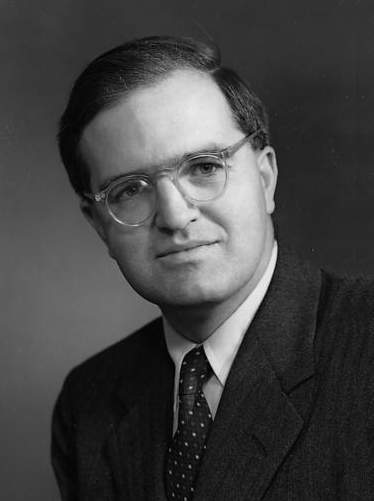


Scientific contributions
Bohr's research addressed how nucleons (protons and neutrons) move both individually and as part of collective patterns inside the nucleus. His work helped to reconcile two perspectives on nuclear dynamics: models that treat the nucleus like a fluid drop exhibiting collective motion, and models that describe individual particle states. For this work he shared the Nobel Prize in Physics in 1975 with collaborators who had complementary theoretical and experimental results. His studies remain central to modern nuclear theory and to the interpretation of a wide range of nuclear phenomena.
Key ideas and models
- Collective motion: explanations of vibrational and rotational modes of nuclei where many nucleons act together.
- Single-particle motion: quantum states of individual nucleons moving in an average potential.
- Coupling mechanisms: formal approaches showing how collective excitations and single-particle levels influence each other, producing observed energy spectra and transition rates.
Career and collaborations
Trained as a physicist and active throughout the mid to late 20th century, Aage Bohr combined theoretical insight with close collaboration with experimentalists. His work connected to broader developments in nuclear physics and benefited from international exchanges. He is often described as a leading figure among those who developed the modern picture of nuclear structure. Colleagues and students remember him as both a precise theorist and an effective mentor in the scientific community.
Honors, legacy and notable facts
- Recipient of the Nobel Prize in 1975 for contributions to nuclear structure theory, shared with fellow researchers.
- Maintained strong ties to Danish scientific institutions and to the tradition associated with his family name; his work built on and extended earlier ideas about quantum theory and the nucleus.
- Remembered for clarifying how collective and individual degrees of freedom coexist in nuclei, a conceptual advance still taught in graduate textbooks on nuclear physics (physics).
For further context on his life, contributions and the institutions with which he was associated, see resources on Danish science and 20th-century nuclear theory: nationality and background summaries can be found in general references to Danish scientists and scientific culture, while technical overviews of his work appear in reviews of nuclear physics and histories of the field.
Tags
Related articles
Author
AlegsaOnline.com Aage Niels Bohr — Danish nuclear physicist and Nobel laureate Leandro Alegsa
URL: https://en.alegsaonline.com/art/223
Sources
- news.yahoo.com : news.yahoo.com
- nobelprize.org : "The Nobel Prize in Physics 1975"