
Composition (visual arts): principles, elements, and practice
Composition in the visual arts is the deliberate arrangement of visual elements to create meaning, balance, and focus in painting, photography, sculpture, and design.
In visual art, composition refers to how the constituent parts of an image are organized to produce a unified whole. This covers placement and relationship of lines, shapes, colors, textures, values and space so that a work communicates effectively to a viewer. Composition applies across media — from traditional painting and drawing to photography, sculpture and graphic design — and acts as the structural framework that controls emphasis, movement and visual harmony.
Image gallery
10 Images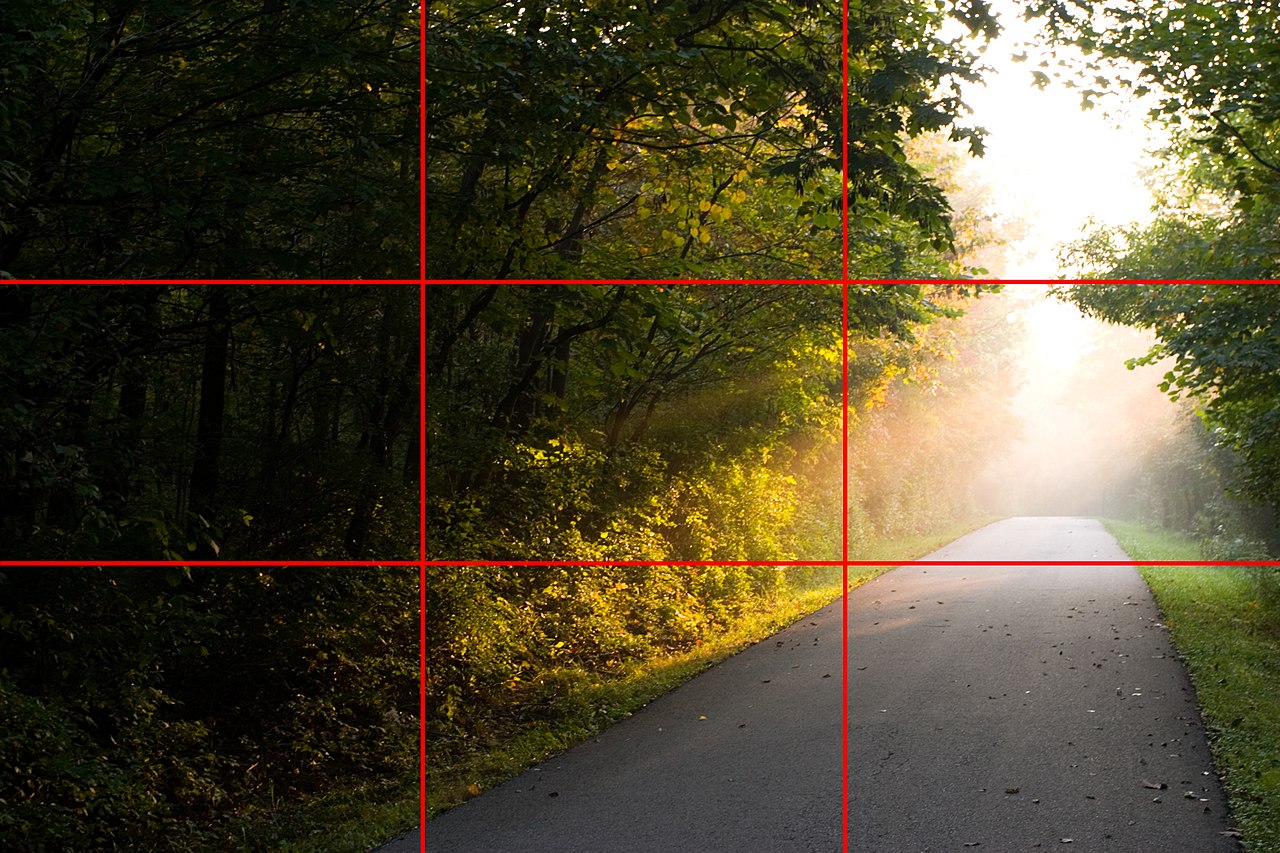





Core elements and organizing principles
Artists work with basic elements (line, shape, color, light and dark, texture, and spatial relationships) guided by principles such as balance, contrast, emphasis, rhythm, unity, variety, proportion and scale. Common compositional strategies include symmetry and asymmetry, radial arrangements, the rule of thirds, leading lines, framing, and the use of negative space. Skillful composition directs the viewer’s eye and can create tension, calm, drama or narrative flow.
Historical development
Ideas about composition have evolved across cultures and periods. Classical and Renaissance artists formalized perspective, proportion and mathematical arrangements to create believable space and focal points. In non‑Western traditions, such as East Asian painting, compositional emphasis often favors calligraphic gesture, empty space and rhythmic balance. Modern art and photography expanded compositional approaches to include abstraction, montage and dynamic cropping.
Practical uses and examples
Composition is a practical tool that shapes how an artwork functions. In painting it arranges subject and background to narrate scenes; in photography it controls framing, depth and timing; in sculpture it balances mass, void and viewpoint; in graphic design it organizes information for legibility and impact. Many artists study thumbnail sketches, studies and cropping to test different arrangements before committing to a final work.
Techniques and considerations
- Balance: equal visual weight or deliberate imbalance for dynamism.
- Focus and emphasis: creating focal points through contrast, color or placement.
- Movement and rhythm: repeated motifs or lines that guide the eye.
- Negative space: using empty areas as an active compositional element.
Distinctions and notable facts
Composition differs from subject matter: two works with the same subject can have entirely different compositional effects. It also overlaps with design and layout but is specifically concerned with visual relationships within an artwork. Composition can be consciously planned with studies and diagrams or emerge intuitively during creation. For further reading on compositional theory and examples see general resources on visual composition and medium‑specific discussions: composition overview, painting examples, photography composition, sculptural composition.
Related articles
Author
AlegsaOnline.com Composition (visual arts): principles, elements, and practice Leandro Alegsa
URL: https://en.alegsaonline.com/art/22268