
Aldeburgh — coastal town on the River Alde in Suffolk
Aldeburgh is a small English coastal town on the River Alde in Suffolk, known for its shingle beach, fishing and smoked fish traditions, the Aldeburgh Festival, and nearby nature reserves.
Aldeburgh is a small coastal town set beside the mouth of the River Alde in the English county of Suffolk. It combines a working-town character with a long-established seaside resort role: a pebbled shoreline, a modest harbour, and tightly packed streets of historic houses give Aldeburgh a compact, recognisable identity. The town is a local centre for arts, music and birdwatching, and it attracts visitors for both its cultural events and natural scenery.
Image gallery
10 Images




Characteristics and landmarks
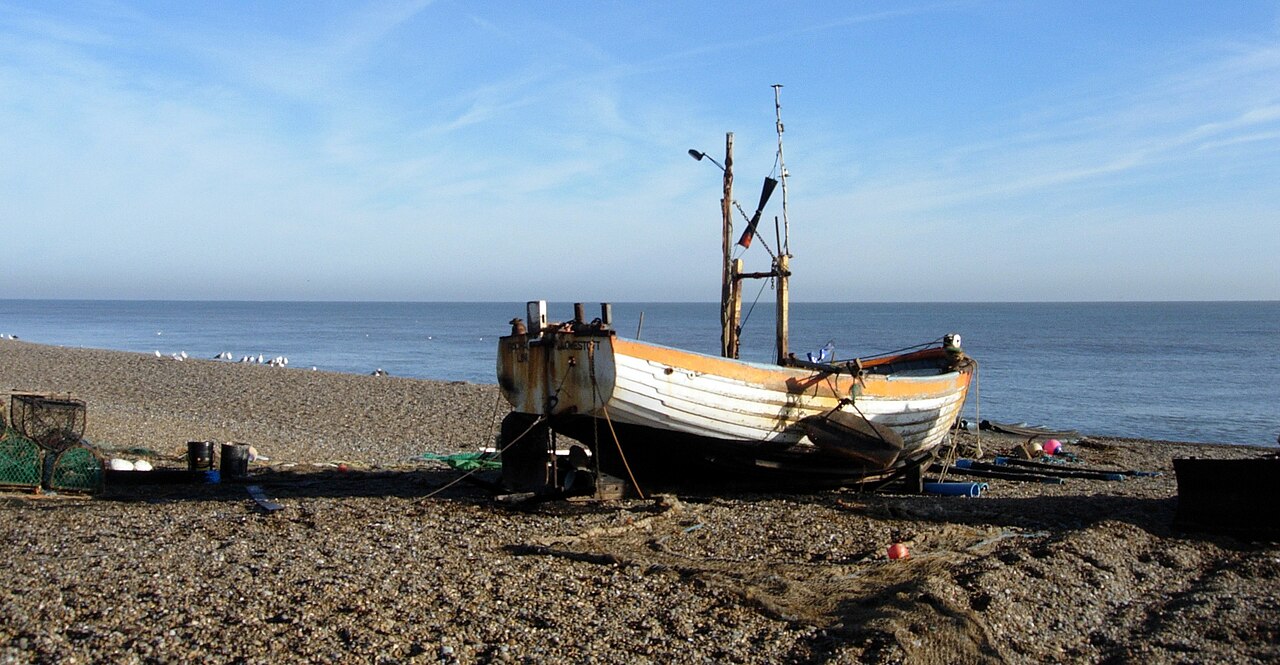
Aldeburgh faces a shingle beach and is noted for its simple sea-front promenade, fishermen's huts, and seafood shops. Historic buildings such as the 16th-century Moot Hall and stretches of Georgian facades survive alongside small galleries, craft shops and cafes. A modern sculptural landmark on the seafront has become a focal point for visitors and is often photographed. The nearby estuary and marshes create an environment valued for wildlife and coastal habitats.
History and development
The settlement grew from medieval origins as a port and fishing village. Over centuries, changes in river channels and coastal processes narrowed its role as a trading port and the town increasingly developed a leisure economy in the 19th and 20th centuries. Aldeburgh also became associated with a community of artists and musicians who were drawn by the light, landscape and relative seclusion.
Culture and events
Aldeburgh is widely known for a music festival founded in the mid‑20th century that helped raise its international profile. The town supports a lively programme of concerts, exhibitions and seasonal events that combine professional performances with local participation. Small museums and heritage groups preserve the story of fishing, boatbuilding and local life.
Nature and recreation
The Alde‑Ore Estuary and surrounding marshes are important for wildfowl and wading birds; they are popular with birdwatchers, walkers and sailors. Boat trips, crabbing from the harbour, coastal walks and beach leisure are common activities. Conservation organisations work in the area to manage habitats and to balance recreation with protection of wildlife.
Notable facts and visitor tips
- Local food: smoked fish and seafood stalls reflect the town's fishing heritage.
- Accessibility: the shingle beach can be steep in places; facilities are concentrated near the town centre.
- Architecture: look for the Moot Hall and narrow lanes of traditional houses.
- Events: check the town's programme for concerts and seasonal festivals before visiting.
For current visitor information, cultural programmes and conservation notices, official and community pages provide up‑to‑date details about Aldeburgh and the surrounding coast.
Related articles
Author
AlegsaOnline.com Aldeburgh — coastal town on the River Alde in Suffolk Leandro Alegsa
URL: https://en.alegsaonline.com/art/2212