
Alderney: the northernmost inhabited Channel Island of the Bailiwick of Guernsey
Alderney is the northernmost inhabited Channel Island. This article explains its geography, government, language, wartime history, economy, and notable features.
Overview
Alderney is one of the Channel Islands, located in the English Channel between England and France. It is the northernmost of the main inhabited islands and part of the Bailiwick of Guernsey. Despite its small population and area, Alderney maintains its own local legislature, The States of Alderney, which retains powers to make laws for many domestic matters while some functions are coordinated with Guernsey.
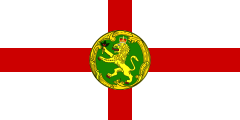
Image gallery
10 Images



Geography and environment
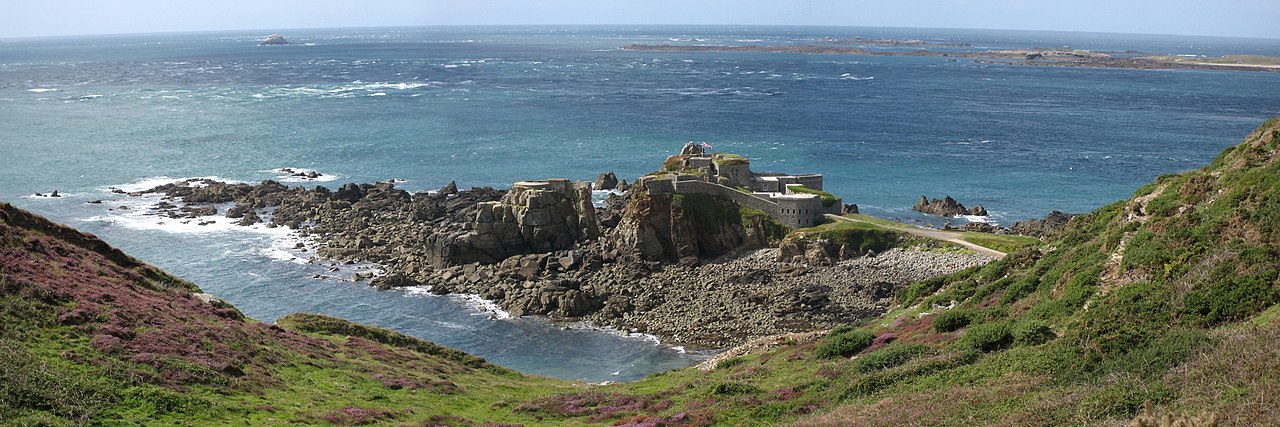
The island is characterised by a rocky coastline, coastal cliffs and several sandy bays. Its terrain is generally low-lying with gentle hills and several distinct headlands. The surrounding marine environment supports seabird colonies and a mix of Atlantic and Channel marine species; fisheries and marine conservation are local concerns. Alderney's climate is maritime, with mild winters and cool summers influenced by the nearby sea.

Government, law and services
Alderney forms part of the Bailiwick but has its own elected body, The States of Alderney, that manages many internal affairs. Certain services such as taxation, social security and some judicial functions are coordinated with the wider Bailiwick administration. Local lawmaking and community institutions reflect the island's small population and the practical needs of island life.
Language and culture
Historically the island's traditional Norman language was Auregnais, a variety of the Norman languages spoken across the Channel Islands. Auregnais is now considered extinct as a community language, replaced by English in everyday use. Alderney retains cultural traditions, festivals and architectural features that reflect a mix of British and Channel Island influences.
History and World War II
Alderney's history includes prehistoric settlement, medieval ties to Norman institutions, and modern developments in fishing and tourism. During World War II the island was occupied by German forces; the occupiers established several forced labour sites and used the island to build fortifications. The graves, ruins and archives remain important reminders of that period. Among the darker aspects of occupation were camps the Germans established on Alderney, which are documented as sites used for forced labour and internment (concentration camps).
Economy, transport and daily life
Economic activity is dominated by small-scale tourism, local services, construction and marine-related work. Regular ferry and air links connect Alderney to Guernsey, and seasonal services link to the United Kingdom and France, enabling trade and visitor travel. Community infrastructure is scaled to serve a small permanent population with an emphasis on resilience and self-sufficiency.
Notable facts
- Alderney is one of the least densely populated jurisdictions in the British Isles and is valued for its open landscapes and wildlife.
- Its legislative arrangements are an example of a small jurisdiction balancing local autonomy with wider administrative cooperation.
- The island's wartime remains and commemorations are studied by historians and visitors interested in 20th-century European history.

For further reading and official information see local government publications and regional maritime resources provided by the Bailiwick authorities and heritage organisations.
External references: Channel Islands overview, English Channel context, relations with England, proximity to France, Bailiwick of Guernsey, Auregnais language, World War II history, records of occupation camps.
Tags
Related articles
Author
AlegsaOnline.com Alderney: the northernmost inhabited Channel Island of the Bailiwick of Guernsey Leandro Alegsa
URL: https://en.alegsaonline.com/art/2222