
Aldgate, district of London
Aldgate is a historic district at the eastern edge of the City of London, bordering the East End. Once a gateway in the London Wall, it is now a mixed commercial and residential area with notable landmarks.
Overview
Aldgate is a district within Central London. It straddles the boundary between the City of London and the London Borough of Tower Hamlets, and is commonly regarded as part of the East End. Historically it marked the easternmost gateway through the London Wall toward Whitechapel; today it is an urban area combining offices, shops and housing.
Image gallery
9 Images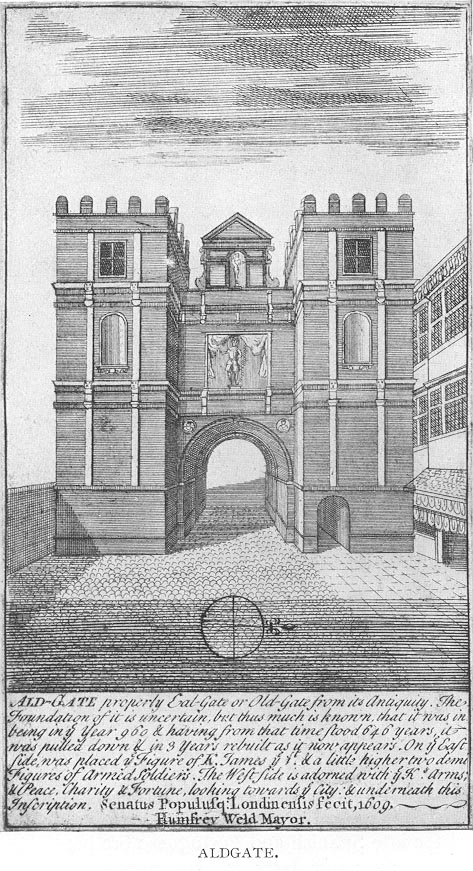


Name and origins
The place-name "Aldgate" is of early medieval origin. The most widely accepted explanation is that it refers to an "old gate" in the Roman and medieval defensive wall that once surrounded the City. That gate served as a principal approach from the east, shaping local routes and early settlement patterns.
History and development
From Roman and medieval times Aldgate functioned as a controlled entry point into the walled City. Over centuries the gate and adjacent streets developed as trade and travel intensified. The surrounding neighbourhood absorbed waves of economic and social change — from small-scale craftsmen and merchants to larger commercial enterprises as the City expanded eastwards.
Landmarks and layout
The district includes a mix of historic and modern features. Notable sites often associated with Aldgate include parish churches, surviving fragments of the old wall, and civic monuments. Streets such as Aldgate High Street connect the area to neighbouring districts and form part of a busy urban fabric of offices, retail and civic uses.
Transport, economy and uses
Aldgate has good transport links and is served by Underground and bus services, making it attractive for commuters who work in the City. The local economy is diverse: City financial services sit alongside small businesses, restaurants and residential properties. Recent decades have seen redevelopment and adaptive reuse of buildings to meet changing commercial and housing needs.
Notable facts and distinctions
- Aldgate’s identity is shaped by its status on the City boundary and its historical role as an eastern gateway.
- The area lies within broader stories of London’s eastward growth and the multicultural character of the East End.
- Today it is a transitional zone where ancient streets and modern developments coexist.
Tags
Related articles
Author
AlegsaOnline.com Aldgate, district of London Leandro Alegsa
URL: https://en.alegsaonline.com/art/2228