
Common Desktop Environment (CDE)
Common Desktop Environment (CDE) is a traditional Unix graphical desktop built on the Motif toolkit, widely used on commercial Unix systems and later released as open-source software.
Overview
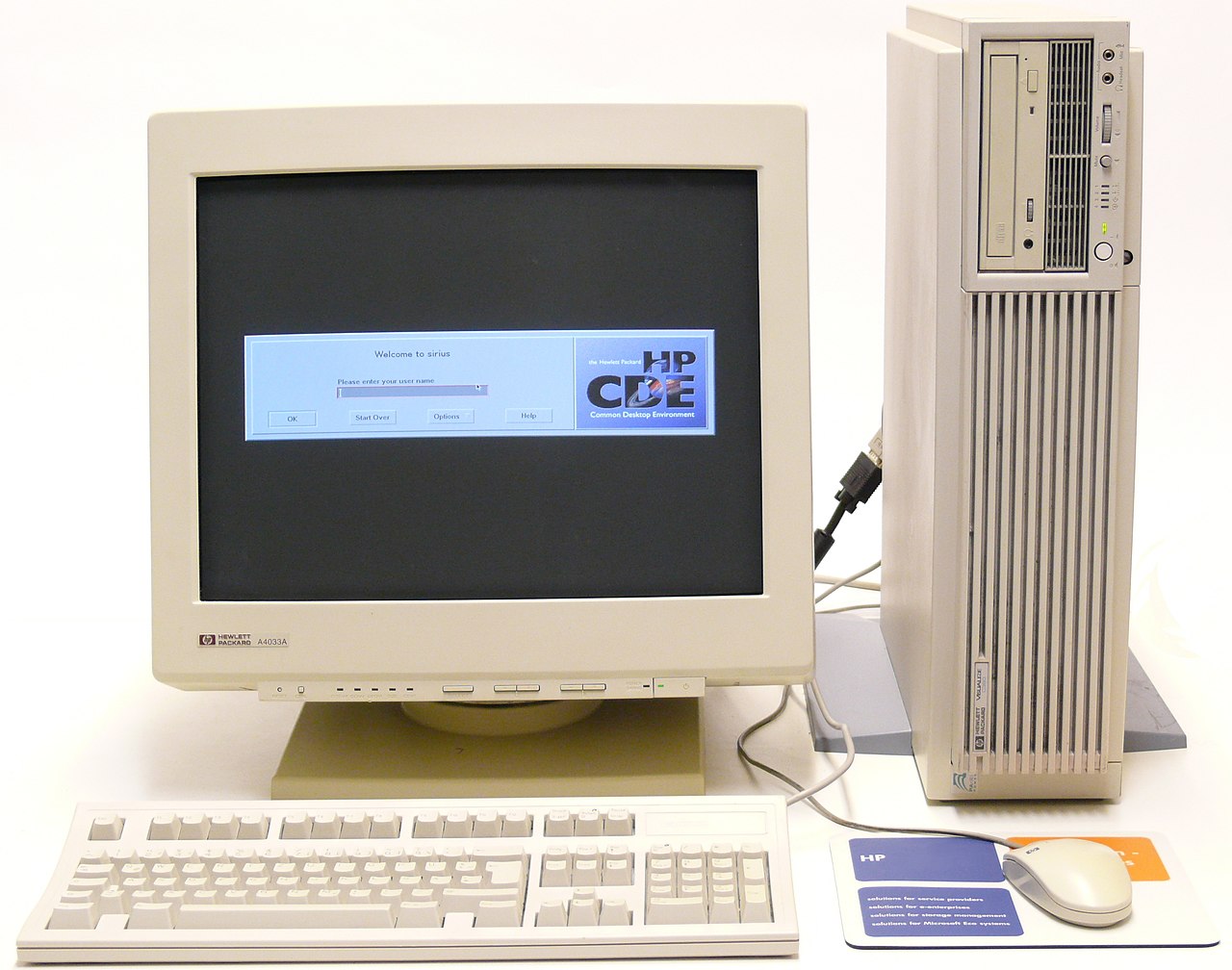
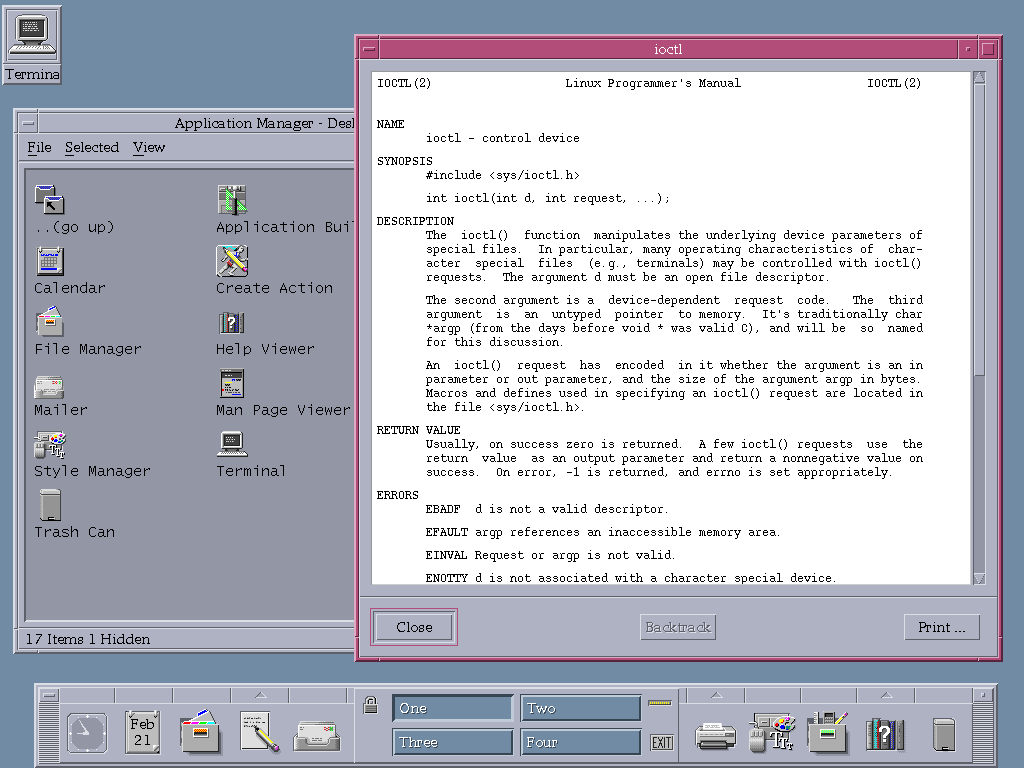
The Common Desktop Environment (CDE) is a graphical desktop environment originally created for Unix systems. It provides a coordinated set of desktop elements — panels, application menus, a file manager, and session controls — and is implemented on top of the X Window System. CDE's visual and interaction design is based on the Motif widget toolkit, which shapes its characteristic look and behaviour.
Image gallery
5 Images


Characteristics
CDE is organized around a persistent "Front Panel" for launching and switching programs, a Workspace Manager for handling virtual desktops, and a file manager with basic file operations. It supports session management, drag-and-drop limited to Motif conventions, and window decorations consistent with Motif themes. The environment was designed for stability and consistency across different commercial Unix platforms.
History and development
Developed in the early 1990s by a consortium of major Unix vendors, CDE was intended as a common standard to simplify desktop interaction on commercial Unix systems. For many years it appeared as the default or standard option on several vendor releases. In the 2010s, stewardship shifted: the original proprietary source was made available under an open-source license, enabling community updates and ports to a wider range of operating systems.
Uses and examples
CDE has been deployed on a variety of enterprise Unix releases and was commonly provided on vendor distributions. Organizations that maintained long-lived Unix installations often used CDE for its conservative design and vendor support. Today it is preserved both on legacy systems and by enthusiasts who prefer its straightforward, low-overhead interface. Vendors such as HP historically provided and supported CDE on some of their operating system offerings, and CDE was available for platforms like OpenVMS in certain distributions.
Distinctions and legacy
- CDE is closely associated with the Motif toolkit, giving it a distinct, professional appearance compared with later desktop projects.
- It prioritized uniform behaviour across diverse Unix systems rather than rapid innovation, which made it popular in commercial settings.
- After the rise of free desktop projects (GNOME, KDE), CDE became less common as a default but remains available via ports and community-maintained packages.
For a concise introduction and technical references see general documentation and vendor pages: Common Desktop Environment overview.
Related articles
Author
AlegsaOnline.com Common Desktop Environment (CDE) Leandro Alegsa
URL: https://en.alegsaonline.com/art/22001