
OpenVMS: a resilient enterprise operating system
OpenVMS is a multiuser, multitasking OS originally by Digital Equipment Corporation for VAX hardware, later ported to Alpha and Itanium. It is known for clustering, availability and strong security.
Overview
OpenVMS is a closed-source, proprietary operating system family originally developed by Digital Equipment Corporation (DEC) for its 32-bit VAX servers. Designed from the start to support multiple simultaneous users and to run many processes concurrently, OpenVMS became popular where reliability, predictable performance and long uptimes were essential. While starting on the VAX line, the system was later adapted to other processor families such as Alpha and Itanium processors, and its functionality and management model remain influential in enterprise computing.
Image gallery
6 Images


Architecture and key features
At its core OpenVMS uses a virtual memory model and a preemptive, priority-driven kernel to provide multitasking and robust resource control. It implements virtual memory, fine-grained process priorities and a security model that supports controlled access to system resources. The operating system was built to meet demanding operational needs and includes facilities for transaction processing and real-time responsiveness where required.
- Clustering and availability: OpenVMS supports clustering technology to combine machines into a single logical system, enabling load distribution and failover for high service continuity (high availability).
- File and data services: The system has long provided advanced file services and was extended to support a distributed model and network-transparent access through its file system.
- Networking: Early support involved DEC-specific protocols and later common stacks, enabling integration into wide-area and local networks (computer networks).
- Data management and languages: OpenVMS environments commonly used integrated data stores such as RMS and Rdb and provided mechanisms for calling between multiple programming languages.
- Security and administration: The platform includes a mature security framework for account and privilege control (security), extensive system logging, and tools for centralized administration.
History and development
Development of what became OpenVMS began in the 1970s as DEC designed an operating system for the new VAX architecture, with the first releases arriving in that era. Over subsequent decades stewardship of the product moved through several companies as the hardware and commercial landscape changed. Beyond its original VAX implementation the code base was ported to other CPU families to support customers who required the same operational model on newer hardware generations. Along the way OpenVMS introduced and refined features—like cluster-based high availability and integrated transaction support—that informed later enterprise operating systems.
Uses, industries and administration
OpenVMS has been adopted where continuous operation and predictable behavior are priorities. Sectors that historically relied on the platform include banking and financial services (financial institutions), healthcare and hospitals, telecommunications, utilities and industrial control. Administrators prize the system for features such as "rolling upgrades," which permit software and hardware refreshes without full shutdown, and for the ability to design geographically dispersed clusters that tolerate site failures.
Notable distinctions and legacy
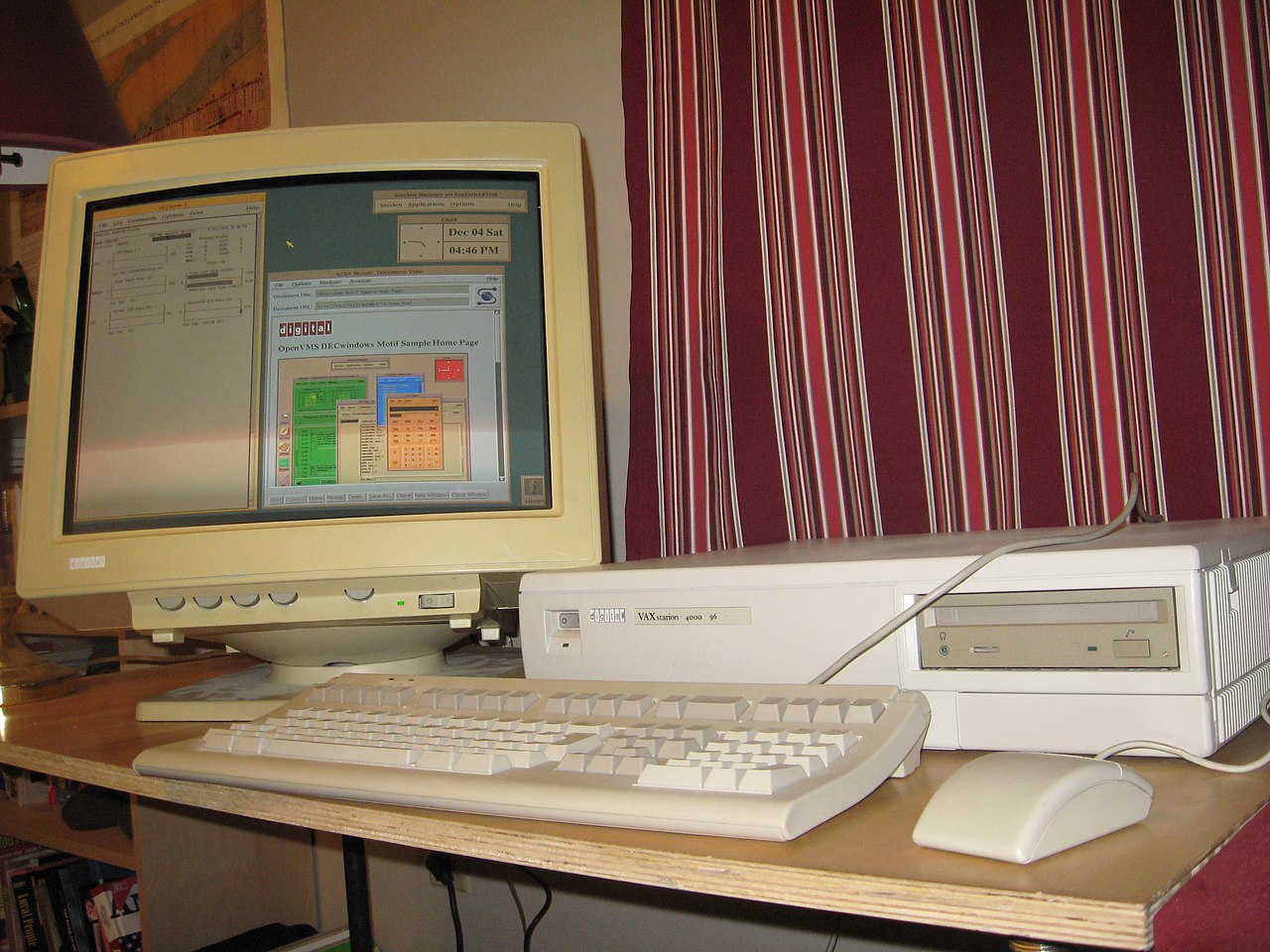
Many elements that became common in later systems—robust clustering, integrated database services, and strong multi-language support—were handled in mature ways on OpenVMS early in its life. The operating system maintains a reputation for stability and for tools that support intensive operational requirements. Workstations such as the VAXstation helped bring graphical interfaces to OpenVMS users in its era, while the platform's treatment of transaction safety and process isolation continues to be studied by system architects. For official resources and product information see official OpenVMS information.
Further reading and resources
- Official OpenVMS information — vendor and community resources.
- VAX architecture and history.
- Alpha and Itanium processors and their relationship with OpenVMS.
- VAXstation and workstation usage.
- Virtual memory concepts used in OpenVMS.
- Real-time and transaction processing on the platform.
- High availability and clustering techniques.
- Computer networks support and networking stacks.
- Distributed services and file access.
- File system architecture.
- RMS and Rdb database options.
- Multiple programming languages and interoperability.
- Security features and practices.
- Financial institutions as typical enterprise users.
Questions and answers
Q: What is OpenVMS?
A: OpenVMS is an operating system developed by Digital Equipment Corporation (DEC) for their VAX servers. It was later ported to DEC Alpha and Itanium-based systems, and it is a 32 bit operating system.
Q: When was OpenVMS released?
A: OpenVMS was published in 1977, making it one of the first of its kind.
Q: What features does OpenVMS offer?
A: OpenVMS offers many features such as virtual memory, time sharing, batch processing, transaction processing, real-time system support, high availability through clustering, computer networks (DECNet/TCP/IP), symmetrical/asymmetrical/NUMA multiprocessing including clustering, distributed file system, integrated database (RMS/Rdb), support for different programming languages with standardized mechanism of calls between them, extensible Shells and high levels of security.
Q: How long can the uptime be on an OpenVMS system?
A: System up-times of over a decade have been reported on an OpenVMS system.
Q: Does upgrading software or hardware require shutting down the system?
A: No - a feature called "rolling upgrade" allows users to upgrade software or hardware without needing to shut down the system.
Q: Is there any way to avoid downtime if a data center is destroyed?
A: Yes - if the system is configured properly then even if a data center is destroyed there will not be any downtime.
Q: Who uses OpenVMS today?
A: Today customers using OpenVMS include banks and financial services companies, hospitals and healthcare organizations, network information services providers and large-scale industrial manufacturers of various products.
Related articles
Author
AlegsaOnline.com OpenVMS: a resilient enterprise operating system Leandro Alegsa
URL: https://en.alegsaonline.com/art/72792
Sources
- uptimes-project.org : ""The Uptimes-Project.org - Host Information: WVNETcluster""