
Coenobitidae: family of land hermit crabs
Coenobitidae is the family of terrestrial hermit crabs, including Coenobita and Birgus (the coconut crab). Air-adapted scavengers tied to the sea for breeding; important in coastal ecosystems and the pet trade.
Coenobitidae is the crustacean family that comprises the terrestrial hermit crabs. Members are a specialized group of hermit crabs adapted to life on land but retain a reproductive dependence on the sea. The family contains all known species of land-dwelling hermit crabs (species list), organized into two recognized genera.
Image gallery
5 Images


Classification
- Birgus — represented by the coconut crab (Birgus latro), a fully terrestrial species that loses the habit of carrying a shell as an adult.
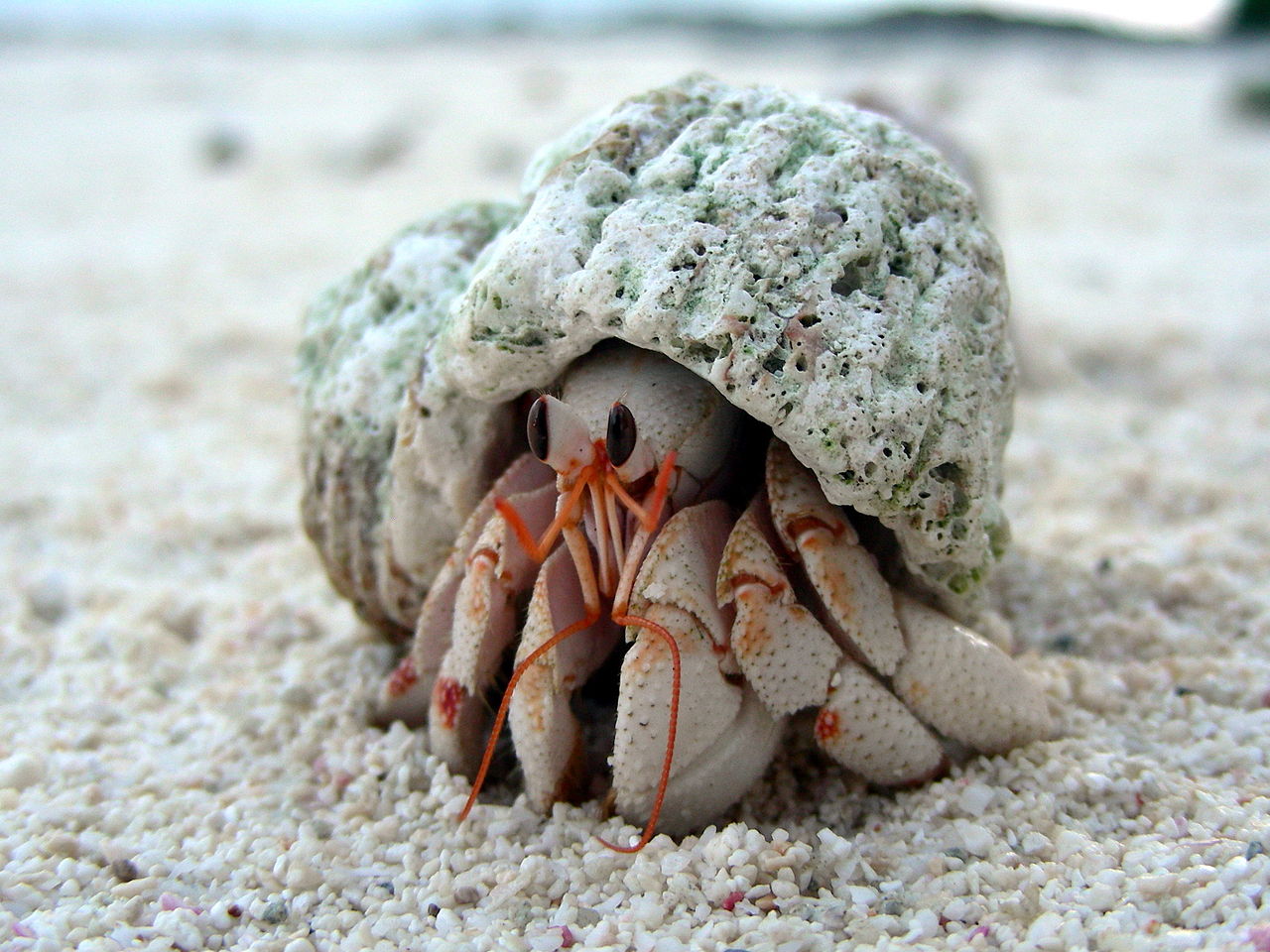
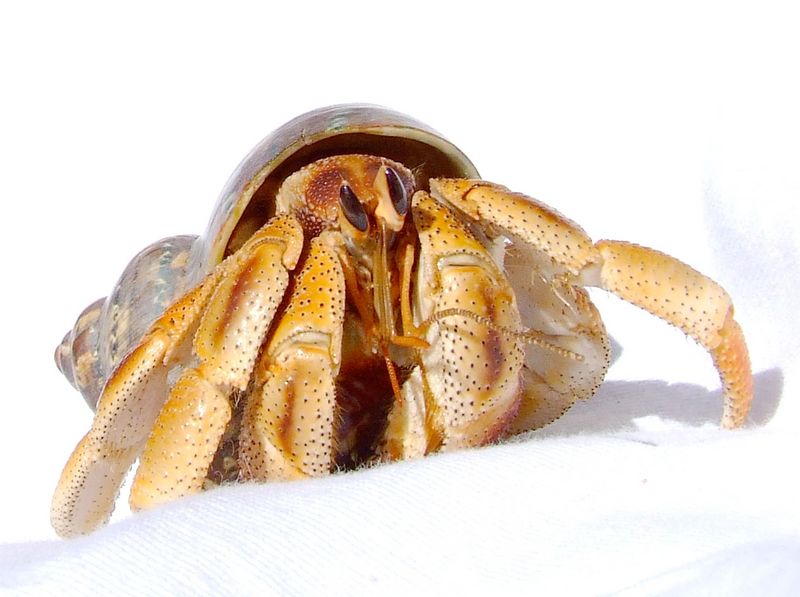
- Coenobita — the genus that includes the majority of land hermit crab species, which use empty gastropod shells for protection.
Morphology and behavior
Coenobitids have robust claws, a soft, asymmetrically coiled abdomen adapted to fit shells, and modified gill structures that allow gas exchange in air when kept moist. Most species remain shell-dependent for protection; they forage as omnivorous scavengers, feeding on plant material, carrion, and detritus. Birgus differs by developing a hardened abdomen and greater terrestrial habits, enabling activities such as climbing and opening coconuts.
Life cycle and ecology
Despite terrestrial adaptations, reproduction requires the sea: eggs hatch into free-swimming larvae that pass through planktonic stages before settling and seeking shells. Coenobitids play ecological roles as nutrient recyclers in coastal forests and beaches and serve as prey for a range of predators.
Human interactions and conservation
Several species are popular in the pet trade and are harvested locally for food, which, together with habitat loss and coastal development, has led to population pressures in some regions. Conservation measures range from local protection of nesting beaches to trade regulation.
Notable facts
The coconut crab is the largest extant terrestrial arthropod and exemplifies the extreme of land adaptation within Coenobitidae. The group illustrates a key evolutionary transition: extensive modification for life on land while maintaining a necessary link to the marine environment for early development.
Related articles
Author
AlegsaOnline.com Coenobitidae: family of land hermit crabs Leandro Alegsa
URL: https://en.alegsaonline.com/art/21394