
Colorado potato beetle (Leptinotarsa decemlineata)
A striped leaf beetle native to North America that is a major pest of potato and other nightshades, notable for its life cycle, wide geographic spread, and frequent evolution of insecticide resistance.
Overview: The Colorado potato beetle (Leptinotarsa decemlineata) is a small, stout leaf beetle best known as a serious pest of cultivated potato and other members of the nightshade family. Its conspicuous yellow-and-black striped elytra give it a distinctive appearance and its scientific name refers to the ten longitudinal stripes on the wing covers. For a general species summary see species information.
Image gallery
10 Images


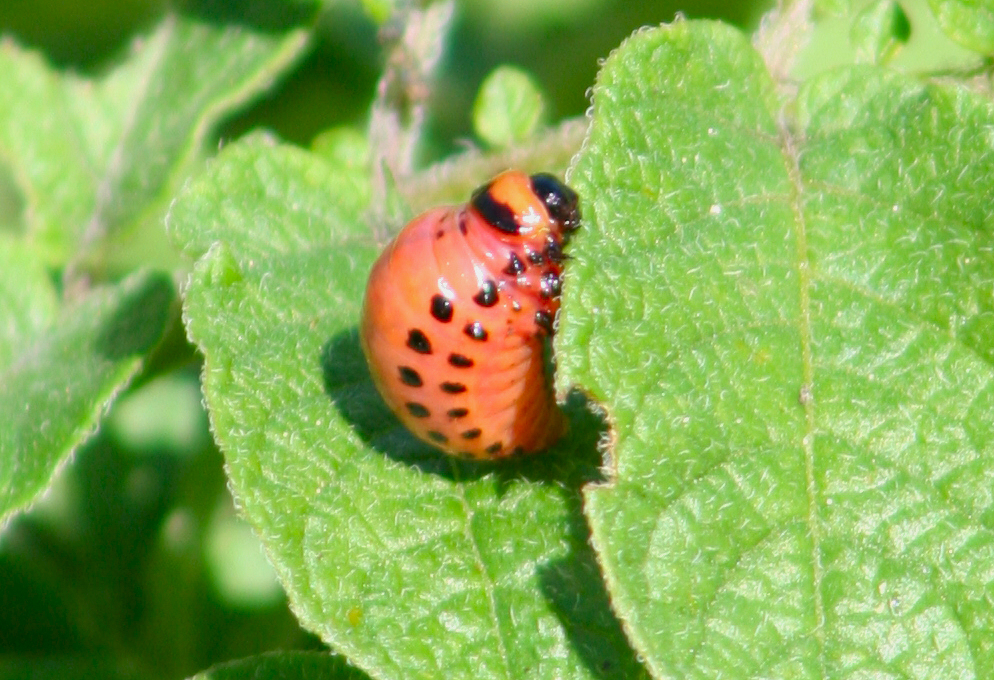


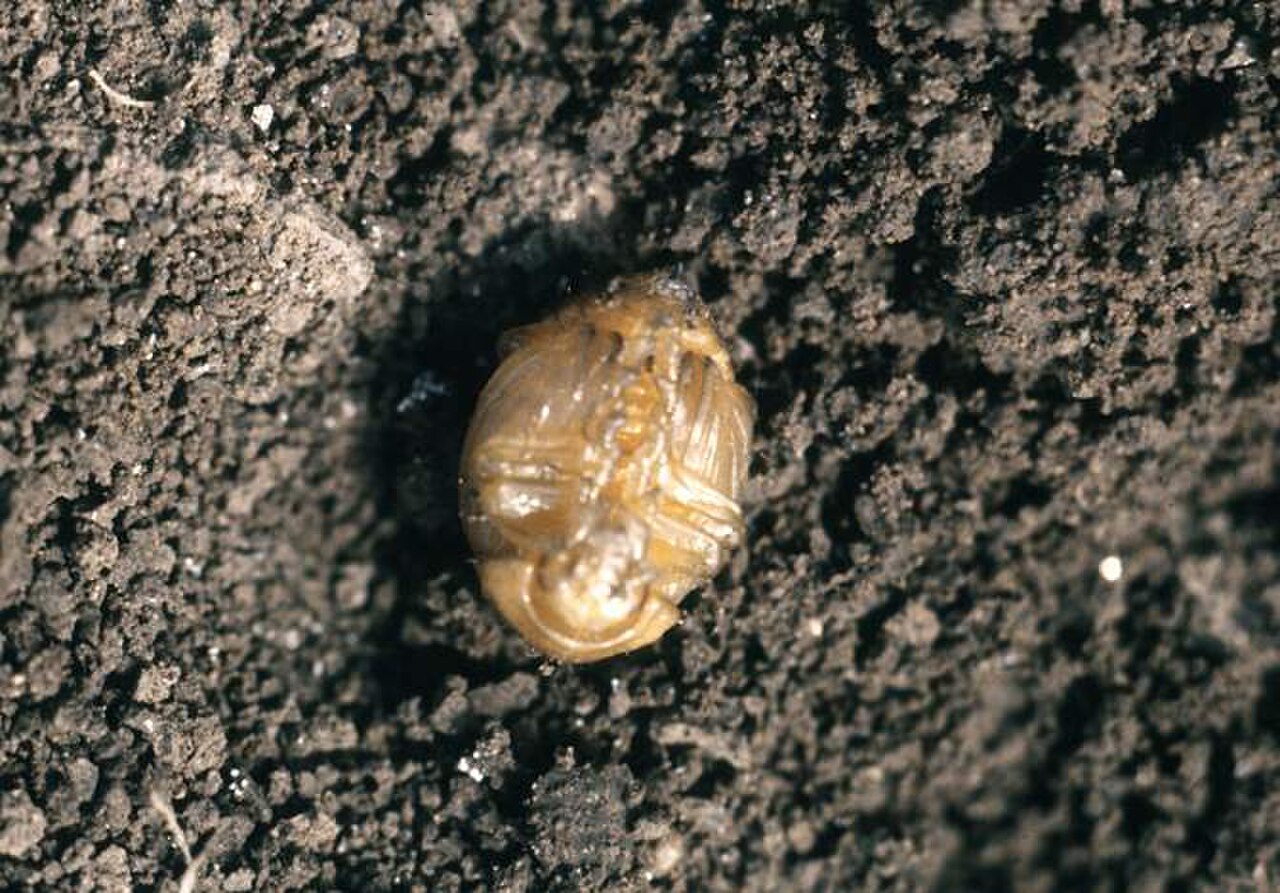


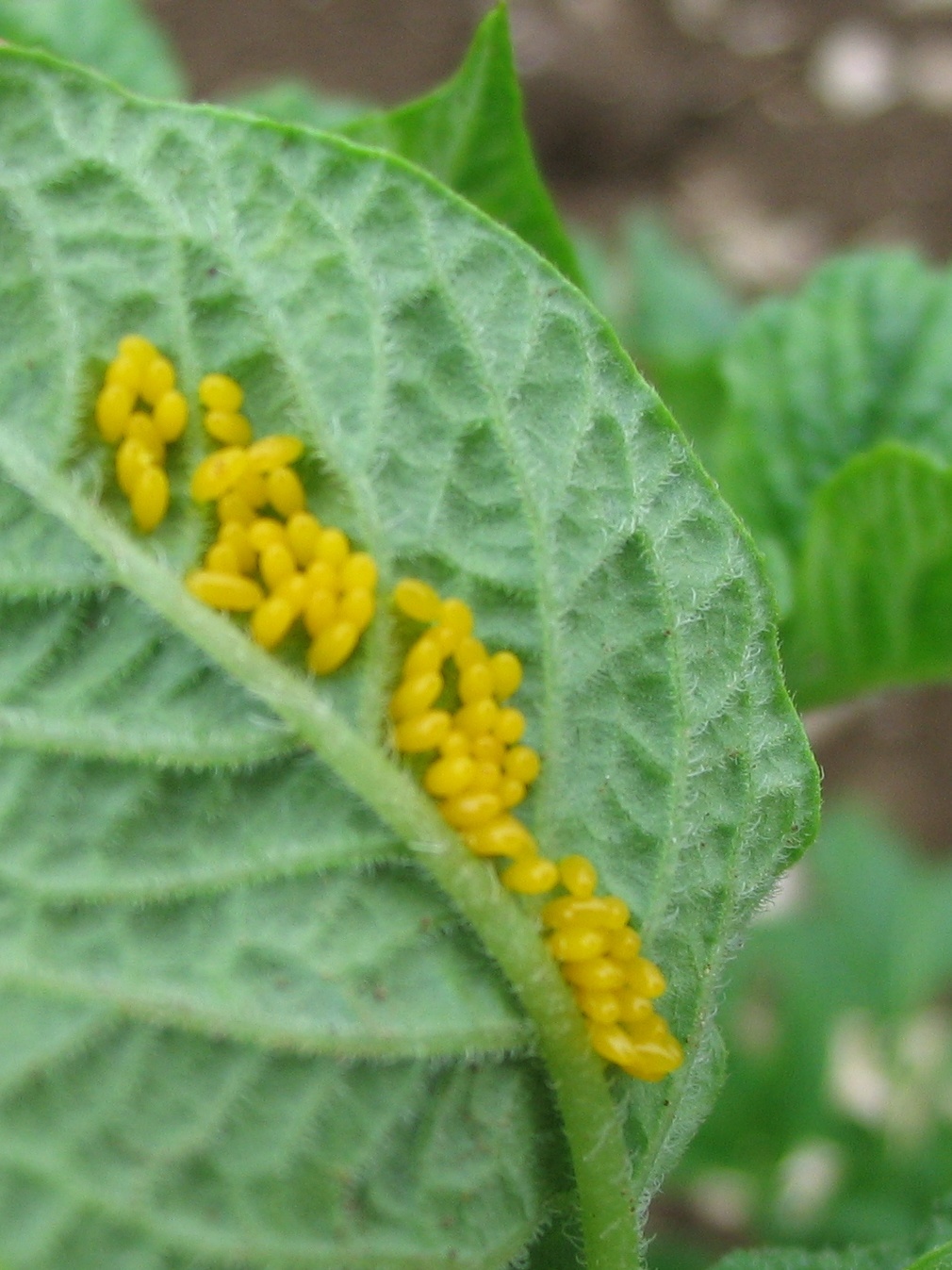
Identification and life cycle
Adults are rounded, about 6–11 mm long, with alternating dark and pale stripes. Females lay clusters of bright yellow-orange eggs on the underside of leaves. Larvae are plump and typically reddish or orange with dark spots; they pass through several instars before pupating in soil. Overwintering occurs when adults burrow into the ground and emerge the following growing season. Number of generations per year varies with climate and latitude. For detailed life-stage descriptions consult identification guides.
Range and historical spread
Native to the southwestern United States and northern Mexico, the beetle expanded rapidly as potato cultivation spread. During the past century it established across much of North America and later moved into Europe and Asia. Human transport of infested tubers and natural dispersal aided its expansion. Historical and distributional notes are available at distribution resources and regional pest histories.
Pest status and insecticide resistance
This species is regarded as one of the most challenging potato pests because it can defoliate plants and because populations repeatedly evolve resistance to chemical controls. Over decades many populations have developed resistance to numerous insecticidal compounds across multiple chemical classes. Resistance patterns vary by region and by population; not every population resists every compound. Reviews of resistance research can be found at research summaries and resistance databases.
Management and control
Effective control typically combines several tactics as part of integrated pest management (IPM):
- Crop rotation and removing volunteer potato plants to reduce overwintering sites.
- Physical removal (handpicking) of beetles and egg masses in small plantings.
- Use of biological agents and natural enemies, including predatory insects and entomopathogenic bacteria.
- Targeted insecticide use guided by monitoring and thresholds to slow resistance development.
For practical recommendations and management plans see extension resources, control guides, and case studies at agronomic reports.
Notable facts and distinctions
The Colorado potato beetle is often used as a model for studying rapid evolution of pesticide resistance and insect-plant interactions. It feeds primarily on Solanaceae (potato, tomato, eggplant and related weeds), which helps distinguish it from other leaf beetles. Additional ecological and experimental information is available via ecology summaries and academic overviews.
Questions and answers
Q: What is the Colorado potato beetle?
A: The Colorado potato beetle, also known as Leptinotarsa decemlineata, is a type of beetle that is considered one of the worst potato pests in the world.
Q: Why is the Colorado potato beetle notable?
A: The Colorado potato beetle is notable because it is resistant to many pesticides, including 52 chemical compounds used in insecticides like cyanide.
Q: How long has the Colorado potato beetle been resistant to pesticides?
A: Over the last 50 years, the Colorado potato beetle has become resistant to 52 chemical compounds used in insecticides.
Q: Is every population of the Colorado potato beetle resistant to every chemical?
A: No, not every population of the Colorado potato beetle is resistant to every chemical.
Q: Where did the Colorado beetle first live?
A: The Colorado beetle first lived in the southwest United States and northern Mexico.
Q: Where can the Colorado beetle be found now?
A: The Colorado beetle can now be found in most of North America, as well as Europe and Asia.
Q: Why is the Colorado potato beetle a pest?
A: The Colorado potato beetle is considered a pest because it can cause significant damage to potato crops.
Related articles
Author
AlegsaOnline.com Colorado potato beetle (Leptinotarsa decemlineata) Leandro Alegsa
URL: https://en.alegsaonline.com/art/21743
Sources
- itis.gov : "Leptinotarsa decemlineata"
- bbc.co.uk : bbc.co.uk/news/science-environment-15623490
- species.wikimedia.org : Leptinotarsa decemlineata