
Hermit crab
Hermit crabs are decapod crustaceans that protect their soft abdomens by occupying empty gastropod shells. They show unique shell‑use behaviour, varied habitats, and important ecological roles.
Overview
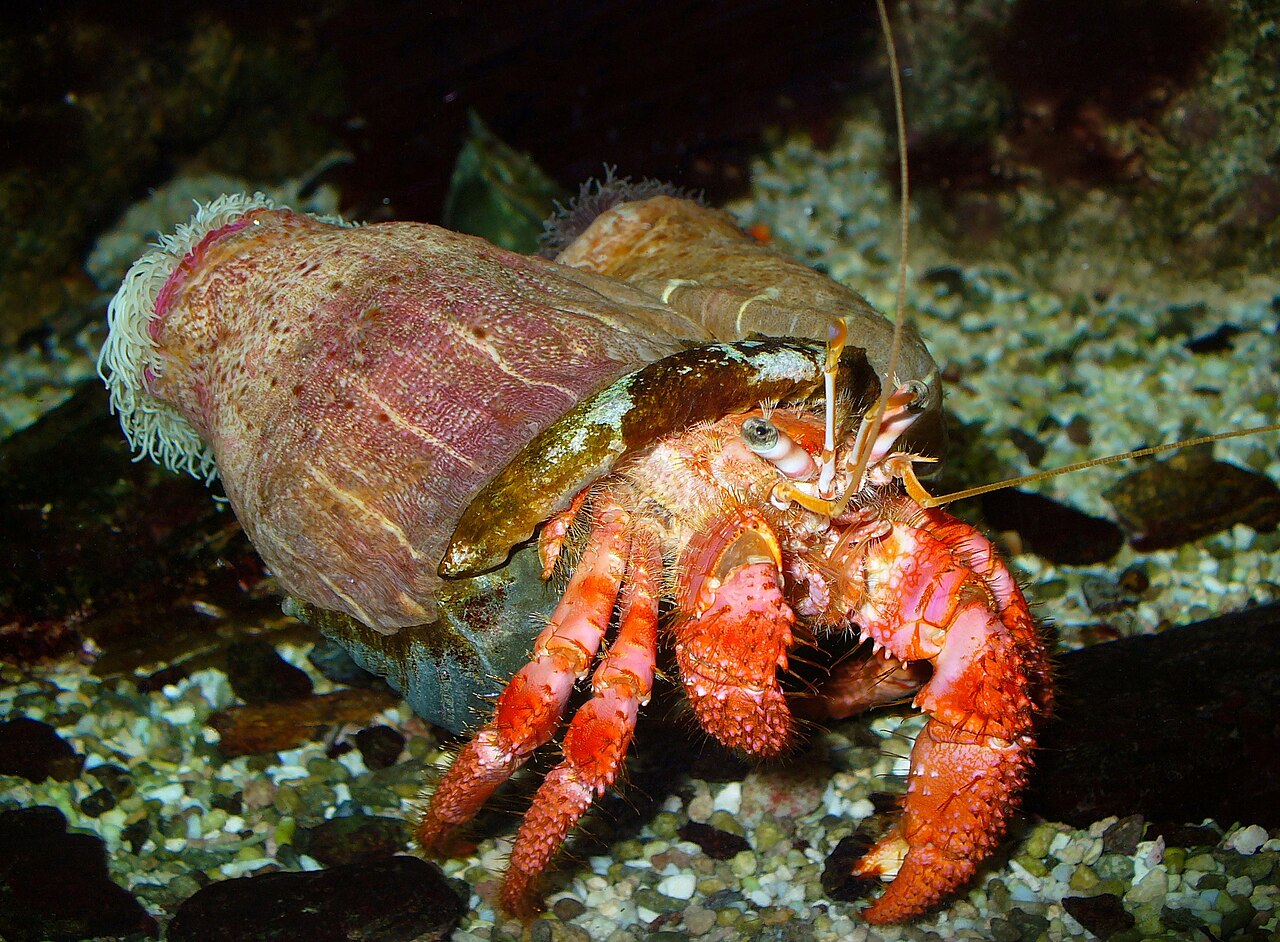
The hermit crab is a common name for members of several families of decapod crustaceans that occupy empty shells to protect their soft, vulnerable abdomens. Unlike true crabs, many hermit crabs have a coiled, unarmoured posterior that must be sheltered. Both marine and terrestrial species exist; their appearance and behaviour reflect adaptations to different environments.
Image gallery
10 Images



Key characteristics
Hermit crabs share a set of distinctive traits that separate them from other crustaceans. These include:
- A soft, asymmetrical abdomen tucked into a portable shell.
- Ten legs (decapod body plan), with the first pair modified as claws.
- Omnivorous, scavenging feeding habits that contribute to nutrient recycling.
Shell use, selection and social behaviour
Shells are essential for protection and growth. Hermit crabs typically inhabit empty gastropod shells, and many individuals prefer common forms such as whelk shells. As they grow they must find larger shells and may engage in a sequence of exchanges known as vacancy chains, where multiple crabs swap shells in rapid succession. Competition for suitable shells can be intense and influences survival and reproduction.
For general reference on their biology see hermit crab resources. Popular shell types used include empty gastropod shells such as those of whelks; these are often cited as common choices (whelk shells).
Habitat, distribution and life cycle
Hermit crabs are found worldwide from shallow intertidal zones to deep waters, and some groups have adapted to life on land in humid coastal forests. Marine species release larvae into the sea, which pass through planktonic stages before settling. Terrestrial species generally need access to seawater for larval development, even if adults live on land. Periodic molting is required for growth and often involves hiding within the shell for protection.
Human interactions and conservation
Hermit crabs are popular in the pet trade and are sometimes affected by habitat loss, pollution and the removal of empty shells from beaches. Adequate shell availability is crucial; conservation efforts and responsible pet keeping emphasize leaving shells in the wild and ensuring captive crabs have appropriately sized, varied shells and proper humidity.
Notable facts
Hermit crabs exhibit notable social and ecological behaviours: they act as scavengers that help clean shores, can form queues or clusters during shell searches, and show problem-solving in choosing and manipulating shells. Their reliance on discarded gastropod shells makes them sensitive indicators of coastal health.
Related articles
Author
AlegsaOnline.com Hermit crab Leandro Alegsa
URL: https://en.alegsaonline.com/art/43830