
Cluster (computing)
A computing cluster is a set of linked computers that collaborate to act as a single system, improving performance, scalability or availability for tasks ranging from scientific simulation to web services.
Overview
A computing cluster is a group of independent computers—called nodes—that are connected and coordinated so they can be used together as a single logical system. By pooling processing power, memory and storage, clusters can tackle problems that are too large, too fast, or too critical for a single machine. Clusters are used in scientific computing, data analytics, web hosting, and any environment that needs higher throughput, redundancy, or lower cost-per-performance than a single server can provide.
Image gallery
10 Images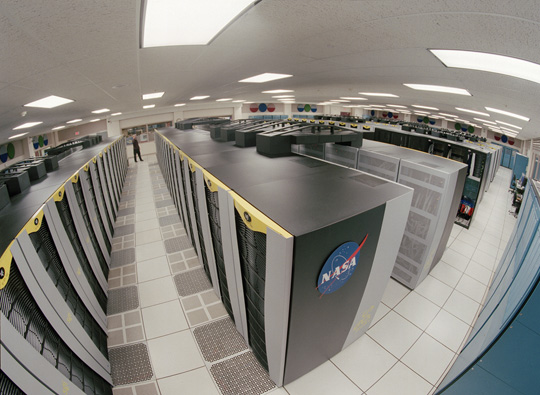
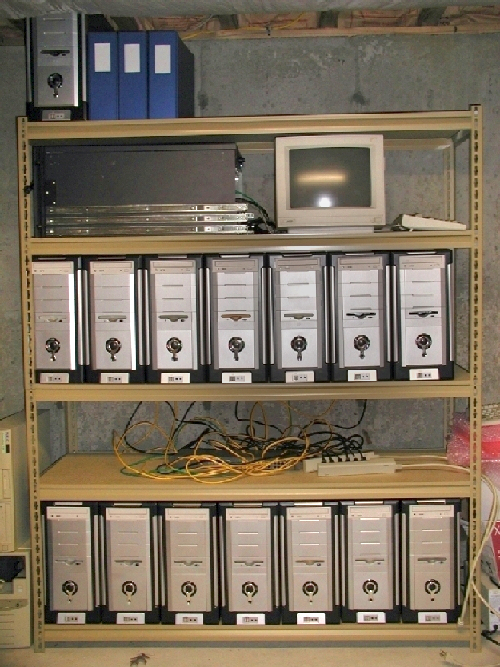
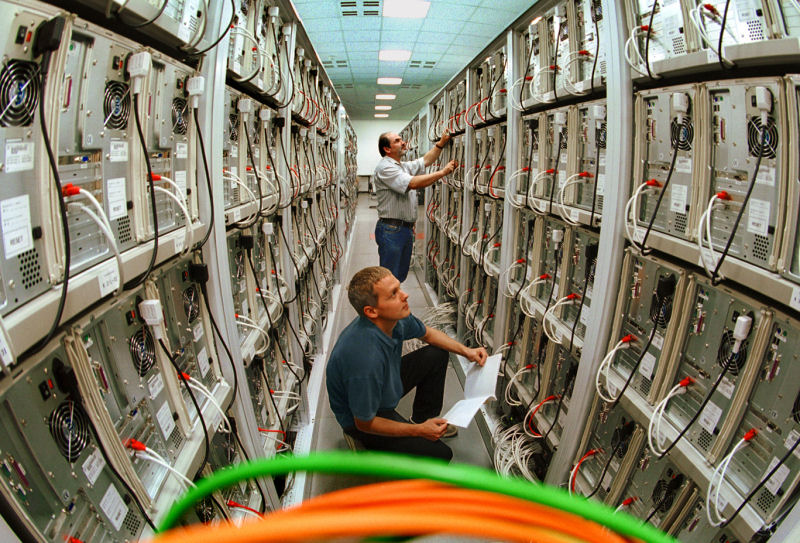


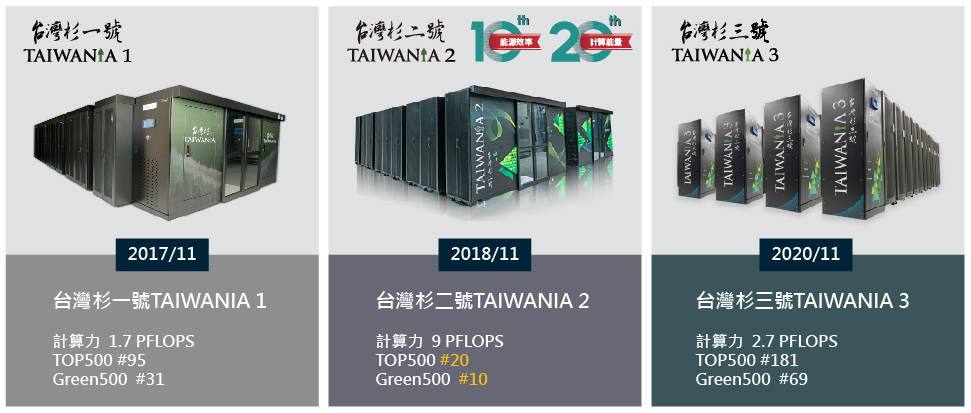
Components and architectures
Typical cluster components include compute nodes (full machines or CPU-only boards), a high-speed network interconnect, centralized or distributed storage, and management software. Storage may be presented as shared disk systems or distributed file systems; some clusters rely on a common disk subsystem that all nodes can access (shared storage). Communication and coordination between nodes are handled by software libraries and middleware such as message-passing interfaces, job schedulers, and orchestration tools.
- Node types: compute nodes, head or master nodes (managing jobs), and I/O or storage nodes.
- Interconnects: commodity Ethernet, low-latency fabrics, and other high-bandwidth links.
- Architectures: shared-memory, distributed-memory (message passing), shared-disk, and shared-nothing designs.
History and development
The cluster approach grew from efforts to achieve parallelism and fault tolerance without relying on single, very expensive machines. During the late 20th century, researchers and engineers began assembling networks of commodity hardware to obtain supercomputer-level performance at far lower cost. Open-source and community projects helped standardize software stacks and techniques for managing many nodes as a cohesive system. Over time clusters have evolved to support virtualization, container orchestration, and integration with cloud platforms.
Uses, advantages and examples
Clusters serve many roles. High-performance computing (HPC) clusters run simulations and scientific models. Data clusters execute distributed analytics and machine learning workloads. High-availability clusters provide failover for critical services, and load-balancing clusters distribute incoming requests across multiple servers. Because clusters can be built from many inexpensive machines, they often provide a cost-effective route to increased capacity—using a group of cheaper components can be more economical than buying a single, more powerful system (cost trade-offs).
Distinctions and related models
Clusters are one of several distributed computing models. They are usually homogeneous or centrally administered and often located in a single data center. By contrast, grid computing describes looser federations of heterogeneous systems that may be geographically dispersed and work on separate parts of a larger problem. Clouds expose pooled resources through service interfaces and may use clusters internally. Key distinctions include node homogeneity, physical proximity, network latency, and the coordination model used to schedule work.
Limitations and notable considerations
Clusters improve scalability and resilience, but they add complexity. Software must manage communication, synchronization, and possible node failures. Network bandwidth and latency can become bottlenecks, and not every application parallelizes efficiently across many nodes. Administrators must balance hardware choices, interconnect quality, storage design, and management tools to suit the intended workloads. When planned and maintained properly, clusters remain a foundational approach for scaling compute and storage beyond single-machine limits.
Related articles
Author
AlegsaOnline.com Cluster (computing) Leandro Alegsa
URL: https://en.alegsaonline.com/art/21172