
Colossus computer: Britain’s wartime programmable electronic cryptanalytic machine
Colossus was an early programmable electronic digital computer developed at Bletchley Park to help decrypt German Tunny teleprinter traffic during World War II; its design remained secret for decades.
Overview
Colossus was developed in Britain during World War II to automate parts of the intense cryptanalytic work being carried out at Bletchley Park. It is widely regarded as the first large-scale, purpose-built programmable electronic digital computer used in combat intelligence. Rather than directly translating intercepted messages into plain language, Colossus accelerated the discovery of key settings used by a German cipher machine, making human analysis far more effective and timely.
Image gallery
10 Images


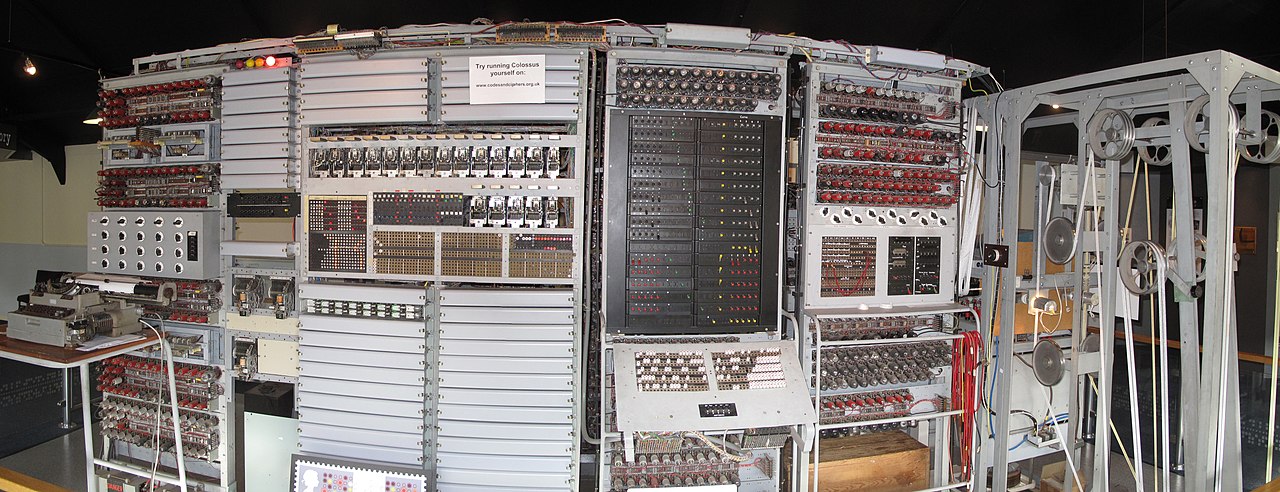


Design and technical characteristics
The machines combined high-speed electronic counting, pattern-detection circuits and paper-tape reading. The engineering was led by Post Office engineer Tommy Flowers under the direction of cryptanalytic teams led by figures including Max Newman. Colossus used numerous vacuum tubes (thermionic valves) and a set of logic and counting units that could be reconfigured by patching and control panels, giving the device limited programmability for different analytic tasks. Data were fed into the machine on punched tape, which allowed very fast sequential processing compared with manual techniques.
How Colossus was used
Colossus was created to support attacks on German teleprinter traffic known to British cryptanalysts by the cover name "Tunny". The intercepted teleprinter messages were a high-level channel used by the German High Command and field units; breaking them provided actionable intelligence that aided the Allies. Colossus carried out statistical searches and pattern tests to propose likely wheel settings for the Lorenz cipher machine; those candidate settings were then refined and verified by skilled linguists and analysts familiar with German military phrasing and procedures. Colossus did not alone produce complete plaintext but reduced the time and manpower required to reach it.
Development, deployment and wartime impact
The initial prototype, often called Mark 1, was operational in late 1943 and was followed by improved models. A later, enhanced version—Mark 2—was in service by early June 1944, shortly before the Allied landings in Normandy. By the end of the war there were ten Colossus machines working at Bletchley Park and other sites. Their contributions to decoding cryptanalysis tasks involving teleprinter traffic from German military army and other high command networks were an important part of the intelligence picture that influenced operational decisions.
Secrecy, postwar treatment and legacy
Colossus and the entire effort to break Tunny remained highly classified long after the war. To preserve secrecy the original machines were dismantled and many design documents were destroyed; the existence and nature of Colossus were not publicly acknowledged for decades. After declassification and with renewed historical interest, enthusiasts and historians reconstructed examples to demonstrate the technology and its significance. A working reconstruction is on display at the National Museum of Computing, where visitors can learn about the machine’s role in signals intelligence and the broader history of computing.
Notable distinctions and continuing importance
- Colossus is distinct from earlier electromechanical tabulating devices in that it relied on high-speed electronic switching rather than purely mechanical components.
- Its architecture emphasized pattern testing and statistical processing rather than stored-program operation as in later general-purpose computers.
- The project illustrates how collaboration between mathematicians, linguists and engineers can produce specialized computing solutions with substantial practical impact.
Further reading on Colossus often links the machine to the story of Tunny and the Lorenz cipher; those subjects show how signals interception, machine design and human analysis combined to create one of the most significant feats of wartime cryptanalysis. Museums and archives now provide access to reconstructed hardware, declassified documents and expert commentary that explain the technical choices and operational use of Colossus during the conflict.
For archival summaries and introductory material, see online resources and museum descriptions that outline the machine’s purpose and the teams behind it. For an introductory gateway to the subject, consult general overviews available from major collections and institutions that preserve this history: programmable, electronic, digital, computer, cryptanalysis, World War II, army, Allies, Max Newman, Bletchley Park, Tommy Flowers, vacuum tubes, Normandy, punched tape, and the National Museum of Computing.
Questions and answers
Q: What was Colossus?
A: Colossus was the world's first programmable electronic digital computer. It was used by British code breakers during World War II to cryptanalyze messages sent between the German High Command and army field commanders.
Q: Who designed Colossus?
A: A group of Post Office telephone engineers led by Tommy Flowers designed Colossus.
Q: When did the first Colossus machine become operational?
A: The first machine, Mark 1, became operational in December 1943 and solved its first problem in February 1944.
Q: How many Colossus computers were in use at the end of World War II?
A: Ten Colossus computers were in use at the end of World War II.
Q: What did British codebreakers call the teleprinter messages they intercepted from Germany?
A: British codebreakers called the teleprinter messages "Fish".
Q: What did they call the German coding machine and its coded messages?
A: They called the German coding machine and its coded messages "Tunny".
Q: What is known about what happened to all of the secret Colussus computers after WWII ended?
A: After WWII ended, all of the secret Colussus computers were taken apart and their designs destroyed so that no one would find out about them.
Related articles
Author
AlegsaOnline.com Colossus computer: Britain’s wartime programmable electronic cryptanalytic machine Leandro Alegsa
URL: https://en.alegsaonline.com/art/21763