
Coaxial cable: design, history, types, and common uses
Coaxial cable is a shielded transmission line used for radio‑frequency and broadband signals. This article explains its structure, common types and connectors, historical development, uses and limitations.
Overview
Coaxial cable is a type of electrical cable designed to carry high‑frequency or broadband signals with controlled impedance and reduced interference. Its distinguishing feature is a concentric construction that confines the electromagnetic field to the space between an inner conductor and an outer conductor, which reduces radiation and susceptibility to outside noise. For a technical introduction, see the technical overview.
Image gallery
10 Images



Structure and key characteristics
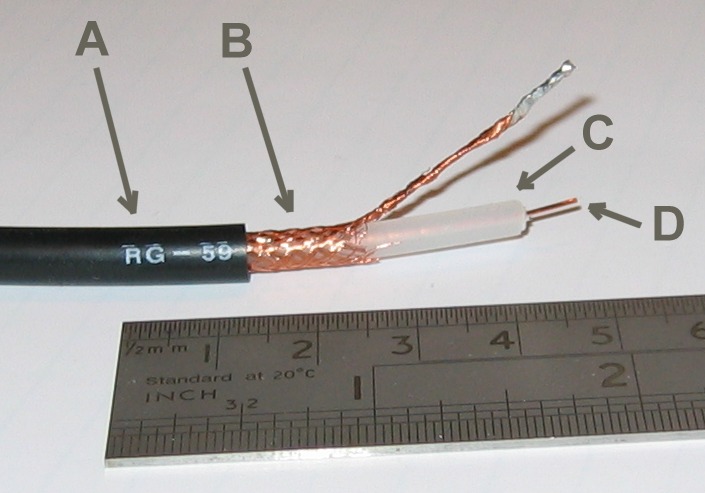
A typical coaxial cable consists of four layers: a central conductor (solid or stranded), a dielectric insulator surrounding that conductor, an outer conductor or shield (braid, foil, or both), and an outer protective jacket. The most important electrical parameters are characteristic impedance (commonly 50 ohm or 75 ohm), attenuation (loss per unit length), capacitance and voltage rating. These properties determine suitability for particular frequencies and transmission distances. Coax is commonly used for carrying radio frequency signals and cable television signal transmission.
How it works
The cable confines the signal's electromagnetic field between the inner and outer conductors so that the wave propagates with predictable velocity and minimal external coupling. That field confinement is why coaxial lines are less prone to external electromagnetic interference and why they can be routed near other equipment with limited cross talk. More on the field behavior can be found in discussions of transmission-line theory electromagnetic field and shielding effects interference.
History and development
The basic concept of a concentric transmission line emerged alongside late 19th and early 20th century advances in telegraphy and radio. Practical coaxial cables were developed as manufacturing, insulating materials and connector technology improved, enabling reliable wideband RF links. Coaxial designs were widely adopted in mid‑20th century broadcast and radio systems and later used in early computer networking standards before higher‑speed and lower‑cost alternatives became common network history.
Common types, standards and connectors
- Impedance: 50 Ω types are typical in radio and data systems; 75 Ω types are standard for television and video distribution.
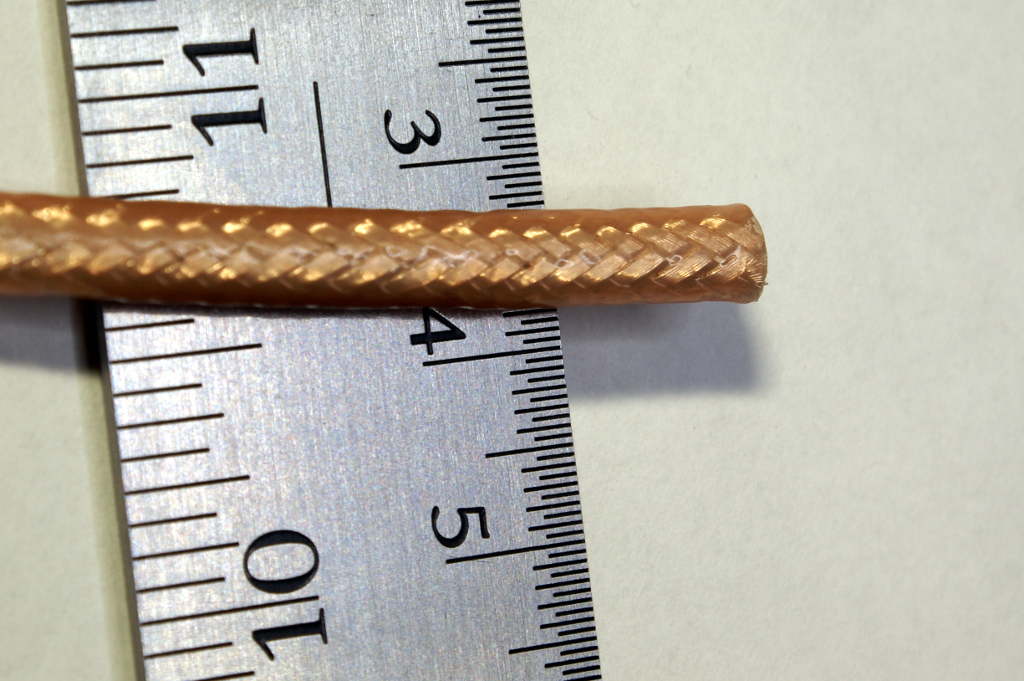
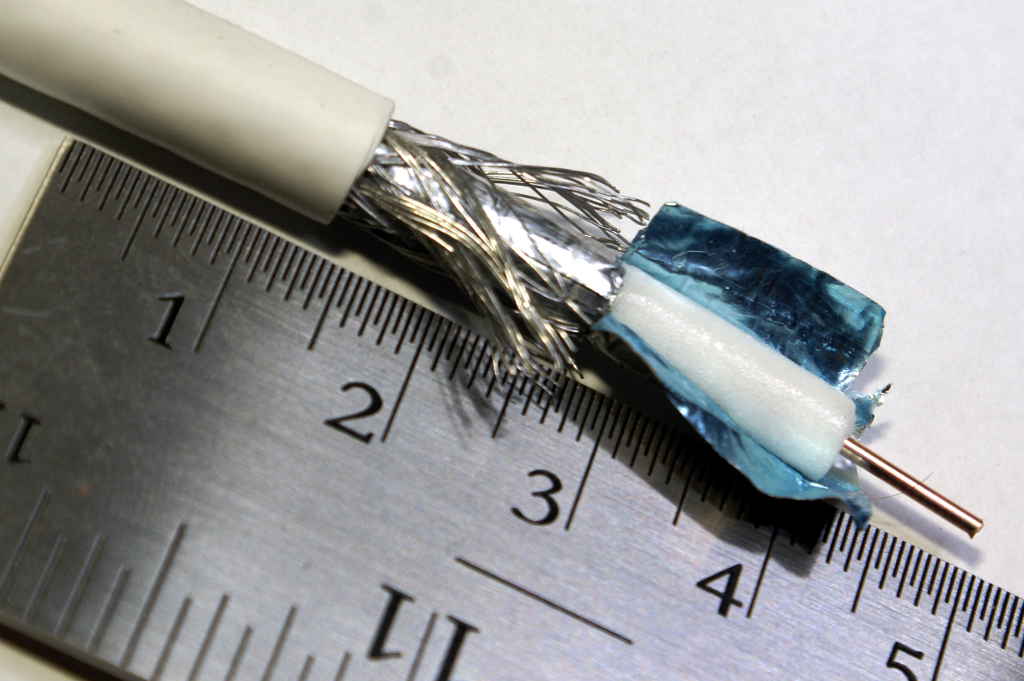
- Construction: solid versus stranded center conductors; single braid, dual braid, foil-plus-braid shields for improved isolation.
- Popular cable families: RG‑series (legacy naming), low‑loss foam‑dielectric types for long runs, and flexible coax for patch cables.
- Connectors: F‑type connectors for consumer TV/cable, BNC for instrumentation and some video, N‑type and SMA for higher‑frequency RF applications.
Applications, advantages and limitations
Coaxial cable remains widely used for cable television distribution, broadband Internet (last‑mile and in‑home wiring), satellite and antenna feedlines, closed‑circuit television, and various RF test and measurement setups. Advantages include controlled impedance, effective shielding, and good performance at high frequencies. Limitations are greater bulk and cost compared with twisted pair, increasing attenuation with frequency and distance, and sensitivity to poor connector terminations. For practical installation advice and standards references consult industry sources high‑frequency resources.
Questions and answers
Q: What is a coaxial cable?
A: A coaxial cable is a special electrical cable used to transmit signals.
Q: What is the purpose of the insulation on a coaxial cable?
A: The insulation on a coaxial cable is used to make it stiff and to prevent the electromagnetic field carrying the signal from interfering with or being interfered with by external electromagnetic fields.
Q: What are some common uses for coaxial cables?
A: Coaxial cables are commonly used for Cable TV and can also be used for computer networks, although this became rare in the 21st century.
Q: How are coaxial cables constructed?
A: Coaxial cables are typically made of a conducting wire with insulation, another layer of conducting material, and a mantle.
Q: What is the function of the conducting wire and conducting material in a coaxial cable?
A: The conducting wire and material are used to transmit a high-frequency or broadband signal.
Q: How does the EM field carrying the signal exist in relation to the inner and outer conductors of a coaxial cable?
A: The electromagnetic field carrying the signal exists ideally only in the space between the inner and outer conductors.
Q: Are there different types of coaxial cables?
A: Yes, there are different types of coaxial cables that satisfy different standards.
Related articles
Author
AlegsaOnline.com Coaxial cable: design, history, types, and common uses Leandro Alegsa
URL: https://en.alegsaonline.com/art/21279
Sources
- books.google.com : Oliver Heaviside By Paul J. Nahin
- patft.uspto.gov : U.S. Patent 1,835,031
- pat2pdf.org : pat2pdf.org/pat2pdf/foo.pl?number=1835031
- earlytelevision.org : Early Electronic Television - The 1936 Berlin Olympics
- books.google.com : Copper-Line Transmission
- time.com : Coaxial Debut
- gadgets.boingboing.net : Gallery: An illustrated history of the transoceanic cable
- books.google.com : Broadcast engineer's reference book By Edwin Paul J. Tozer
- radio-electronics.com : Coaxial feeder or RF coax cable
- atlantic-cable.com : 1956 TAT-1 Silver Commemorative Dish
- books.google.com : The worldwide history of telecommunications By Anton A. Huurdeman