
Combination lock: mechanisms, types, history, and security considerations
A combination lock uses a sequence of numbers or symbols instead of a key. This article explains how they work, common types, historical development, typical uses, and security benefits and risks.
Overview
A combination lock is a locking mechanism that opens only when its user supplies a correct sequence of numbers, symbols, or positions. Unlike keyed locks, combination locks rely on an internally aligned set of components that must match the preset combination. They are used where users prefer a code-based access method or where issuing and managing physical keys is impractical.
Image gallery
8 Images



How they work
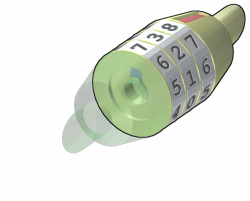
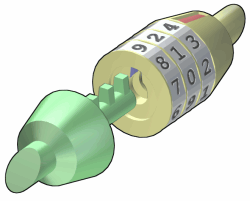
Mechanically, combination locks typically use a stack of wheels or discs keyed to a rotating dial or separate tumblers. Each wheel has a notch; when all notches align at the same position, a bar or "fence" can fall into place and allow the lock to open. Electronic models use a keypad or touchscreen to accept a numeric or alphanumeric code and actuate an internal solenoid or motor to release the bolt.
Common components
- Dial or keypad: interface used to enter the combination.
- Wheels/discs: internal parts that must align for release.
- Fence or gate: the element that engages only when alignment is correct.
- Shackle or bolt: the part that physically secures the object.
Types and variations
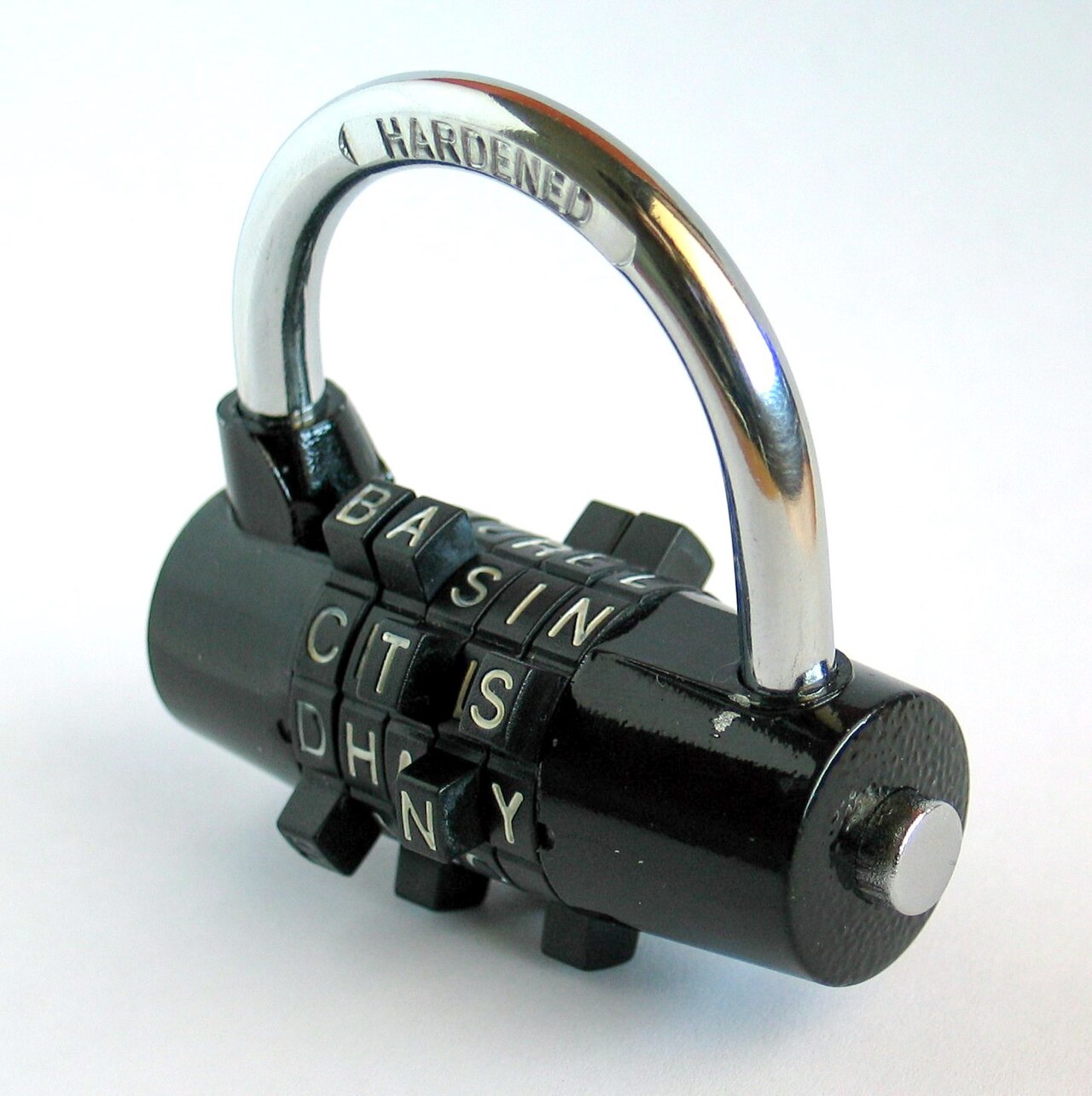
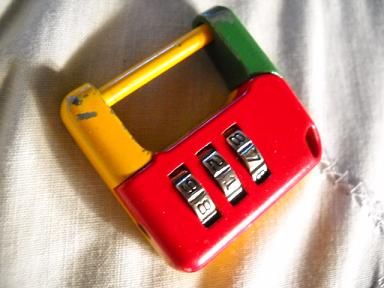
There are several varieties: single-dial mechanical locks often require a sequence of three numbers; multiple-dial padlocks have separate rotating rings; safe and vault locks may use more complex wheel packs and four-number sequences; electronic combination locks use push-button codes and can include features such as timed lockouts, audit trails, or integration with access control systems. Luggage, gym, and bike locks also commonly use simple combination mechanisms.
History and development
Combination locks have ancient antecedents but became widely practical with advances in precision machining and industrial manufacturing. Mechanical dial designs gained popularity for safes and bank vaults in the 19th and early 20th centuries. In recent decades, electronic and digital variants expanded the concept into consumer electronics and smart access systems.
Uses, advantages, and security considerations
Advantages include not needing a physical key and being able to change codes without replacing hardware on many models. They are convenient for shared access and public facilities. However, combination locks have distinct vulnerabilities: poorly designed or worn mechanisms can be decoded by manipulation, shimming, or trial-and-error; simple electronic codes can be guessed; and physical attacks (cutting, drilling) remain possible. Good practice involves choosing reputable designs, using complex combinations, periodically changing codes for shared locks, and combining mechanical strength with proper installation.
Notable distinctions
- Mechanical vs electronic: mechanical locks are passive devices without power needs; electronic locks offer features but require power and can have software-related flaws.
- Application-specific designs: high-security safes use more complex wheel packs and hardened housings compared with consumer padlocks or travel locks.
- Resettable vs factory-set: some locks allow owners to set their own combination; others come with a pre-set code that must be changed carefully.
Understanding these aspects helps users select an appropriate lock for a given risk, balancing convenience and security.
Questions and answers
Q: What is a combination lock?
A: A combination lock is a type of lock that is unlocked using a specific set of secret numbers instead of a key.
Q: How do mechanical combination locks work?
A: Mechanical combination locks typically have a dial that can be rotated to three different numbers (or four numbers for certain safe locks) in order to unlock the lock.
Q: How do electronic combination locks work?
A: Electronic combination locks usually have a keypad where the user can enter a specific combination of numbers to unlock the lock, similar to entering a telephone number.
Q: What is the advantage of using a combination lock?
A: One advantage of using a combination lock is that it eliminates the need for a key, which can be lost or stolen.
Q: Can combination locks be reset?
A: Yes, many combination locks can be reset, allowing the user to change the combination as needed.
Q: Are combination locks secure?
A: Combination locks can be very secure if programmed with a strong combination and installed properly. However, like any other lock, they can be vulnerable to certain forms of attack.
Q: What types of objects might use combination locks?
A: Combination locks can be found on a variety of objects, including safes, lockers, briefcases, and luggage.
Related articles
Author
AlegsaOnline.com Combination lock: mechanisms, types, history, and security considerations Leandro Alegsa
URL: https://en.alegsaonline.com/art/21866