
Claymore: the Scottish greatsword and its later forms
The claymore is a name applied to two related Scottish swords: the two-handed medieval greatsword and the later basket‑hilted broadsword. This article explains form, history, use, and common confusions.
Overview
The term claymore has its roots in Gaelic and is commonly associated with a large Scottish sword. In older sources the name appears linked to Scottish martial tradition and to the generic word sword. Etymologically it derives from Gaelic phrases meaning "great sword" or "two‑handed sword" and over time has been applied to more than one weapon type used in Scotland between the late medieval and early modern periods.
Image gallery
6 Images


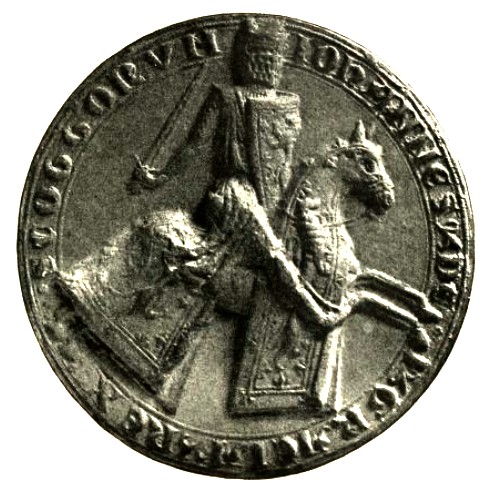
Design and characteristics
The classic two‑handed claymore is a long, double‑edged blade with a cross hilt designed for two hands. Typical surviving examples are substantial in overall length and mass: many examples approach an overall length of roughly 55 inches (1.4 metres) with blades around 42 inches, and weights commonly cited in the range of 5.5 pounds (2.5 kg). Blades often include a central groove or fuller to reduce weight without sacrificing stiffness.
By the 17th century a different sword, the basket‑hilted single‑handed broadsword, came into widespread use in Scottish regiments. This form added a basket or cup to protect the hand and was often used with a shielded left hand or with bucklers and pikes in formation. Both the large two‑handed greatsword and the later basket‑hilted broadsword are sometimes called "claymore," which leads to frequent confusion.
History and development
Long two‑handed swords of the claymore type began to appear in Scottish warfare from the later Middle Ages; some accounts place the emergence of very large forms around 1350 and note incremental lengthening of blades and grips as battlefield needs changed. These swords were especially prominent during the 16th century when Highlanders used heavy cutting weapons alongside lighter arms in raids and pitched battles; references often note the claymore's role in clashes with English forces in that period (16th century).
Use, tactics and effectiveness
On the battlefield the large two‑handed claymore functioned as a shock and cutting weapon. Its reach and momentum made it effective against lightly armoured opponents and in displacing pike formations at short range. When plate armour became thicker and more widespread some armies adopted specialized techniques or different swords for half‑armour or thrusting attacks. Contemporary comparisons sometimes pair the claymore with continental two‑handed swords such as the German Landsknecht sword (Landsknecht) when discussing weapons capable of dealing with heavy protection (armour).
Manufacture, regional centers and variants
Sword production in Scotland was concentrated in urban centres and burghs where smithing skills and trade networks supported arms manufacture. Known centres of sword making included Edinburgh, Glasgow, Stirling and the area of Canongate. During the mid‑1600s many basket‑hilted forms were produced for use by Highland and Lowland troops (mid‑1600s), reflecting a shift in battlefield doctrine and personal protection.
Distinctions and notable facts
- Name ambiguity: "Claymore" can mean either the earlier two‑handed greatsword or the later basket‑hilted broadsword; context is necessary to identify which is meant.
- Construction: two‑handed examples often feature a broad blade with a pronounced cross‑guard, while the later single‑hand type emphasizes hand protection via a basket.
- Cultural role: the claymore is a strong symbol of Scottish martial heritage and appears in art, literature and modern ceremonial use.
For further reading and images consult museum collections and specialist studies of European arms and armour. Many modern reconstructions and museum displays illustrate the range of sizes and forms the name "claymore" has covered through several centuries.
Scottish | sword | 16th century | 55 inches | 1.4 metres | 5.5 pounds | 2.5 kilograms | mid‑1600s | Edinburgh | Stirling | Glasgow | 1350 | armour | Landsknecht
Related articles
Author
AlegsaOnline.com Claymore: the Scottish greatsword and its later forms Leandro Alegsa
URL: https://en.alegsaonline.com/art/20863