
Clavicle (Collarbone): Structure, Function, Development and Clinical Notes
The clavicle (collarbone) is a long bone connecting the shoulder to the trunk. This article covers its anatomy, development, functions, common injuries, and evolutionary and clinical significance.
Overview
The clavicle, commonly called the collarbone, is a horizontally oriented long bone that links the upper limb to the axial skeleton. It spans between the sternum at the chest and the shoulder girdle, helping position the arm away from the body and providing attachment sites for muscles and ligaments.
Image gallery
10 Images


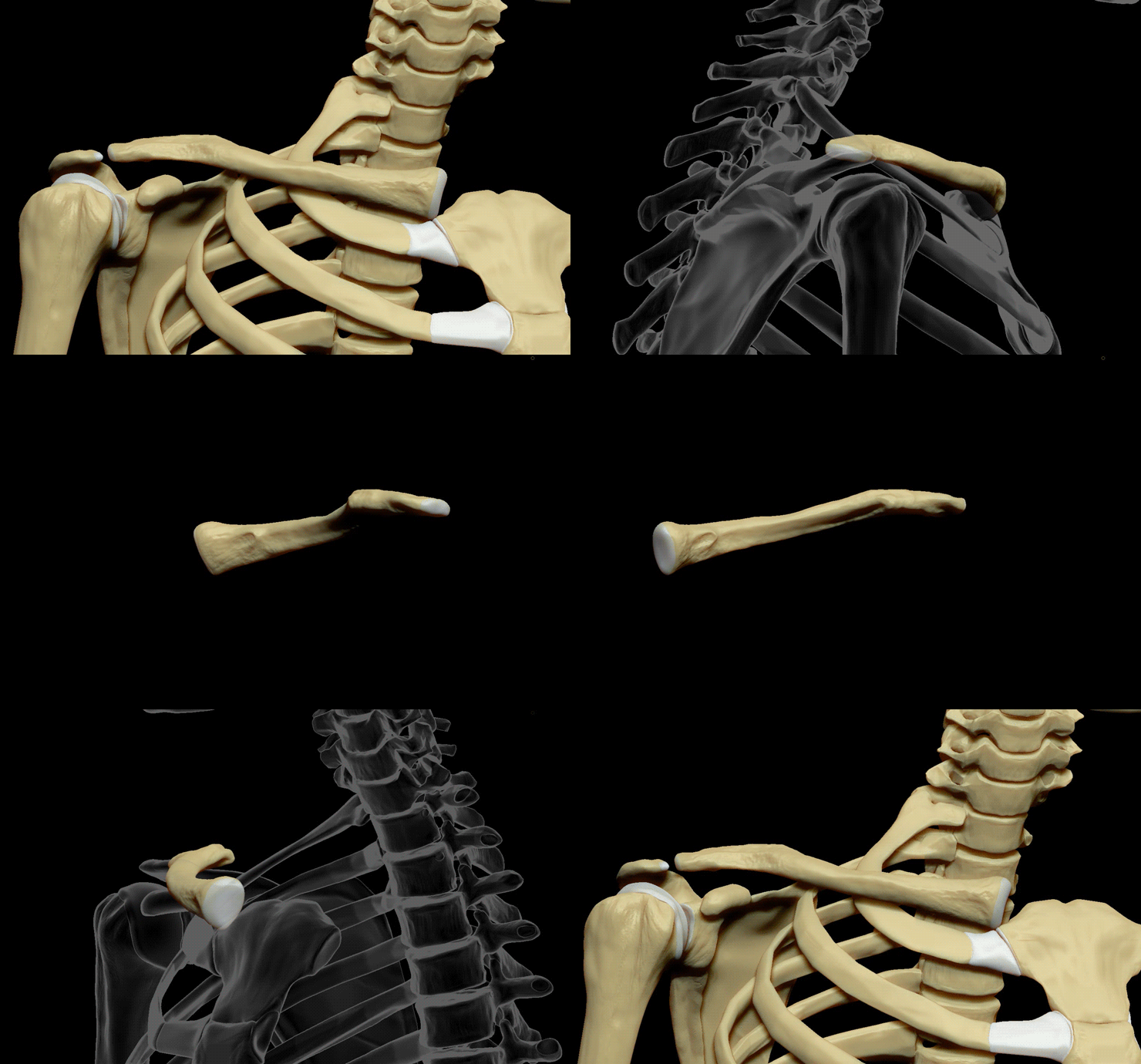


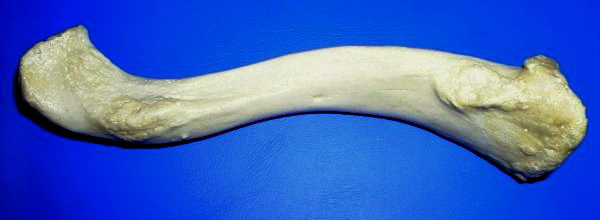
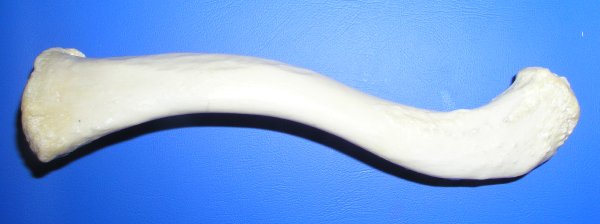
Anatomy and composition
The clavicle can be described in three regions: the medial (sternal) end, a central S-shaped shaft, and the lateral (acromial) end where it meets the shoulder complex. It articulates medially with the sternum and laterally with the scapula, forming part of the shoulder joint complex and stabilizing the shoulder. The bone contains an internal spongy layer of cancellous or "sponge-like" bone covered by a dense cortical shell; this microstructure is noted in descriptions of cancellous tissue as cancellous bone.
Development and variation
The clavicle develops from more than one ossification center and has an unusual growth pattern compared with many long bones. Its timing of ossification and fusion can vary among individuals. Anatomical variation is common: some people have a more curved shaft, while others may exhibit accessory ossicles or congenital differences that affect shoulder mechanics.
Function and biomechanics
Functionally, the clavicle acts as a rigid strut that holds the shoulder away from the thorax, increasing the arm’s range of motion and transmitting mechanical forces from the upper limb to the trunk. Multiple muscles attach to it — including the deltoid, pectoralis major, sternocleidomastoid, trapezius and subclavius — so it serves both as a site for leverage and as a protective barrier for neurovascular structures beneath the shoulder.
Clinical importance and injuries
Clavicle fractures are among the more common long-bone injuries, often resulting from falls onto the shoulder or outstretched hand. Treatment ranges from conservative immobilization to operative fixation depending on displacement and patient needs. Certain genetic conditions and developmental disorders may affect clavicle formation; for example, impaired clavicle development is a recognized feature of some skeletal dysplasias.
Evolutionary and comparative notes
Clavicles are present across many vertebrate groups but vary in prominence and function. Many mammals and numerous other land vertebrates possess clavicles, though cursorial species sometimes reduce or lose them to allow greater shoulder mobility. In primates and other animals that use the forelimb for climbing or manipulation, the clavicle tends to be well developed to facilitate a wide range of motion.
- Key points: supports shoulder, transmits force, common fracture site.
- Structure: medial end, shaft, lateral end; cancellous core, cortical shell.
- Variation: species differences, individual anatomical variation, clinical implications.
For further anatomical illustrations and clinical guidance see related resources: scapular relations, bone microstructure, and general anatomy summaries available online at trusted medical portals: definition, shoulder anatomy, comparative anatomy, and vertebrate examples.
Related articles
Author
AlegsaOnline.com Clavicle (Collarbone): Structure, Function, Development and Clinical Notes Leandro Alegsa
URL: https://en.alegsaonline.com/art/20830