
Clostridia: anaerobic, spore-forming bacteria of medical and ecological importance
Clostridia are a class of mostly anaerobic, Gram-positive bacteria (including Clostridium) known for spore formation, diverse metabolism, environmental roles, and some potent human pathogens and toxins.
Overview
The Clostridia are a class of bacteria within the phylum Firmicutes. The group includes the well-known genus Clostridium and several related genera. Members are typically Gram-positive in staining appearance (Gram-positive), rod-shaped, and adapted to oxygen-poor environments; in many species the presence of molecular oxygen is harmful. Individual species range from benign environmental decomposers to agents of serious disease.
Image gallery
1 Image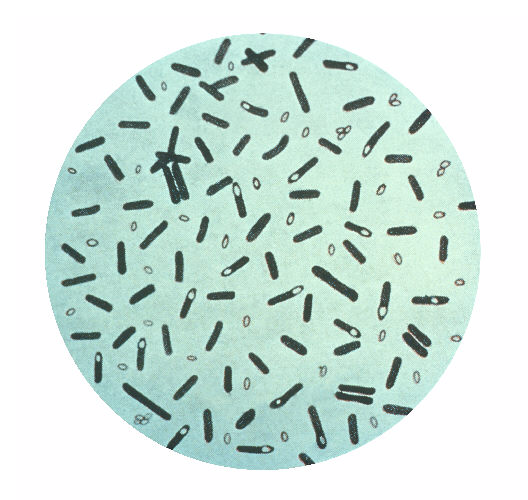
Key characteristics
Clostridia are obligate anaerobes with metabolic strategies that rely on fermentation rather than aerobic respiration. Many produce resilient heat- and desiccation-resistant endospores that allow survival through adverse conditions and facilitate wide dispersal. Several members of the class, including numerous strains of the genus Clostridium, are adapted to break down complex organic matter and are described as saprophytic, commonly inhabiting environments such as soil, aquatic sediments, and the intestinal tracts of animals.
Survival, habitats, and related groups
Spore formation is a defining survival strategy: dormant spores resist heat, chemical insult, and oxygen exposure, then germinate when conditions become favorable. Aside from soil and sediments, some clostridial species live in specialized niches, including the gut microbiota of humans and other animals. Heliobacteria are an example of bacteria placed historically within this class on the basis of physiology and certain genetic traits, illustrating the variety of lifestyles found among clostridial lineages.
Phylogeny and classification
While the name Clostridia has long been used for a set of anaerobic, spore-forming Gram-positive rods, modern genetic analyses have shown that the assemblage is not strictly monophyletic. In other words, species grouped under the traditional label do not all descend from a single recent common ancestor, and the class contains multiple distinct evolutionary lineages. As a result, taxonomic revisions continue and some taxa traditionally placed among the Clostridia are being reclassified as genomic data clarify relationships.
Medical and practical importance
Several clostridial species are notable for their medical impact. Some produce powerful protein toxins: the bacterium that causes tetanus synthesizes a neurotoxin often called tetanospasmin, while others produce botulinum neurotoxins responsible for botulism. Infections or toxin exposure can cause severe, sometimes fatal disease, but the group also contains species used in industrial fermentation and research. Control of pathogenic clostridia involves wound care, vaccination (for tetanus), antimicrobial stewardship, and infection control measures to limit spread of spore-forming cells.
Notable species
- Clostridium perfringens — associated with gas gangrene and certain forms of food poisoning.
- Clostridioides difficile (formerly Clostridium difficile) — a major cause of antibiotic-associated colitis and pseudomembranous colitis.
- Clostridium tetani — the agent of tetanus, mediated by tetanospasmin.
- Clostridium botulinum — the source of botulinum toxins causing botulism, a severe neuroparalytic illness.
- Clostridium acetobutylicum — historically important in solvent production and as a model organism in fermentation studies.
- Other named species of medical or veterinary relevance include C. haemolyticum and C. novyi, which cause disease in animals and occasionally humans.
Because the class contains both environmentally beneficial decomposers and agents of serious disease, clostridia are important subjects of study across microbiology, clinical medicine, ecology, and industrial biotechnology. Ongoing genomic research promises to refine their classification and deepen understanding of how different clostridial lineages evolved metabolic strategies, pathogenic mechanisms, and ecological roles.
Questions and answers
Q: What is the class of Firmicutes that includes Clostridium?
A: The class of Firmicutes that includes Clostridium is called the Clostridia.
Q: Are members of the genus Clostridium obligate anaerobes?
A: Yes, members of the genus Clostridium are obligate anaerobes and lack aerobic respiration. Oxygen is toxic to them.
Q: Are species of the genus Clostridium monophyletic or polyphyletic?
A: Studies show that species of the genus Clostridium are highly polyphyletic, meaning they do not form a single evolutionary lineage.
Q: Where can most species of this genus be found?
A: Most species of this genus can be found in soil, but some are human pathogens.
Q: What toxins are produced by some members of this class?
A: Some members of this class produce toxins such as tetanus toxin (known as tetanospasmin) produced by C. tetani and botulinum toxin produced by C. botulinum, which are among the most dangerous known.
Q: What other organisms belong to this class?
A: Heliobacteria also belong to this class.
Q: Name five notable species belonging to this class?
A: Notable species belonging to this class include Clostridium perfringens (Gangrene, food poisoning), Clostridium difficile (Pseudomembranous colitis), Clostridium tetani (Tetanus),Clostridium botulinum (Botulism), andClostridium acetobutylicum
Related articles
Author
AlegsaOnline.com Clostridia: anaerobic, spore-forming bacteria of medical and ecological importance Leandro Alegsa
URL: https://en.alegsaonline.com/art/21091
Sources
- ncbi.nlm.nih.gov : "Clostridia"
- ncbi.nlm.nih.gov : ncbi.nlm.nih.gov/Taxonomy/taxonomyhome.html/index.cgi
- arb-silva.de : "16S rRNA-based LTP release 106 (full tree)"
- arb-silva.de : arb-silva.de/projects/living-tree