
Claire Lee Chennault — American aviator and leader of the Flying Tigers
U.S. aviator (1893–1958) who organized and led the American Volunteer Group “Flying Tigers” and later commanded U.S. air operations in China; noted for fighter tactics and Sino‑American cooperation.
Overview
Claire Lee Chennault (September 6, 1893 – July 27, 1958) was an American military aviator and air commander best known for organizing and leading the American Volunteer Group, popularly called the Flying Tigers, during the early months of the Pacific War. His work in China during World War II combined operational command, training of Chinese personnel, and public leadership that made him a prominent and sometimes controversial figure in U.S.–China wartime relations.
Image gallery
9 Images






Early life and military beginnings
Born in the United States in 1893, Chennault began a career that combined military service and aviation during the early 20th century. He rose through the ranks of U.S. Army aviation branches in the interwar years and developed a reputation for interest in tactical flying and fighter employment. His prewar thinking emphasized agility, disciplined formation flying and practical tactics adapted to available aircraft and theater conditions.
Flying Tigers and tactical approach
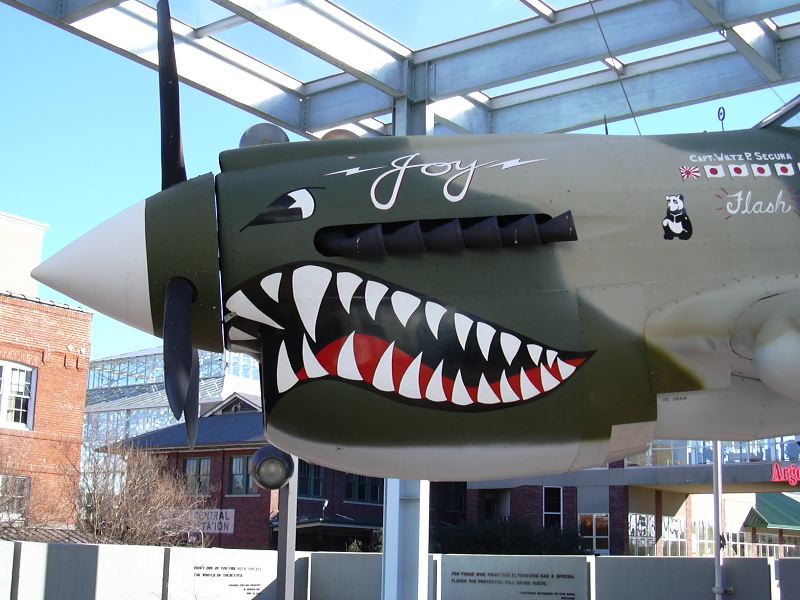
In 1941 Chennault was instrumental in recruiting and organizing the American Volunteer Group (AVG), a unit of volunteer U.S. pilots who flew Curtiss P-40 fighters in defense of China. Operating under difficult logistical and political constraints, the AVG used tactics that exploited the strengths of their aircraft: diving attacks, disciplined pairs and small formations, and an emphasis on energy maneuvering rather than prolonged turning fights. These methods, often described as hit‑and‑run or "boom‑and‑zoom," contributed to notable early successes against Japanese air forces and helped secure public attention for China’s resistance.
Wartime command and Sino‑American cooperation
After the AVG was disbanded, Chennault continued to serve in China, eventually commanding larger U.S. air forces in the theater where he focused on close cooperation with Chinese air and ground units, training of Chinese pilots and protection of supply routes. His command style combined practical field experience, strong views about fighter employment, and outspoken critiques of strategies he believed wasted aircraft or left key fronts exposed. These disagreements with other U.S. commanders sometimes created friction, but his supporters credited him with sustaining an effective air campaign under trying circumstances.
Postwar years, promotion and death
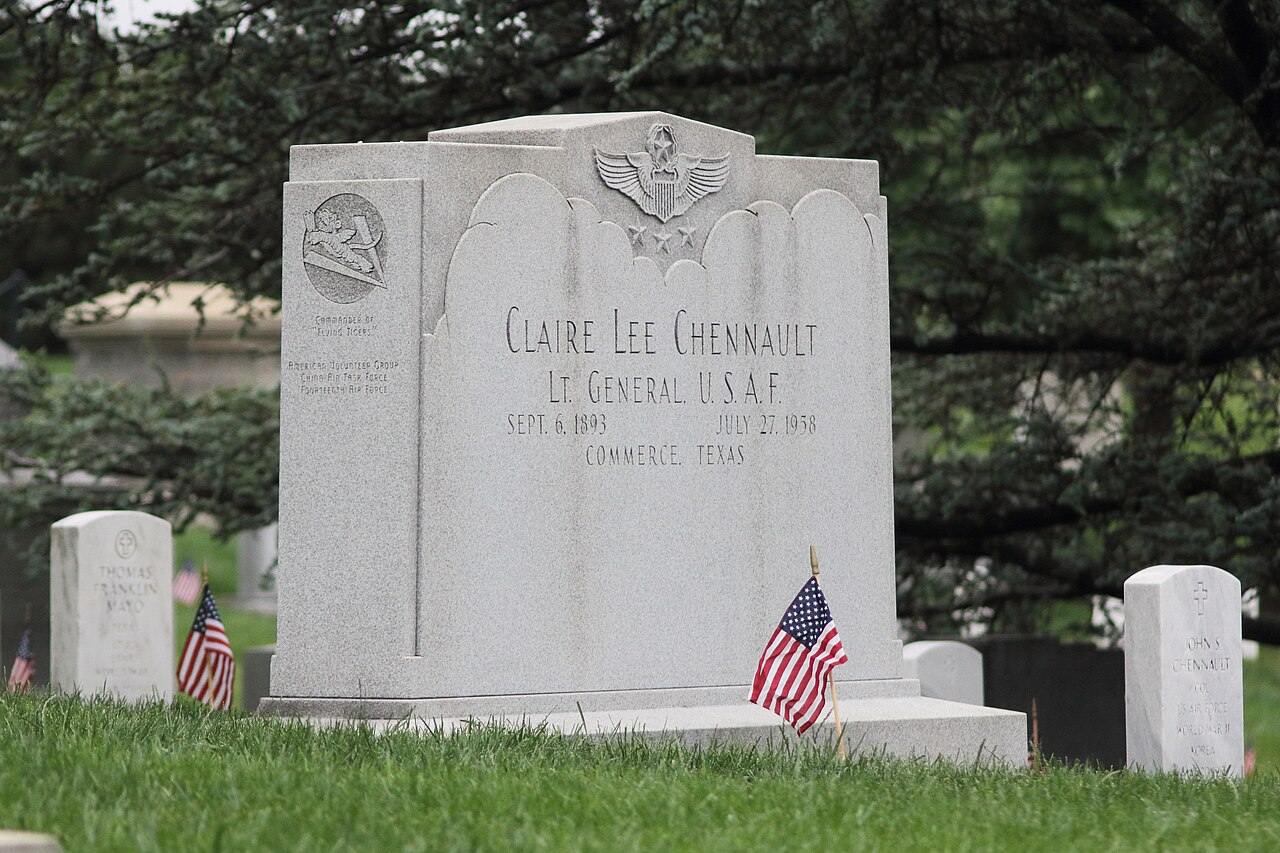
Following the war Chennault maintained a public profile related to China and aviation. In 1947 he married journalist and activist Anna Chennault, who later became a prominent figure in her own right. In July 1958 he was promoted in the United States Air Force to the rank of lieutenant general. Nine days after that promotion he died in New Orleans at the Ochsner Foundation Hospital of lung cancer on July 27, 1958. He had been married twice and fathered a large family.
Legacy and notable facts
- Chennault is widely associated with the popular image of the Flying Tigers and is credited with adapting fighter tactics to the realities of the China theater.
- His emphasis on morale, training and close liaison with allied ground forces influenced later concepts of air support and theater air command.
- He remains a complex historical figure: celebrated for early air victories and Chinese popular support, but also debated for his strategic disagreements with other Allied leaders.
Chennault’s career illustrates how tactical innovation, international cooperation and personality can shape an air campaign. His work left a lasting imprint on the air war in China and on the memory of Allied efforts in the Asia‑Pacific theater.
Tags
Related articles
Author
AlegsaOnline.com Claire Lee Chennault — American aviator and leader of the Flying Tigers Leandro Alegsa
URL: https://en.alegsaonline.com/art/20639