
Cinereous vulture (Aegypius monachus)
Large Old World vulture found across Eurasia; a chiefly scavenging bird with dark plumage, important ecological role, distinct taxonomy, and conservation concerns in parts of its range.
Overview
The cinereous vulture (Aegypius monachus), also called the black vulture or monk vulture, is a large Old World raptor in the family Accipitridae. It is among the largest of the Old World vultures and is often listed alongside other very large species as one of the two largest Old World vultures. This species is a specialized scavenger and plays a key role in removing carcasses from ecosystems.
Image gallery
10 Images


Physical characteristics
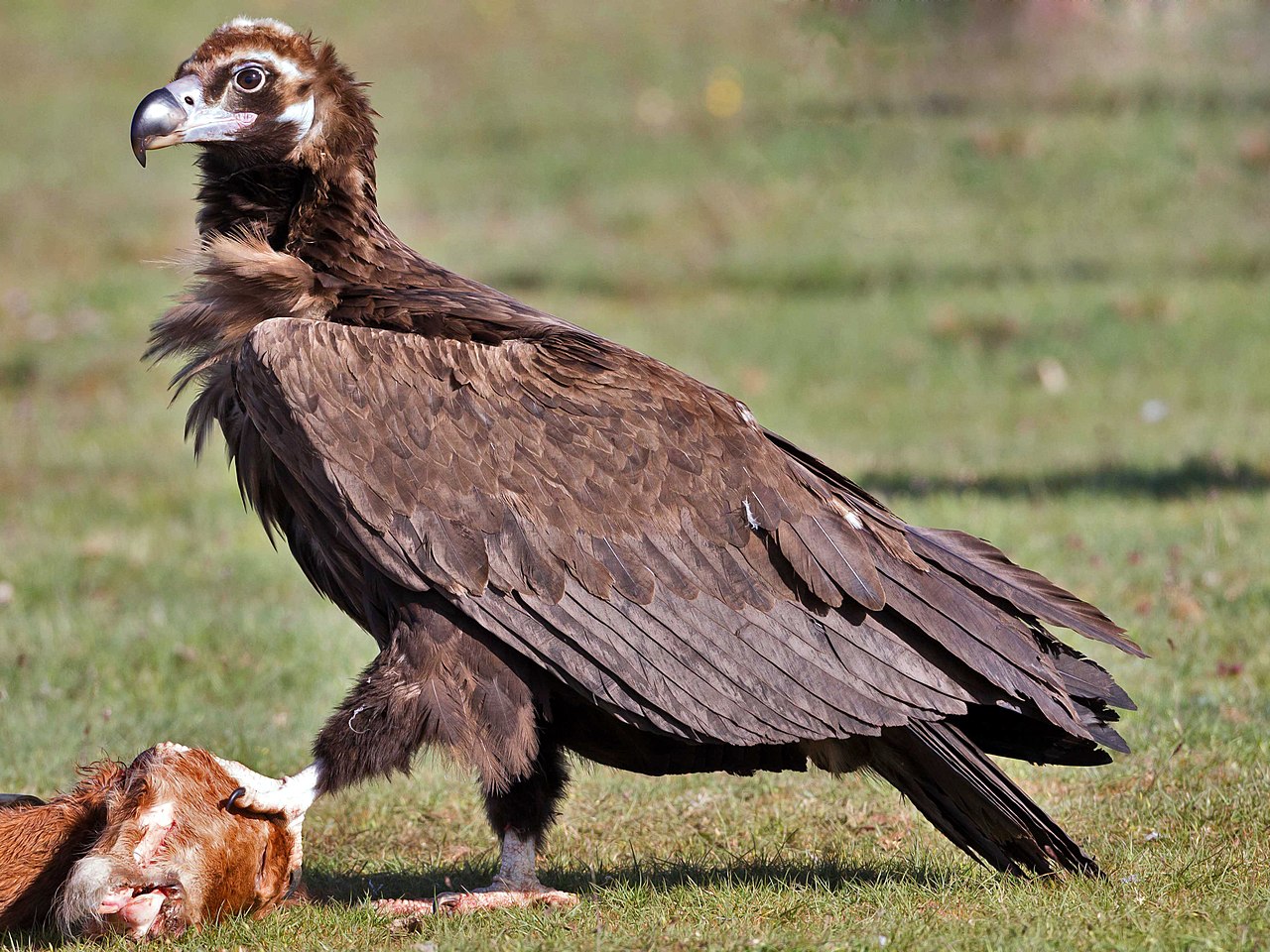
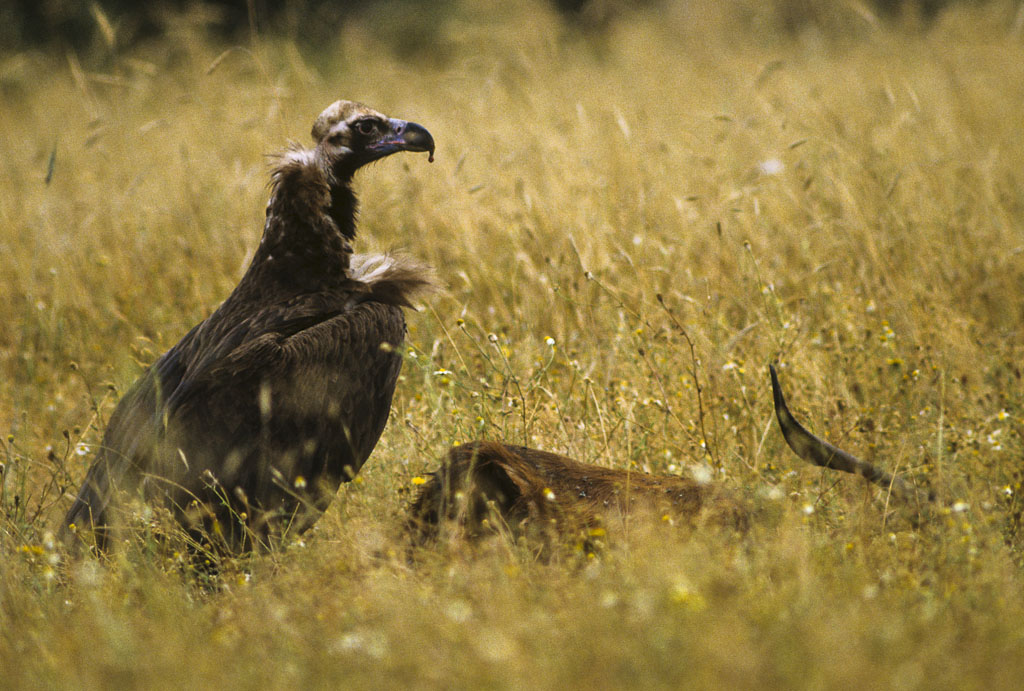
Adults are notable for overall dark, sooty plumage, a heavy bill, and a neck ruff of feathers that contrasts with the bare-headed appearance typical of some other vultures. Their wings are broad and built for soaring; wingspans commonly exceed two meters in mature individuals. Juveniles are slightly paler and gain the full adult coloration over time.
Distribution and habitat
The cinereous vulture is native to parts of Europe, the Middle East and across Asia. It occupies a range of habitats including open woodlands, semi-open steppe, mountain slopes and areas with scattered trees suitable for nesting. Some populations are resident, while those in more northern or marginal regions may move seasonally in search of food.
Behavior and diet
As an obligate scavenger the species feeds mainly on carrion, from the carcasses of large mammals to smaller remains. It often locates food by sight and may dominate other scavengers at a carcass due to its size and powerful bill. Social behavior is typically loose: birds may congregate when feeding but often roost, fly and nest singly or in pairs rather than in large breeding colonies.
Reproduction and lifespan
Cinereous vultures breed in trees or on cliffs depending on local terrain. Pairs build large stick nests and typically produce a small number of offspring each year. Parental investment is high, with both adults contributing to incubation and feeding. In the wild, individuals can live many years, but detailed longevity varies with local conditions.
Conservation, taxonomy and notable facts
The species is an Old World vulture (Old World vulture) and is only distantly related to the New World scavengers in family Cathartidae; it is not closely allied to the much smaller American black vulture (American black vulture), despite similar common names. Threats include poisoning, reduced food availability, disturbance, and collisions with infrastructure. Conservation measures in several regions include monitoring, protection of nesting sites and supplementary feeding or reintroduction efforts. Its ecological importance as a cleanup specialist makes its conservation significant for ecosystem health.
Related articles
Author
AlegsaOnline.com Cinereous vulture (Aegypius monachus) Leandro Alegsa
URL: https://en.alegsaonline.com/art/20409