
Cigarette
A cigarette is a small roll of cured plant material—most commonly tobacco—wrapped in paper and smoked to deliver nicotine and other chemicals; it is associated with addiction and serious health risks.
Overview
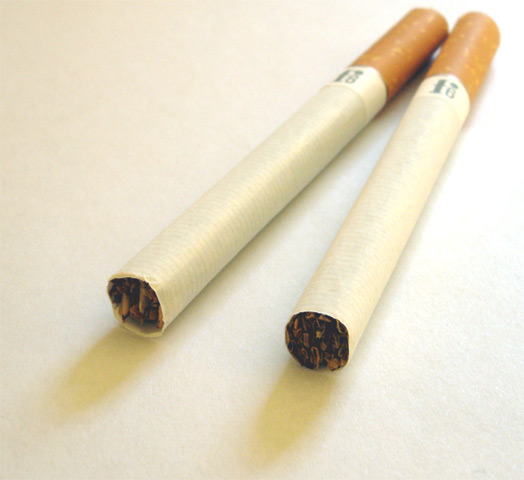
A cigarette is typically a narrow cylinder of cured leaf material wrapped in thin paper and intended to be lit and inhaled. While any dried leaf can be rolled and smoked, the term usually refers to products made from cured tobacco. The act of drawing smoke into the lungs is commonly called smoking, and it delivers both the stimulant nicotine and a complex mixture of combustion products.
Image gallery
10 Images


Parts and characteristics
Most modern manufactured cigarettes share a common construction. Typical components include:
- Wrapped filler—finely cut, cured leaf (usually tobacco).
- Paper wrapper—thin, often treated to burn evenly.
- Filter—an attached mouthpiece made of cellulose acetate or similar material on many commercial brands.
There are many style variations (menthol, low-tar, hand-rolled) and non-tobacco alternatives, but the defining feature is the intentional inhalation of smoke to absorb compounds like nicotine, which can be addictive.
History and development
Tobacco smoking has a long history, with indigenous ceremonial and medicinal uses predating global trade. Commercial cigarettes became widespread in the 19th and 20th centuries as mechanized rolling and mass marketing expanded production. For decades, manufacturers promoted cigarettes aggressively; in many places advertising and public attitudes changed only after health research linked cigarette use with serious disease.
Health effects and risks
Cigarette smoke contains thousands of chemicals, many of which are toxic or carcinogenic. Regular use is strongly associated with respiratory disease, cancers (notably lung cancer), cardiovascular disease (including heart disease), and other harms. Nicotine creates dependence, so users—people who begin smoking—often continue despite negative health and social consequences. Secondhand smoke also presents risks to non-smokers, including children and pregnant people.
Regulation, public health, and cessation
Responding to evidence of harm, governments have adopted measures such as age restrictions, advertising limits, warning labels, taxes, and smoke-free laws to reduce use and exposure. Public health campaigns emphasize cessation, and a range of supports exist: counseling, prescription medications, and nicotine replacement therapies are commonly used to help adults quit. Although many countries have seen declines in smoking prevalence, cigarette use remains a leading preventable cause of disease in many regions.
Distinctions and notable facts
Cigarettes differ from other smoked products such as cigars, pipes, and newer nicotine delivery systems in size, composition, and patterns of use. While alternatives (including electronic nicotine devices) have changed the landscape of nicotine consumption, combustible cigarettes continue to account for the majority of smoking-related illness historically attributed to tobacco.
For additional resources and research summaries, see authoritative sources linked here: dried leaf and rolling, smoking basics, tobacco information, nicotine effects, addiction overview, population studies, lung cancer info, cardiovascular risks.
Related articles
Author
AlegsaOnline.com Cigarette Leandro Alegsa
URL: https://en.alegsaonline.com/art/20366
Sources
- cancer.gov : "Harms of Smoking and Health Benefits of Quitting"