
Circadian rhythm sleep disorders
Conditions in which the body's internal clock is misaligned with the external day, causing sleep timing problems, daytime sleepiness or insomnia despite otherwise normal sleep duration.
Overview
Circadian rhythm sleep disorders are a group of conditions in which the timing of sleep and wakefulness is out of sync with the 24-hour day. These disorders arise when the body's internal timekeeper, the circadian rhythm, does not align with a person's environment or desired schedule. People with these disorders commonly obtain adequate total sleep but at abnormal clock times, producing social, occupational and health consequences.
Image gallery
2 Images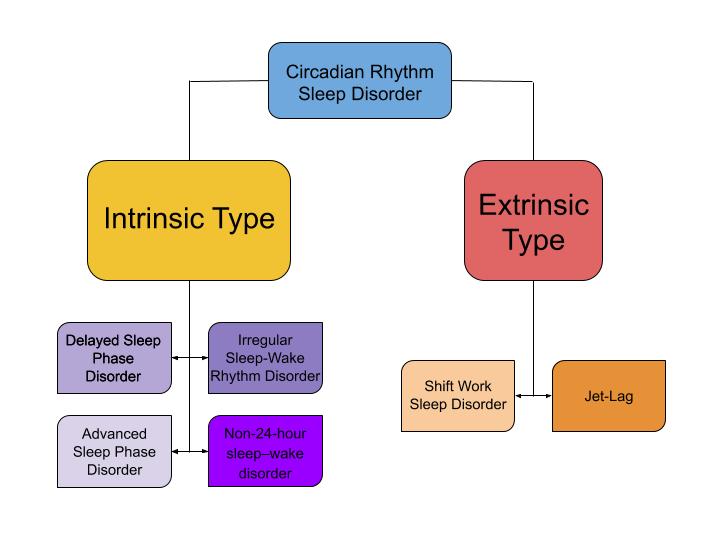

Core characteristics
Symptoms typically include difficulty falling asleep or staying awake at socially expected times, fragmented sleep, and daytime sleepiness or insomnia. These problems often coexist with disturbances in other daily rhythms such as appetite, core body temperature and hormone cycles. Cognitive performance, mood and metabolic regulation can be affected when sleep timing is chronically misaligned.
Common types
- Delayed sleep-wake phase disorder: habitual late sleep onset and late wake times.
- Advanced sleep-wake phase disorder: early evening sleepiness and early-morning awakening.
- Non-24-hour sleep-wake rhythm: a sleep pattern that progressively shifts later each day, common in people who are blind.
- Irregular sleep-wake rhythm: fragmented sleep, with multiple naps and no clear main sleep period.
- Shift work disorder and jet lag: externally imposed schedule changes that conflict with the internal clock.
Causes, diagnosis and assessment
Causes include genetic predisposition, altered light exposure, work schedules, travel and reduced light perception. Assessment relies on clinical history, sleep diaries, actigraphy and sometimes melatonin or core body temperature measurements. The diagnosis distinguishes these disorders from insomnia and other sleep conditions that primarily affect sleep quality rather than timing; see also links about sleep and daily rhythms like appetite.
Treatment and management
Management aims to realign sleep timing using light therapy, appropriately timed melatonin, gradual schedule changes (chronotherapy), strict sleep hygiene and behavioral strategies. For shift workers, optimizing shift schedules, controlled light exposure and planned naps can reduce impairment. Treatment plans are individualized and may combine several approaches.
Importance and prognosis
When recognized and treated, many people can improve sleep timing and daytime functioning, though some forms are chronic. Early identification and workplace or social accommodations often reduce the personal and societal impact of these disorders.
Questions and answers
Q: What are circadian rhythm sleep disorders?
A: Circadian rhythm sleep disorders occur when the circadian rhythm of a person is not functioning properly, causing abnormal sleep and wake times.
Q: Do people with circadian rhythm sleep disorders have good quality sleep?
A: Yes, people with circadian rhythm sleep disorders usually have 8 hours of good quality sleep despite the abnormal sleep and wake times.
Q: Do circadian rhythm sleep disorders only affect sleep?
A: No, circadian rhythm sleep disorders affect other systems in the body such as appetite, body temperature rhythm, and hormone cycles.
Q: What controls the circadian rhythm?
A: The circadian rhythm is controlled by the body's internal clock.
Q: Can external factors affect the circadian rhythm?
A: Yes, external factors such as light exposure can affect the circadian rhythm.
Q: What is the importance of a properly functioning circadian rhythm?
A: A properly functioning circadian rhythm is important for overall health as it affects not just sleep but also appetite, body temperature rhythm, and hormone cycles.
Q: How can one manage circadian rhythm sleep disorders?
A: Management of circadian rhythm sleep disorders involves lifestyle changes such as maintaining a consistent sleep schedule and minimizing exposure to light at night. Medications and light therapy may also be used in some cases.
Tags
Related articles
Author
AlegsaOnline.com Circadian rhythm sleep disorders Leandro Alegsa
URL: https://en.alegsaonline.com/art/20431