
Christopher Hill: English Marxist Historian of the Seventeenth Century
Biography and survey of John Edward Christopher Hill (1912–2003), his Marxist-informed approach to seventeenth-century England, major themes, influence on social history and scholarly reception.
Overview
John Edward Christopher Hill (6 February 1912 – 24 February 2003), usually cited as Christopher Hill, was an English historian whose work applied a broadly Marxist analytical framework to the political, social and religious upheavals of seventeenth‑century England. Hill argued that social structures, economic interests and popular movements were central to understanding the English Revolution and its aftermath. His writing combined scholarly research with a readable style that helped shape undergraduate teaching and public understanding of the period.
Image gallery
1 Image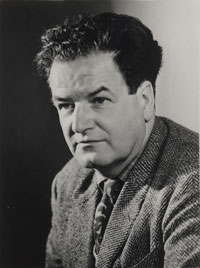
Early life and education
Hill was born into a prosperous Methodist family in York; his father was a solicitor. He attended St Peter's School, York, and won a place to read history at Balliol College, Oxford. A formative episode in his youth was a stay in Freiburg, Germany, before university, where he witnessed political instability and the rise of extremist politics; he later said this experience contributed to his political awareness and intellectual commitments. At Oxford he came under the influence of tutors who recognised his promise as a historian and encouraged his study of early modern England.
Academic career
Hill pursued a long academic career in which he combined archival scholarship with broad synthetic studies aimed at students and general readers. He became a prominent figure in British historical life and was associated with debates that shifted attention from elite political narratives to the experiences and ideas of wider social groups. Over several decades he published both specialist monographs and widely used textbooks. He continued to write and lecture well into old age and remained an active presence in historical discussions.
Intellectual approach and method
Although Hill described himself in broadly Marxist terms, his scholarship is marked by an interest in multiple causal factors: economic tensions, class formations, religious belief, print culture and the mobilization of ordinary people. He emphasised the importance of pamphlets, petitions and other printed materials as evidence of popular political consciousness. Hill placed particular weight on the social roots of radical movements and the ways in which religious ideas and material grievances could combine to produce political action. His approach encouraged historians to examine the cultural as well as the economic dimensions of change.
Major themes and representative works
Hill is best known for studies that foreground popular radicalism, the culture of dissent and the lived consequences of conflict during the mid‑seventeenth century. Among his best‑known books are The World Turned Upside Down: Radical Ideas During the English Revolution and God's Englishman: Oliver Cromwell and the English Revolution. These works brought sustained attention to groups such as the Levellers and Diggers, to the role of Puritanism and nonconformist religion, and to the broader social implications of civil war and revolution. He also wrote introductory texts and surveys used widely in university teaching.
Reception and influence
Hill's scholarship had a profound influence on the development of social and cultural history in Britain and beyond. By shifting emphasis from constitutional histories and elite politics to the activities and ideas of common people, he helped open new questions about the dynamics of change in early modern societies. His readable prose and commitment to interpretation made his books popular with students and non‑specialist readers.
Criticisms and later debates
From the 1970s onward scholars debated the strengths and limits of Hill's framework. Critics argued that his Marxist orientation sometimes risked overstating the coherence or centrality of social class explanations, or underplaying contingency, individual agency and the complexities of political institutions. Subsequent work has often sought a more pluralistic balance, integrating social, cultural, political and intellectual approaches while retaining Hill's emphasis on popular voices and printed sources.
Legacy
Hill remained a prominent and occasionally controversial public intellectual until his death in 2003. He is remembered for reinvigorating seventeenth‑century studies, for encouraging historians to take popular radicalism seriously, and for demonstrating how close attention to pamphlets, sermons and other ephemeral documents can illuminate large political transformations. His influence continues in undergraduate teaching and in ongoing scholarly debates about the nature and causes of the English Revolution.
Selected works and further reading
- The World Turned Upside Down (study of radical ideas during the English Revolution) is among his most influential interpretive books.
- God's Englishman (a sympathetic account of Oliver Cromwell's role and the religious dimensions of the period) is widely read by students and general readers.
- He also produced numerous essays, lectures and textbooks that introduced generations of undergraduates to early modern history.
Further resources
- Concise biography and overview
- Selected bibliography and major publications
- Archival material and personal papers
- Introductions to his Marxist methodology
- Studies of the English Revolution linked to Hill's work
- Discussions of Hill's influence on social history
- Debates and critiques of his interpretations
- Teaching resources and textbook adaptations
- Oral histories and interviews
- Obituaries and memorial essays
Hill died of cerebral atrophy in Chipping Norton, Oxfordshire on 24 February 2003. His work remains a touchstone for those interested in how social forces, religious movements and popular ideas shaped the crisis and transformations of seventeenth‑century England.
Related articles
Author
AlegsaOnline.com Christopher Hill: English Marxist Historian of the Seventeenth Century Leandro Alegsa
URL: https://en.alegsaonline.com/art/20171