
Christian calendar (liturgical year and ecclesiastical calendars)
Overview of the Christian calendar: the liturgical year, its seasons and feasts, historical development (Julian to Gregorian), and variations among Western and Eastern Christian traditions.
A calendar in a Christian context usually refers to the system churches use to mark the liturgical year, the cycle of seasons, feasts and commemorations observed by Christian communities. Different Churches rely on related but sometimes distinct calendars to schedule celebrations, to determine the date of Easter, and to assign readings, colors and rites for worship throughout the year.
Image gallery
7 Images



Core structure and seasons
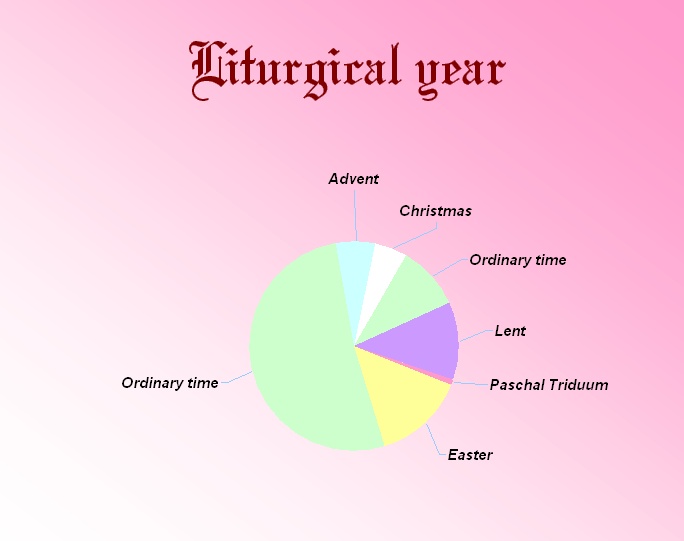
The liturgical year is organized around a set of principal seasons and many secondary feasts. In broad terms these include:
- Advent — a preparatory season before Christmas;
- Christmas and Epiphany — celebrations of the Nativity and related commemorations;
- Ordinary Time — weeks outside the major seasons, devoted to general growth in faith;
- Lent and Holy Week — a penitential period culminating in the commemoration of Christ's passion;
- Eastertide and the Paschal season — celebrating the Resurrection and its aftermath, including Pentecost.
These seasons determine liturgical texts, lectionary readings, vestment colors, and pastoral emphases. Many churches also mark the anniversaries of saints, martyrs and local patrons — often called saints' days — which enrich the rhythm of communal prayer and memory.
History and development
The Christian calendar as used in the West developed alongside the Roman civil calendar. The modern civil standard, the Gregorian calendar, was promulgated in 1582 under Pope Gregory XIII to correct drift in the date of Easter caused by small errors in the older Julian system. Adoption of the Gregorian reform was gradual and uneven; some countries and traditions accepted it quickly, while others continued to use the Julian calendar for civil or liturgical purposes for centuries.
Variations between traditions
Not all Christian communities calculate festival dates in the same way. Eastern Orthodox churches often retain the Julian or a revised Julian reckoning for liturgical purposes, so that Christmas and other fixed feasts can fall on different civil dates than in Western churches. The method for fixing the date of Easter (the Paschalion) also differs in technical details, producing occasional divergence between Western and Eastern celebrations.
Uses, importance and modern practice
For clergy and laypeople alike, a Christian calendar structures public worship, personal devotion and communal life: it advises which scripture passages to read, which themes to preach, and when to observe fasts and feasts. National and local churches may add patronal festivals, state holidays, or pastoral observances to reflect culture and history. Lectionaries and printed calendars help congregations follow the cycle, and many denominations publish official calendars and rubrics to ensure consistency.
Notable distinctions and facts
- Liturgical years may begin at different times: many Western churches start the year with Advent, while some Eastern traditions begin on 1 September.
- Movable feasts (like Easter) are calculated from the paschal full moon and the vernal equinox as determined by ecclesiastical rules, not always by the astronomical events.
- Saints' commemorations vary: Roman Catholic, Anglican and Orthodox calendars share many names but also honor local and national figures differently.
For more detailed official calendars and local variants, consult denominational resources and published lectionaries. Useful starting points include general overviews of church calendars and authoritative guides from individual traditions; see also resources linked by major churches and academic studies of liturgical chronology.
calendar references and denominational guides, Church resources, and materials explaining Easter, Lent, Pentecost, Advent, Christmas, the Gregorian calendar reforms under Pope Gregory XIII, distinctions with Orthodox practice, and collections of Saint commemorations are commonly available from denominational websites and liturgical publishers.
Related articles
Author
AlegsaOnline.com Christian calendar (liturgical year and ecclesiastical calendars) Leandro Alegsa
URL: https://en.alegsaonline.com/art/20070