
Christian Church (the universal body of Christian believers)
An overview of the Christian Church as the collective body of Christian believers: its identity, common beliefs, historical development, organizational varieties, worship practices, and modern significance.
The term "Christian Church" commonly denotes the universal body of people who identify as Christians rather than any single local congregation or institutional denomination. For an introduction to the wider faith tradition see Christianity, and for other uses of the word see Church (disambiguation). Many Christians describe the Church as a spiritual community founded in the first century in the life and teaching of Jesus. In this broad sense the Church is a theological concept — the sent and gathered people of God — rather than only an administrative organization.
Image gallery
3 Images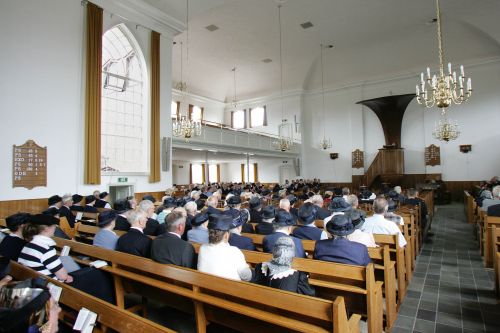


Core identity and common beliefs
Across the diverse global community there are basic convictions that most traditions share. These include belief in one God revealed in Scripture and in the person of Jesus as Christ, the significance of Jesus' life, death and resurrection for human salvation, and the action of the Holy Spirit in guiding and sustaining believers. Many Churches express these convictions in creeds and confessions; for example, historic formulations are summarized in the Creeds (see the Creed), and the role of the Holy Spirit is highlighted in liturgy and doctrine.
Characteristics and common elements
- Worship and sacraments: Regular worship gatherings often include prayer, Scripture reading, preaching, and sacraments such as baptism and the Lord's Supper.
- Scripture and tradition: Christian communities rely on the Bible as authoritative, interpreted variously by tradition, reason and communal practice.
- Ministry and leadership: Structures range from hierarchical episcopal systems to congregational or presbyterial forms that govern teaching, pastoral care and mission.
Historical development
The Christian Church developed from small first‑century groups into a religion that spread across the Roman Empire and beyond. Over centuries it assumed cultural, social and political roles in different regions. Institutional forms evolved — including what became known as the Roman Catholic Church and the Eastern Orthodox Churches — while later movements produced Protestant traditions and other families of churches. For information on denominational variety see Christian denominations, and for particular traditions see, for example, Roman Catholic, Anglican Communion and various Protestant traditions.
Variety, disputes and reform
The Church’s history includes theological debates, reforms and institutional divisions. Some controversies concerned doctrine, liturgy, or the authority of leaders; others reflected political and cultural tensions. Reformation movements, ecumenical efforts and theological dialogues have sought to address differences and seek common ground. Disputes have sometimes led to conflict; historical episodes of coercion and persecution — whether by state authorities, religious institutions, or opposing groups — are part of the complex record and have prompted reflection and reform within many churches (see further commentary at related studies).
Worship, mission and contemporary role
Today the Christian Church is global and diverse in practice. Local congregations vary widely in language, music, governance and social engagement, yet many share commitments to worship, pastoral care, education and charitable work. The Church also plays roles in cultural life, humanitarian aid, healthcare, and public ethics. Ongoing movements for ecumenism aim to foster cooperation among different traditions while respecting distinct convictions. For background on particular persons and foundational texts see entries such as Jesus and for broader resources consult general references like Christianity and denominational pages listed above.
Notable distinctions
- "The Church" as universal body vs. "a church" as a local congregation.
- Institutional authority (for example, papal or synodal systems) vs. congregational or charismatic leadership models.
- Doctrinal creeds and shared liturgies vs. diverse theological emphases that distinguish denominations.
For summaries of specific traditions, major doctrinal statements or institutional histories follow links to denominational and topical pages such as Roman Catholic, Anglican, Protestant entries, and studies of foundational beliefs at the Creed. Additional resources and disambiguation are available via Church (disambiguation) and thematic overviews at Christianity and related scholarly pages on denominations and on historical controversies.
Questions and answers
Q: What is the Christian Church?
A: The Christian Church refers to the universal company of believers, or every person who has ever accepted or will accept the Christian Faith. It is thought of as being part of God's way to bring people close to him and was begun by Jesus in the 1st century AD.
Q: Who founded the Christian Church?
A: Jesus founded the Christian Church in the 1st century AD.
Q: What are some beliefs shared by all major denominations?
A: All major denominations believe that God is the creator and eternal father of all things, that Jesus was the Christ and son of God who died to save people from punishment for their sins, and that Holy Spirit is God's gift to help and comfort Christians. They also believe these three parts make up one God.
Q: What are controversies?
A: Controversies are different opinions between different denominations which have sometimes caused arguments and splits within organised churches.
Q: How did Christianity become a persecuting organization during Late Antiquity?
A: During Late Antiquity, Christianity became increasingly important as an institution which led it to become a persecuting organization in human history.
Q: What other information can be found on specific pages about Christianity?
A: Specific pages about Christianity contain general information about Christianity or information about specific Christian denominations.
Related articles
Author
AlegsaOnline.com Christian Church (the universal body of Christian believers) Leandro Alegsa
URL: https://en.alegsaonline.com/art/20072
Sources
- etext.lib.virginia.edu : etext.lib.virginia.edu
- bbc.co.uk : bbc.co.uk
- encarta.msn.com : encarta.msn.com/encyclopedia_761572657_6/Orthodox_Church.html
- vatican.va : vatican.va
- goarch.org : goarch.org/
- reformationhappens.com : reformationhappens.com/movements/magisterial
- spindleworks.com : spindleworks.com/library/faber/008_theca.htm
- crusades.boisestate.edu : crusades.boisestate.edu
- usccb.org : usccb.org
- ewtn.com : ewtn.com
- newadvent.org : newadvent.org/cathen/15179a.htm
- bartleby.com : bartleby.com/
- pbs.org : pbs.org/wgbh/pages/frontline/shows/religion/maps/cron.html