
Chordophone (string-based musical instruments)
Chordophones are musical instruments that produce sound primarily by vibrating strings. This article explains their definition, structure, classification, history, playing methods, and common examples.
Overview
A chordophone is any musical instrument whose sound is produced mainly by the vibration of one or more strings stretched between fixed points. In everyday language chordophones are often called string instruments; familiar western examples include the violin, guitar and harp, but the family also embraces many non-Western instruments and hybrid forms.
Image gallery
10 Images


Construction and sound production
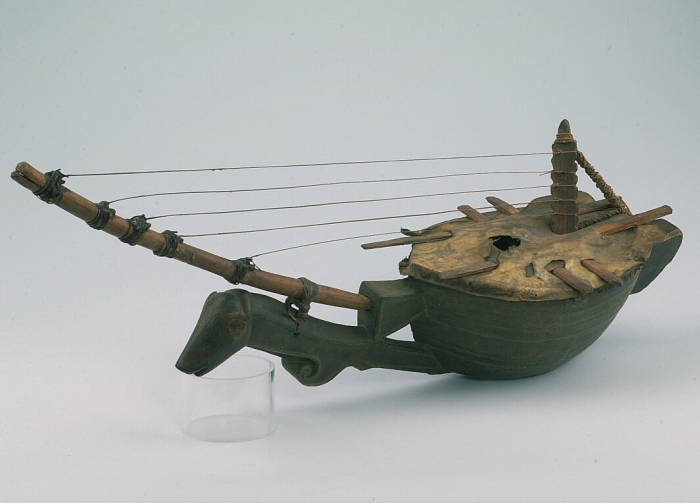
Most chordophones share basic elements: strings, a method of excitation (bowing, plucking, striking or friction), a frame or neck to hold string tension, a bridge to transmit vibrations, and a resonator or soundboard that amplifies the sound. Materials for strings have evolved from gut and silk to metal and synthetic fibers, while bodies range from hollow wooden shells and carved soundboards to box-like or frame constructions.
Classification
Academic musicology typically places chordophones within the Hornbostel–Sachs system, which separates them into major categories such as zithers (strings mounted on a board), lutes (strings run along a neck), harps (strings perpendicular to the soundboard), and lyres. Within those groups instruments are further divided by how sound is produced—plucked, bowed, struck—or by structural details like whether the resonator is integral or detachable.
History and cultural importance
Stringed instruments appear early in human history, with archaeological and iconographic evidence of lyres, harps and simple lute-like instruments in ancient societies across Mesopotamia, Egypt and later Greece and China. Over centuries chordophones were adapted to local musical styles and technologies, becoming central to ensemble, religious and solo performance traditions worldwide.
Playing techniques and uses
Players excite strings in different ways: bowed (violin family), plucked with fingers or plectrum (guitar, lute, sitar), or struck (hammered dulcimer, piano). Techniques include pizzicato, fingerpicking, tremolo, harmonics, and percussive tapping. Chordophones serve roles from orchestral and chamber music to folk accompaniment, solo virtuosity, and popular music.
Examples and notable facts
Well-known chordophones are the violin, cello, double bass, the guitar, lute family instruments, the harp, as well as non-Western types like the sitar, koto, oud and santur. The piano is also classed as a chordophone because its strings are struck by hammers. Chordophones remain one of the most diverse and adaptable instrument families in world music.
Related articles
Author
AlegsaOnline.com Chordophone (string-based musical instruments) Leandro Alegsa
URL: https://en.alegsaonline.com/art/19979