
Basking shark (Cetorhinus maximus)
Large, slow-moving filter-feeding shark found in temperate seas worldwide, reaching about 12 m. Feeds on plankton at the surface; historically hunted and now subject to conservation measures.
Overview
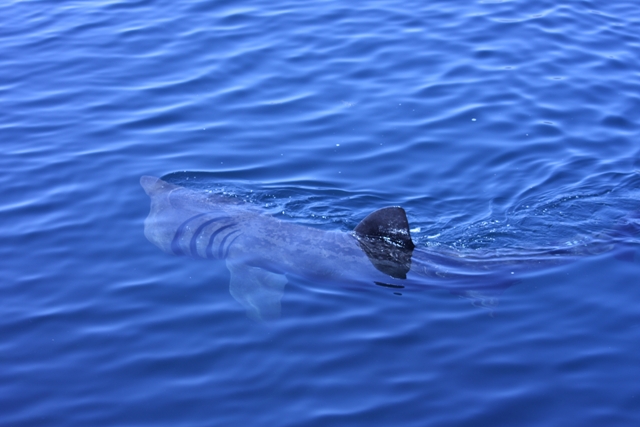
The basking shark (Cetorhinus maximus) is a very large, slow-swimming shark known for filtering plankton from surface waters. It grows to about 12 metres (40 feet) and is widely recognized as the second largest extant shark species, after the whale shark. Its common English name derives from the way it often swims with an open mouth near the sea surface, appearing to "bask" in the sun.
Image gallery
6 Images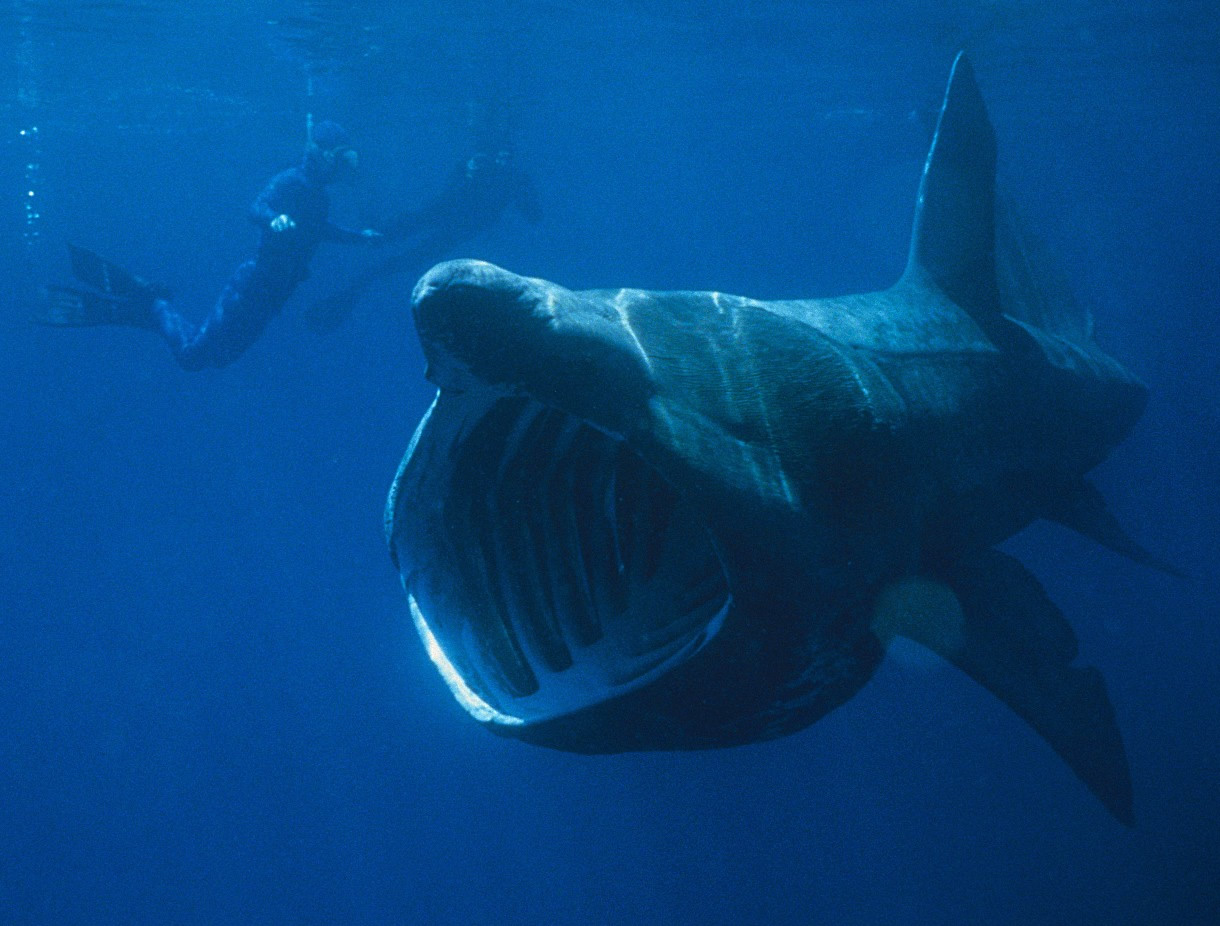


Physical characteristics
Key features include a huge, gaping mouth, numerous long gill rakers used to strain tiny animals from seawater, and a tall, triangular dorsal fin that is frequently visible as the animal moves near the surface. The body is stout and can appear dark grey to brown; unlike the whale shark, it does not display a distinctive spotted pattern. The basking shark is a classic filter-feeding species, relying on continuous swimming to force water through its gills and capture food.
Behavior and ecology
Basking sharks feed primarily on plankton, small crustaceans and fish larvae. They are most often seen alone or in small groups and may form larger aggregations where plankton concentrations are high. These sharks undertake seasonal movements and can be coastal or oceanic depending on food availability. Although they appear slow and harmless to humans, their size and gill structures require cautious interaction and respectful viewing distances.
Reproduction and life history
The reproductive biology of the basking shark remains incompletely understood. It is believed to be ovoviviparous—females carry eggs that hatch internally, later giving birth to live young—but details such as gestation length and pup size are not well documented. Basking sharks mature slowly and have low reproductive rates, traits that make populations vulnerable to overexploitation.
Human interactions and conservation
Historically targeted for liver oil, fins and meat by coastal fisheries, basking sharks experienced significant declines in many regions during the 19th and 20th centuries. Today they are protected in portions of their range and are considered vulnerable or threatened in several jurisdictions. Conservation measures include fishing restrictions, protected areas, and guidelines for whale- and shark-watching to minimize disturbance. Because they follow plankton blooms, basking sharks can serve as informal indicators of ecosystem productivity and attract ecotourism.
Notable distinctions and facts
- Second-largest living shark species after the whale shark.
- Often mistaken for other large filter-feeders; its anatomical details—especially the long gill rakers and lack of spot patterns—help distinguish it.
- Alternative common names include sunfish (not to be confused with the unrelated mola), bone shark, elephant shark, sailfish shark and big mouth shark.
Importance and research
Scientists study basking sharks to learn about migration, feeding ecology and the health of plankton communities. Sightings contribute to citizen-science databases and inform management decisions. Continued monitoring and international cooperation are important to ensure the species persists in the face of fisheries impacts, bycatch and changing ocean conditions.
For general background on filter-feeding sharks and conservation, see related resources: filter-feeding sharks overview, shark biology and whale shark comparisons.
Questions and answers
Q: How big can the basking shark grow?
A: The basking shark can grow up to 40 feet (12 metres) in length.
Q: What is the basking shark known for?
A: The basking shark is known for being a huge filter-feeding shark.
Q: What is the basking shark's scientific name?
A: The basking shark's scientific name is Cetorhinus maximus.
Q: How does the basking shark feed?
A: The basking shark is a filter feeder and feeds by swimming with its mouth open to capture plankton.
Q: What is the basking shark compared to in terms of size?
A: The basking shark is the second largest shark in the world, after the whale shark.
Q: What are some other names for the basking shark?
A: The basking shark is also called the sunfish, the bone shark, the elephant shark, the sailfish shark, and the big mouth shark.
Q: Is the basking shark dangerous to humans?
A: The basking shark is not considered dangerous to humans as it feeds on plankton and poses no threat to humans.
Tags
Related articles
Author
AlegsaOnline.com Basking shark (Cetorhinus maximus) Leandro Alegsa
URL: https://en.alegsaonline.com/art/9263
Sources
- species.wikimedia.org : Cetorhinus maximus
- flmnh.ufl.edu : "FLMNH Ichthyology Department:Basking shark"
- bioexpedition.com : "Basking Shark-Animal Information and Facts"
- arkive.org : "Basking shark videos,photos and facts-Cetorhinus maximus-ARKive"